China has crossed a significant energy milestone: solar power is now the country’s largest source of installed electricity-generating capacity, overtaking coal for the first time.
China had 1,288 gigawatts of installed solar capacity at the end of July, narrowly exceeding its 1,285 GW coal fleet, according to National Energy Administration data reported by Reuters. Combined wind and solar capacity had already surpassed coal in 2025. Now solar alone has done so.
But installed capacity does not equal electricity generated, and coal remains China’s largest source of power generation.
During the first half of 2026, wind and solar together generated 24.6% of China’s electricity, compared with 49.7% from coal. Coal falling below half of generation for the first time nonetheless marks another notable shift in the structure of China’s power system.
China is expanding renewables without abandoning coal
China’s energy transition is not a straightforward replacement of coal plants with solar panels.
Beijing is adding renewable capacity at unprecedented scale while maintaining a large coal fleet to support reliability, rising electricity demand and energy security. Nearly 80 GW of new coal power capacity was commissioned in 2025 following a wave of approvals after the country’s 2021 power shortages.
Yet coal-fired generation fell around 1.5% that year, its first decline since 2015.
That divergence between capacity and utilization is increasingly important. Coal plants can remain available even as they operate less frequently, providing backup and flexibility as renewable generation grows.
The International Energy Agency expects this trend to continue. Despite electricity demand projected to grow nearly 5% annually through 2030, Chinese coal-fired generation is expected to broadly plateau as renewables and nuclear meet additional demand. Solar supplied more than 10% of Chinese electricity in 2025 and is projected to exceed 20% by 2030.
The transition also reflects a wider shift in global power markets. The IEA expects renewable electricity generation worldwide to overtake coal-fired generation in 2026.
The next constraint is integration
China has demonstrated its ability to deploy renewable capacity rapidly. The more difficult challenge is integrating that electricity efficiently.
Wind and solar have expanded faster than parts of the electricity system can fully accommodate them, exposing constraints in transmission, grid management, market design and system flexibility.
Carbon Brief estimates that China could have generated an additional 170 terawatt-hours of wind and solar electricity in the first quarter of 2026 if curtailment had not increased in recent years. Its analysis points not only to physical infrastructure constraints, but also to inflexible grid management, coal-plant operations and market structures that can limit renewable utilization.
Those constraints have emissions consequences. China’s CO₂ emissions rose 2% year over year during the first quarter of 2026 even as renewable capacity continued to expand, although emissions remained below their early-2024 peak.
The next phase of the transition will therefore depend increasingly on transmission, storage, flexible demand and electricity-market reform rather than simply adding more generation capacity.
Storage could narrow the gap
Falling battery costs could help address some of those constraints.
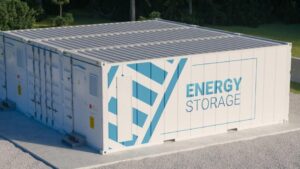
Investment in combined solar-and-battery projects outside China reached roughly $25 billion during the first half of 2026, nearly triple the level a year earlier, according to the Financial Times. Improving battery economics are making it increasingly viable to store solar power generated during periods of abundant sunlight and dispatch it when demand is higher.
China is also expanding storage domestically, with plans to roughly double capacity by 2030.
Greater storage could reduce renewable curtailment, improve grid flexibility and lessen reliance on coal-fired generation during periods when solar and wind output falls.
The transition is therefore becoming less about whether China can build enough renewable capacity and increasingly about whether its power system can use that capacity efficiently and reliably.
An industrial shift with global consequences
China’s renewable expansion is also closely tied to its industrial strategy.
Years of investment, manufacturing scale and domestic competition have made Chinese companies leading global suppliers of solar panels, batteries and electric vehicles. Falling costs have helped make clean-energy technologies more affordable internationally while increasing competitive pressure on manufacturers in the United States, Europe and other economies.
The shift has also intensified concerns about supply-chain concentration. Governments are increasingly balancing access to lower-cost Chinese technologies with efforts to strengthen domestic manufacturing and reduce dependence on concentrated supply chains.
Energy security adds another dimension. Volatility in fossil-fuel markets has strengthened interest in solar, batteries and electrification among countries seeking to reduce exposure to imported oil and gas.
China’s renewable buildout therefore increasingly carries implications for emissions reduction, energy security and industrial competitiveness.
The real test comes next
Solar surpassing coal in installed capacity marks a significant change in the structure of China’s electricity system, but it does not signal the end of coal’s central role.
China remains the world’s largest coal consumer and accounts for more than half of global coal-fired electricity generation. At the same time, it is the leading manufacturing base for many of the technologies capable of reducing reliance on fossil fuels.
The next phase will depend on whether grid investment, storage, market reform and greater system flexibility allow renewable capacity to translate into higher generation and lower fossil-fuel use.
Given China’s scale in both coal consumption and clean-energy manufacturing, the outcome will have consequences well beyond its borders.
 Follow SDG News on LinkedIn