A fragile ceasefire between the United States and Iran—hailed just days ago as a step back from the brink—has quickly become a test of global order. What is emerging instead is a three-front diplomatic rupture: over Lebanon, over control of the Strait of Hormuz, and over the future of transatlantic alignment itself.
Across European Union capitals, leaders are no longer simply supporting the ceasefire. They are redefining it.
Lebanon: The Ceasefire’s Missing Piece
European leaders are increasingly unified around a simple premise: a ceasefire that excludes Lebanon is not a ceasefire at all.
As Israeli strikes continue against Hezbollah targets, Europe’s top diplomats have made clear that the current arrangement risks collapse unless it expands geographically.
This position puts Europe at odds with Washington’s interpretation of the deal. While the Trump administration has treated Lebanon as a separate theater, European governments see it as inseparable from the broader regional conflict.
The result is a widening diplomatic gap. Iran has echoed Europe’s stance, insisting that any lasting agreement must include Lebanon, while Israel has rejected such linkage outright.
What was framed as a bilateral ceasefire is rapidly becoming a multilateral dispute over its very definition.
Hormuz: The Battle Over Global Trade Rules
At the center of the crisis lies the world’s most strategic maritime chokepoint.
The Strait of Hormuz, through which roughly a quarter of global seaborne oil flows, remains effectively constrained despite the ceasefire. Hundreds of vessels are stalled, and global energy markets are reacting accordingly.
Iran has moved to assert control—not just militarily, but economically—by proposing fees for ships transiting the strait. Europe’s response has been unequivocal.
The EU has rejected both Iran’s tolling proposal and a controversial idea floated by Donald Trump to structure a joint U.S.-Iran “revenue-sharing” arrangement for passage. European officials have emphasized that freedom of navigation is a foundational principle of international law and cannot be monetized.
This is more than a policy disagreement. It is a clash over the rules of the global system itself.
If Hormuz becomes transactional, the implications extend far beyond the Gulf—potentially reshaping how strategic chokepoints are governed worldwide.
NATO Under Pressure: A Deadline for Alignment
The strain is now spilling into the transatlantic alliance.
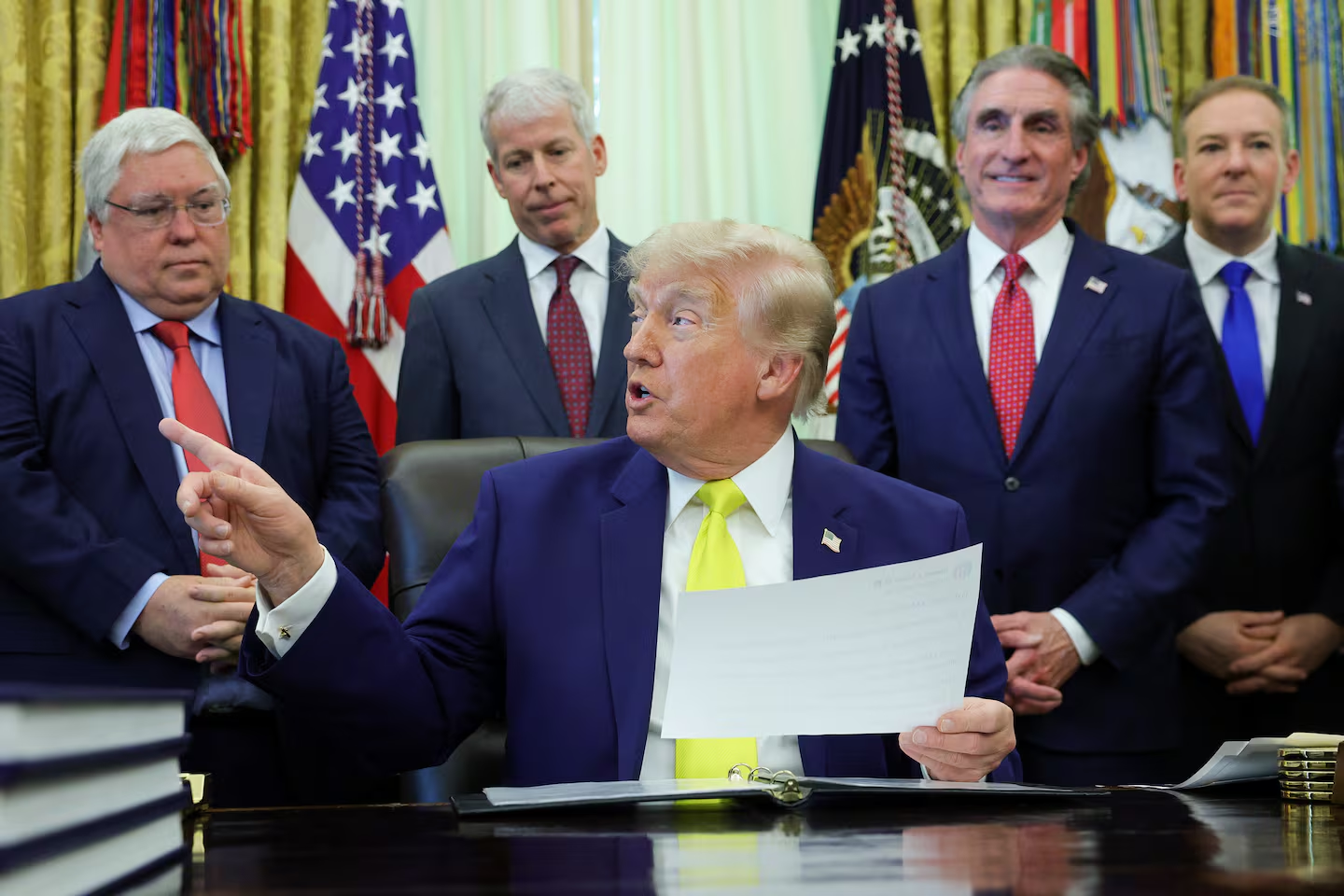
The Trump administration has reportedly given NATO allies days to commit naval forces to secure the Strait of Hormuz, effectively internationalizing the enforcement of the ceasefire.
But Europe is hesitant.
NATO allies have already resisted deeper military involvement in the conflict, exposing deeper questions about burden-sharing and strategic priorities.
The alliance now faces a defining moment: whether to align with a U.S.-led enforcement strategy, or to pursue a more independent European approach grounded in diplomacy and international law.
A Ceasefire in Name, a Negotiation in Reality
What is unfolding is not a stable peace, but a renegotiation of power.
Iran is leveraging its geographic advantage to reshape economic terms in the Gulf. Europe is asserting legal and diplomatic boundaries. The United States is pressing for rapid enforcement and allied alignment.
Meanwhile, the ceasefire itself remains contested—its scope unclear, its terms disputed, and its durability uncertain.
The result is a new geopolitical equation:
Not a binary conflict, but a three-way negotiation between Washington, Tehran, and Brussels over the future of security, trade, and sovereignty in one of the world’s most critical regions.
The Strategic Takeaway
For global leaders, the lesson is immediate.
This is no longer just about preventing war. It is about defining the rules that govern peace.
Europe has drawn a line: no tolls on global trade, no partial ceasefires, no unilateral reinterpretations of international norms.
Whether that line holds may determine not only the fate of this ceasefire—but the shape of the emerging world order.
RELATED STORIES:
- U.N. to End Half-Century Peacekeeping in Lebanon as State Security Expands
- The Final Countdown: Inside the Deadline That Could Reshape the Middle East
- The Price of a Pause: How the U.S.–Iran Ceasefire Reveals Strategic Concessions and Reputational Risk
- The Cost of Trump’s Transactional Alliance Doctrine Is Now Unfolding in Real Time
- Maersk Suspends Key Shipping Routes as Iran War Disrupts Global Trade
 Follow SDG News on LinkedIn