The Polish government is moving quickly to contain political and security fallout after reports emerged that the United States abruptly halted the planned deployment of roughly 4,000 additional American troops to Poland — a decision that has reignited questions across Europe about the future of U.S. military commitments on NATO’s eastern flank.
The canceled deployment reportedly involved the U.S. Army’s 2nd Armored Brigade Combat Team from the 1st Cavalry Division. According to multiple reports, preparations were already well underway, with equipment in transit and deployment ceremonies completed before the Pentagon reversed course.
The move comes at a deeply sensitive moment for European security architecture.
Since Russia’s invasion of Ukraine in 2022, Poland has transformed itself into one of NATO’s most strategically important frontline states — dramatically increasing defense spending, modernizing its military, and positioning itself as a central deterrence hub against Russian aggression.
Now, Warsaw finds itself attempting to reassure both domestic audiences and NATO allies that the sudden shift does not signal weakening American commitment to the region.
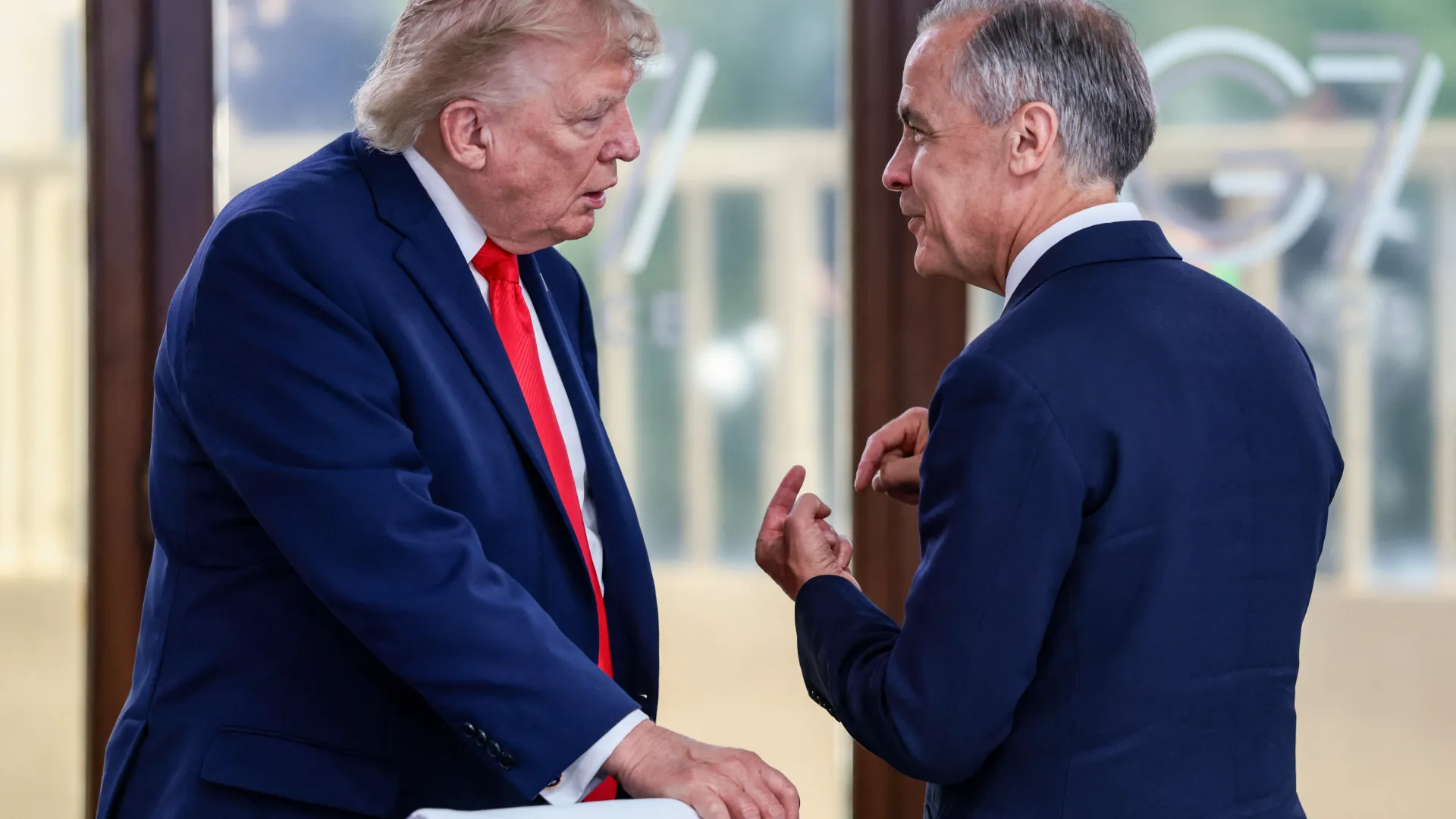
Polish Prime Minister Donald Tusk sought to calm concerns publicly, saying he had received assurances from Washington that the decision was logistical rather than strategic.
“I received assurances … that these decisions are of a logistical nature and will not directly affect deterrence capabilities and our security,” Tusk said.
Poland Tries to Downplay the Strategic Implications
Polish defense officials moved rapidly to insist that Poland itself was not being singled out.
Defense Minister Władysław Kosiniak-Kamysz stated that the issue was linked to broader restructuring of U.S. troop deployments across Europe rather than a downgrade of Poland’s status within NATO.
Still, reports that senior Polish officials initially learned of the decision through media coverage and intelligence backchannels intensified concerns inside Warsaw about the predictability of U.S. decision-making.
The optics are particularly difficult for Poland because the country has spent years positioning itself as Washington’s closest military partner on NATO’s eastern flank.
Warsaw currently hosts roughly 10,000 U.S. troops on a rotational basis and has invested heavily in American military hardware, including Abrams tanks, HIMARS systems, Patriot missile batteries, Apache helicopters, and F-35 fighter jets. Poland is also now among NATO’s highest defense spenders, allocating nearly 5% of GDP to defense.
Iran War Tensions Add New Strain to U.S.-Europe Relations
The troop reversal is unfolding against the backdrop of widening tensions between Washington and several European governments over the U.S.-Israeli war with Iran.
Reuters and other outlets reported that the earlier U.S. decision to withdraw 5,000 troops from Germany came shortly after public disagreements between President Donald Trump and European leaders regarding the conflict.
According to Reuters, Trump was angered that several European allies did not join the war effort against Iran and publicly clashed with German Chancellor Friedrich Merz after critical comments about U.S. strategy.
The administration has increasingly framed Europe as insufficiently committed both militarily and politically to U.S. security priorities.
Trump has repeatedly argued that European allies must assume greater responsibility for their own defense and has suggested additional reductions of American troop presence across the continent.
The Pentagon has simultaneously emphasized that its long-term objective is for European allies to carry a greater share of conventional defense responsibilities inside NATO.
Poland’s Delicate Position on Iran
Poland itself has attempted to carefully navigate the Iran conflict without directly joining military operations.
Earlier this year, Polish Defense Minister Kosiniak-Kamysz publicly stated that Poland was not participating in U.S. military operations against Iran and that Warsaw had received no such request from Washington. He also warned that a prolonged Middle East war could disrupt weapons flows to Ukraine and economically benefit Russia through higher energy prices.
Polish Foreign Minister Radosław Sikorski also reportedly questioned whether Iran had posed a “direct threat” to Europe prior to the escalation.
At the same time, Poland has avoided openly confronting Washington over the war and has continued emphasizing the importance of the transatlantic alliance.
That balancing act reflects Poland’s broader geopolitical reality: Warsaw remains heavily dependent on American military guarantees even as Europe enters a period of growing strategic uncertainty.
A Larger Debate About NATO’s Future
NATO officials have attempted to minimize fears surrounding the canceled deployment, noting that rotational troop forces are not central to the alliance’s formal deterrence plans.
But analysts warn the political symbolism matters almost as much as troop numbers themselves.
For many European governments — particularly those bordering Russia — the deeper concern is whether the United States is beginning a long-term strategic retrenchment from Europe at a moment when the continent faces simultaneous instability tied to Russia, energy security, defense industrial capacity, and growing global geopolitical fragmentation.
The immediate military impact of canceling a single deployment may be manageable.
The broader psychological impact on European confidence in the durability of American leadership inside NATO may prove far more consequential.
RELATED STORIES:
 Follow SDG News on LinkedIn