As governments struggle to keep the Paris Agreement’s 1.5°C target alive, the United Nations is elevating an often-overlooked climate reality: cutting methane emissions may be the fastest and most effective way to slow global warming in the coming decades.
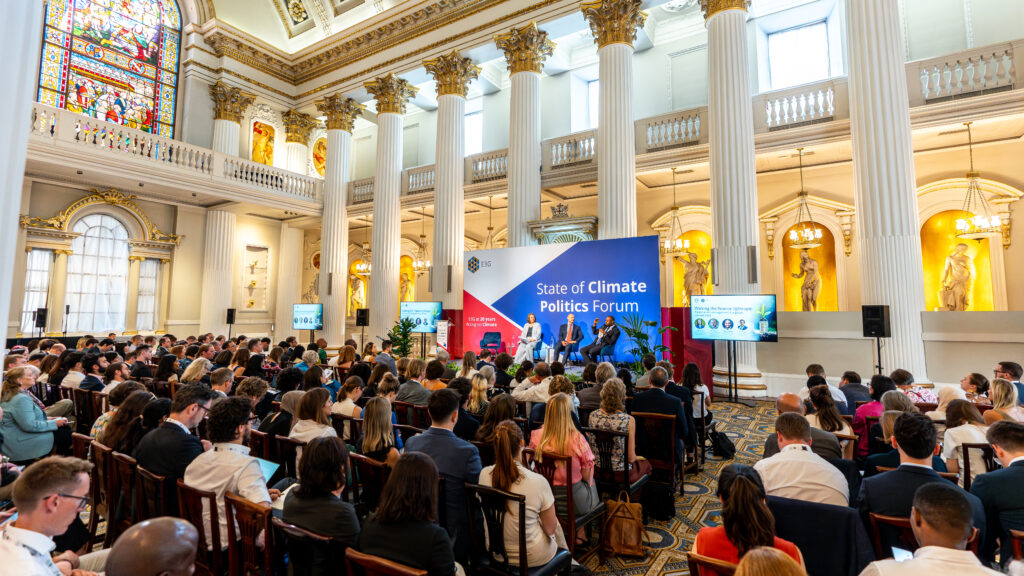
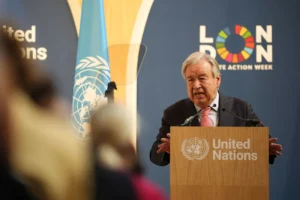
Speaking during London Climate Action Week, United Nations Secretary-General António Guterres launched a new global Call to Action on Methane, arguing that the world has confronted major environmental threats before—from eliminating ozone-depleting chemicals to phasing out leaded gasoline—and that methane pollution must now be the next frontier.
“Methane pollution must be next,” Guterres declared.
The urgency is difficult to overstate. Although carbon dioxide remains the principal driver of long-term warming, methane is responsible for approximately one-third of global warming today. Yet methane behaves differently from CO₂. It persists in the atmosphere for only about a decade, meaning reductions made today could deliver measurable climate benefits within a single generation.
The Climate’s Emergency Brake
Scientists increasingly describe methane mitigation as the climate’s “emergency brake.”
Per unit of mass, methane traps roughly 80 times more heat than carbon dioxide over a 20-year period. Atmospheric methane concentrations have nearly tripled since pre-industrial times and continue to rise at record levels. Without decisive intervention, global anthropogenic methane emissions are projected to increase further this decade.
The United Nations argues that cutting methane represents one of the most cost-effective opportunities available to governments.
Unlike many climate solutions that require technological breakthroughs or decades of infrastructure transformation, many methane reductions can be achieved immediately using technologies that already exist today.
Why Methane Matters Beyond Climate
Methane is not merely a climate issue.
Methane emissions contribute to ground-level ozone pollution, which is linked to approximately one million premature deaths annually and reduces agricultural productivity worldwide. Aggressive methane mitigation could prevent significant crop losses, reduce heat-related labor impacts, improve air quality, and generate substantial economic benefits.
For developing countries, particularly those on the frontlines of climate change, these co-benefits carry profound implications for public health, food security, and economic resilience.
Three Sectors Hold the Key
More than 90 percent of human-caused methane emissions come from three sectors: agriculture, fossil fuels, and waste.
Agriculture accounts for roughly 40 percent of human-caused methane emissions, primarily from livestock and rice cultivation. Fossil fuels contribute approximately 35 percent through oil and gas operations and coal mining, while waste—including landfills and wastewater systems—accounts for another 20 percent.
The fossil fuel sector presents perhaps the greatest opportunity for immediate gains.
According to the UN, approximately 70 percent of methane emissions from oil and gas operations can be eliminated using existing technologies, much of it at low or even no net cost. Yet in 2025 alone, an estimated 167 billion cubic meters of gas were flared globally—equivalent to Africa’s annual gas consumption.
Guterres called on governments and industry alike to establish a new global standard of near-zero methane emissions throughout the oil and gas value chain by repairing leaks and ending routine flaring.
He also urged countries to reduce food waste, eliminate open dumping, improve landfill management, capture emissions from wastewater systems, and accelerate methane reduction strategies across agriculture.
A Global Movement Is Taking Shape
Momentum is building.
The Global Methane Pledge, launched at COP26 and now backed by more than 150 countries, seeks to reduce global methane emissions by at least 30 percent by 2030. Experts increasingly view methane reduction as one of the few climate interventions capable of delivering near-term cooling while countries continue the longer and more complex process of decarbonizing entire economies.
For governments, businesses, and investors, methane mitigation increasingly represents a rare convergence of environmental necessity and economic opportunity.
Captured methane can be transformed into energy. Improved waste management can create jobs and generate power. Reducing leaks preserves valuable resources that would otherwise be lost to the atmosphere.
The Road to COP31
The UN’s renewed methane push arrives ahead of COP31 in Türkiye, where pressure is expected to intensify for practical, near-term emissions reductions and accelerated implementation of climate commitments.
Guterres has announced plans to convene world leaders in September to advance the transition away from fossil fuels and build momentum heading into the climate summit.
At a time when many climate solutions appear politically contentious, technologically uncertain, or financially daunting, methane stands apart.
The science is clear. The technologies largely exist. The economics frequently work.
The question confronting the international community is no longer whether methane can be reduced. It is whether governments and industries will move quickly enough to seize what may be the world’s fastest opportunity to slow climate change.
RELATED STORIES:
 Follow SDG News on LinkedIn