SDG News’ Heeta Lakhani interviews Juan Carlos Monterrey – Panama’s climate envoy and COP30 Bureau Vice President – on forests, fossil fuels and the urgent text negotiations underway inside the summit.
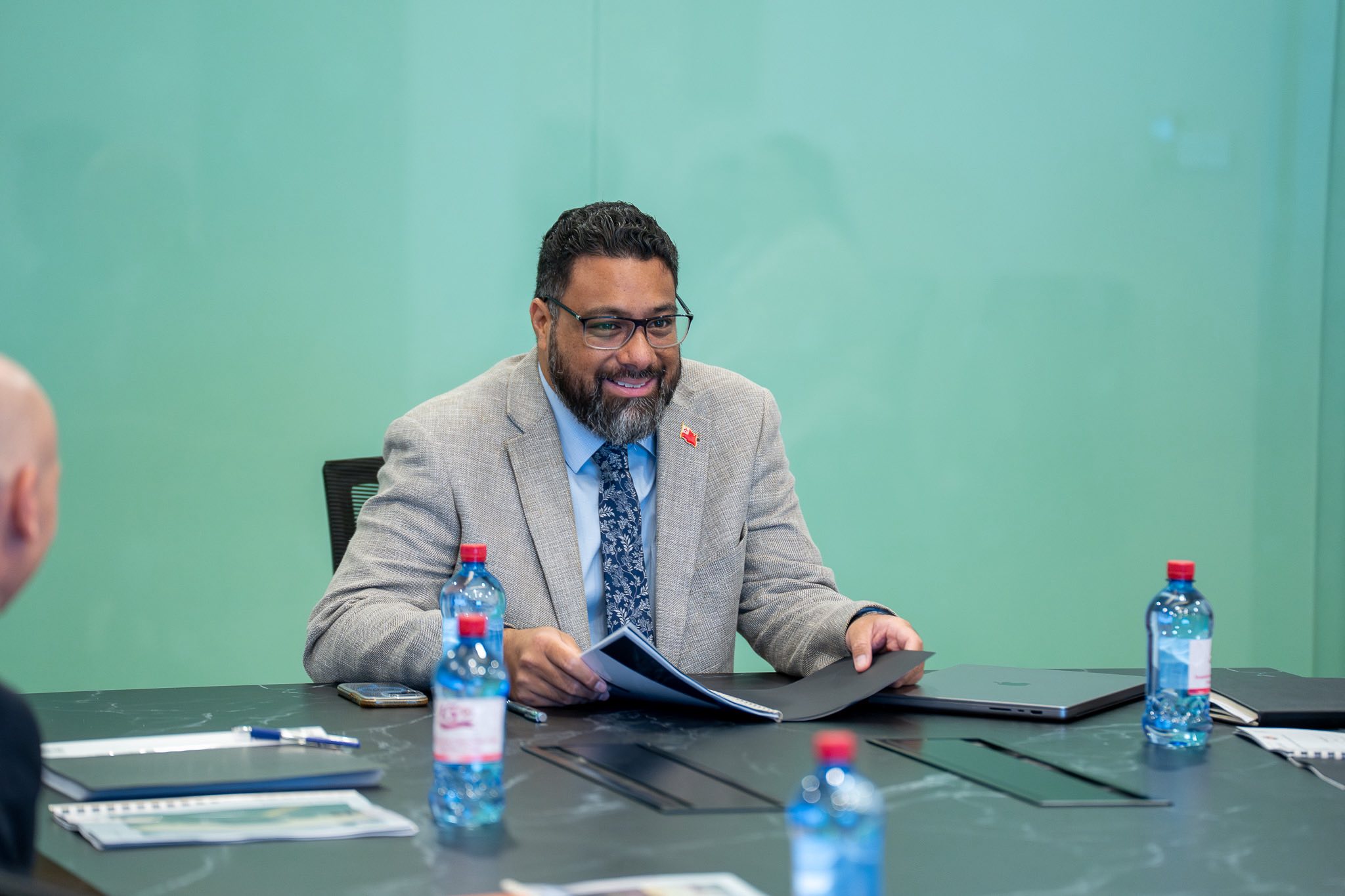
Belém — As COP30 enters the most pressurised stretch of its second week, the corridors outside the Amazon Room are thick with stalled conversations, half-finished sentences and negotiators waiting for the next draft text to drop. It was in this atmosphere that Heeta Lakhani, SDG News Chief Correspondent, sat down with Juan Carlos Monterrey, Panama’s Special Representative for Climate Change and Vice President of the COP30 Bureau.
Clear in message and unambiguous in tone, Monterrey outlined the political decisions that must be taken if this COP is to meet the expectations set by its Amazonian host.
“If we cannot agree to end deforestation while we meet near the Amazon…”
Asked where negotiations stand, Juan Carlos Monterrey described a summit suspended between urgency and delay.
“We are waiting on the next version of the text,” he said. “There are many topics we need strengthened — the pathway to end deforestation globally; the pathway to phase out and transition away from the fossil fuel economy; and a strong signal for system reform.”
For him, Belém presents a uniquely symbolic moment — one that must translate into political clarity.
“This COP is literally occurring in the Amazonia bioregion,” he told SDG News. “If we cannot agree to end deforestation while we meet near the Amazon, I don’t know at what other COP we’re going to get this platform.”
The comment reflects a broader tension in the rooms this week: negotiators are wrestling with a text that has not yet captured the level of ambition expected for forests, despite the summit’s location.
A process that must evolve to meet the moment
Monterrey did not shy away from critiquing the process itself.
“The current processes in the UNFCCC are not up to date with the realities of the current world,” Juan Carlos Monterrey said.
To him, improving the system is not an institutional preference — it is necessary for survival.
“We need to streamline processes, cut the red tape and accelerate investments and action.”
This aligns with a growing sentiment among delegations that the negotiation machinery is slowing implementation rather than enabling it.
A just outcome: fossil fuel transition and gender action
With ministers now under pressure to deliver a credible outcome by the end of the week, Monterrey was clear about what must be in the final decision.
First, he said, “We need a clear pathway to transition away from fossil fuels.”
Second, COP30 cannot conclude without an ambitious gender action plan.
“We cannot leave Belém without a gender action plan,” he said.
He stressed that women and girls face disproportionate climate impacts — and hold disproportionate potential for driving solutions.
“When you give a dollar to a woman leader, that dollar runs faster… it comes back to the care of her home and to the care of the community.”
His emphasis on gender reflects a broader push from civil society and several delegations demanding that COP30 restore momentum on the Gender Action Plan after years of uneven progress.
A decade in climate diplomacy — and still one of the youngest in the room
Turning to his own journey, Monterrey noted that he is 33 years old — the same age as the conventions themselves, established in 1992. He began attending climate negotiations a decade ago.
“I started in 2015 as the youngest deputy lead negotiator negotiating the Paris Agreement, and now I’m the climate envoy for my country.”
But youth, he said, remains a persistent barrier.
“Being a young person in these rooms is not very easy. That is why we need more young people in these rooms.”
Monterrey credited Lakhani’s work co-founding the Climate Youth Negotiator Program as an important pathway for bringing new voices into the process.
His advice to young people watching COP from afar was unapologetically direct:
“No one is really going to open the door for you. Your job is to kick that freaking door and get in.”
What to watch in the decisive final days
As the interview closed, Monterrey returned immediately to the negotiation halls, where the next iteration of the text is expected to determine whether this COP advances on forests, fossil fuels, gender, and system reform — or whether ministers leave Belém with unresolved gaps.
Inside COP30, the anticipation is rising.
The outcomes Juan Carlos Monterrey outlined — ending deforestation, beginning a fossil fuel transition, delivering a gender action plan — are the benchmarks against which this summit will now be judged.
RELATED STORIES:
- Panama Minister Juan Carlos Navarro: “Nature Financing Isn’t a Luxury—It’s a Necessity”
- Juan Carlos Monterrey Gómez to Help Lead Nature Summit as Panama Hosts Global Climate Week
- Spotlight: Juan Carlos Navarro, Minister of Environment, Panama
- SDG News Spotlight: Ethel Maciel Brings Global Health to the Heart of COP30
- Global Ministers Call for Plastics Treaty That Limits Production, Not Just Waste
 Follow SDG News on LinkedIn