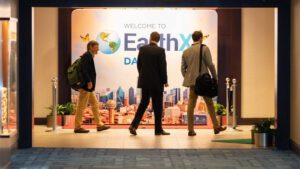
At the heart of Panama City during UN Global Climate Week, world leaders, policymakers, and business innovators gathered for the 2025 Nature Summit. This was a pivotal moment in the global conversation on sustainability. Among the innovators, executives, and leaders at the summit was Robert Maersk Uggla, Chairman of A.P. Moller – Maersk, who shared his vision for The Future of the Blue Economy.
Uggla’s message was clear: transforming the global supply chain is one of the most urgent and important ways we can combat climate change. By doing so, humanity can combine innovation in technology, transportation, and finance, all while focusing on environmental responsibility.
“Global supply chain accounts for 11% of emissions,” Uggla stated, opening his remarks with a stark reminder of the industry’s environmental footprint.
Uggla shared his vision for progress, highlighting how Maersk, one of the world’s largest shipping companies, is spearheading this transition.
Fueling the Future: Dual-Fuel and Electrification
“We are working on electrifying transportation,” Uggla said, sharing Maersk’s ongoing transition to cleaner fuels. “Maersk has been ordering dual-fuel technology for its boats,” he added, referring to their adoption of ethanol-powered vessels, which is one of the best ways to reduce maritime emissions in the shipping industry.
Their work doesn’t stop with ocean based transportation, the company is also shifting its land-based logistics strategies.
“We are reducing emissions by using rail instead of trucking,” Uggla explained.
This shift to lower-emission transport modes is an important part of Maersk’s decarbonization strategy, and paves the way for other organizations to follow.
Panama: A Strategic Role in Sustainable Logistics
Panama City is considered a global shipping hub due to the Panama Canal, and allows the country to be in a unique position to be at the forefront of change.
“Panama is a model for logistics to reduce emissions,” he said, pointing to the Panama’s infrastructure and strategic location.
Uggla also shared key ways to continue the progress:
“Panama needs to accelerate and enable investments, which is vital to optimizing asset utilization, thereby taking out waste from the global supply chain.”
In other words, efficiency isn’t just about speed or cost, it’s about doing it sustainability and focused on the long term.
The Call for Policy and Partnership
While private innovation is of the utmost importance, Uggla shifted the focus to the importance of governmental support and strong regulatory frameworks.
“Effective regulations are vital from the government,” he urged, underlining that scalable climate action can only happen through public-private collaboration.
Robert Maersk Uggla went on to encourage Panama to lead the way:
“Panama as a leader should promote electrification and travel by rail over trucking.”
By championing rail and green infrastructure, Uggla suggested, Panama can set a global benchmark for sustainable trade and logistics, while also lowering its overall emissions.
Robert Maersk Uggla’s presentation at the Nature Summit was a call to action to rethink and rebuild the systems that transports our world. From investing in ethanol-fueled vessels to pushing for systemic change in transportation and regulation, his message was rooted in action—not just ambition.
As global emissions continue to climb, and supply chains stretch farther and faster than ever before, the future of the blue economy will be shaped by those bold enough to lead it.
Follow along for more coverage from the UN Global Climate Week and the Nature Summit in Panama City.
Related Article: UN Climate Chief Stiell: Climate Policy Is the Antidote to Economic Uncertainty—and It Starts in Panama
 Follow SDG News on LinkedIn