War, Rewritten for the Internet
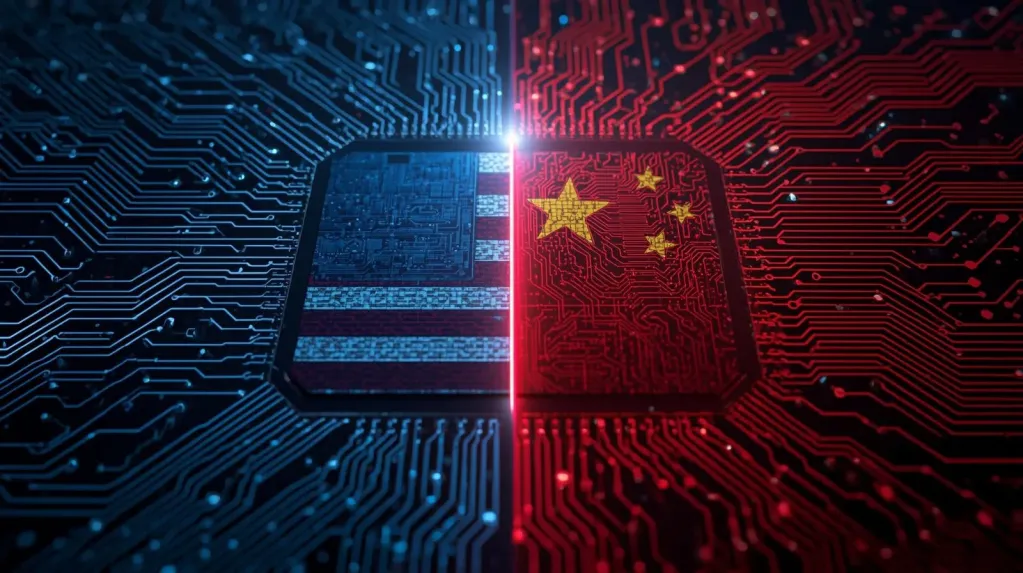
As the conflict with Iran escalates, a clearer picture is emerging of what may define this war in the long term: not just missiles and maritime chokepoints, but memes, satire, and algorithmic storytelling.
New reporting underscores that this is no sideshow. It is a deliberate, fast-moving information campaign on both sides—one that is reshaping how war is communicated, consumed, and understood.
A “virtual front” has now fully opened, where governments are not only launching strikes, but launching content—engineered to travel at the speed of the scroll.
Iran’s Strategy: Trolling as Statecraft
Iran’s digital campaign has become more pointed—and more personal.
According to recent reporting, Iranian-linked media and networks are systematically producing memes, videos, and AI-generated satire targeting Donald Trump, who has become the central figure in their messaging.
This is not random internet behavior. It is coordinated propaganda adapted for the modern media ecosystem. The objective is familiar—undermine the opponent, project confidence—but the tools are distinctly 21st century: humor, virality, and shareability.
In effect, Iran is “trolling” the U.S. president at scale, turning geopolitical conflict into a stream of digestible, viral content designed to capture—and hold—attention.
The White House Response: War as Content
The Trump administration, however, is not simply reacting. It is participating.
Recent analysis shows that U.S. messaging around the war has taken on a highly stylized, internet-native form. Videos blend real military footage with video game aesthetics, cinematic edits, and meme-like slogans—packaged less like traditional wartime briefings and more like content built for platforms.
This represents a striking evolution in U.S. communication strategy. Where past administrations spoke to the public, this one performs for it—meeting audiences where they are: inside feeds dominated by speed, spectacle, and competition for engagement.
Experts warn that this “gamification” risks trivializing the realities of war, transforming complex geopolitical decisions into something that feels closer to entertainment than consequence.
The Attention Economy Becomes the Battlefield
What distinguishes this moment is not just that propaganda exists—it always has—but that it now operates inside the architecture of the attention economy.
In this system, attention is the most valuable currency. Algorithms reward content that provokes emotion—anger, humor, shock—and punish nuance, patience, and complexity. The result is a powerful incentive for governments to communicate not with precision, but with virality in mind.
Memes outperform press releases. A satirical video can reach tens of millions before a formal statement reaches ten thousand. And once a narrative takes hold online, it becomes extraordinarily difficult to dislodge.
Both Washington and Tehran appear to understand this. Their strategies are not just about persuasion; they are about capture—capturing time, capturing focus, capturing the limited bandwidth of a global audience.
In that sense, the conflict is no longer just being fought over territory or influence. It is being fought over attention itself.
A Conflict Built for Virality
This dynamic is reshaping the nature of conflict in real time.
AI-generated videos can be produced and distributed at scale. Humor lowers defenses and increases shareability. Cultural references make geopolitical narratives feel familiar, even entertaining.
The result is a war that unfolds not just through breaking news alerts, but through trending content—where the line between information, propaganda, and performance becomes increasingly difficult to define.
Allies, Audiences, and the Risk of Distortion
For allies, this evolution complicates an already fragile landscape.
Public messaging that leans into spectacle risks undermining credibility at a moment when cohesion is critical. European leaders, already cautious about deeper involvement, must now navigate not only military strategy but the reputational consequences of a conflict playing out in real time online.
For global audiences, the implications are even more profound. The fusion of AI, satire, and statecraft creates an environment where perception can be shaped—and reshaped—at scale, often detached from underlying reality.
The danger is not just misinformation. It is a distortion of how war itself is understood.
The New Standard for Power
The Iran conflict is making one thing unmistakably clear.
Power in the modern era is no longer defined solely by military capability or economic strength. It is defined by the ability to command attention, to shape narratives, and to influence how events are perceived across a fragmented, fast-moving global media landscape.
In this new model, victory is not only measured on the battlefield.
It is measured in what the world watches, believes, and remembers.
RELATED STORIES:
- The World’s First Fully Networked War
- How the Iran War Is Accelerating the World’s Shift to Energy Independence
- The War That Burns Twice: How the Iran Conflict Is Rewriting the Future of Energy
- The Iran War’s Shock to the Global System: Energy, Economics, and Global Governance in Crisis
- Trump Administration Escalates Pressure on Global Climate Governance
 Follow SDG News on LinkedIn