Europe’s environment is under mounting pressure. Despite progress in cutting greenhouse gas emissions and improving air quality, the European Environment Agency (EEA) warns in its newly released Europe’s Environment 2025 report that the continent’s natural systems are degrading at an alarming pace. Biodiversity is in decline, ecosystems are overstressed, and climate change is accelerating faster here than anywhere else on the planet.
The report, compiled with input from 38 countries, is the EEA’s most comprehensive assessment to date. Its message is stark: environmental deterioration now threatens Europe’s competitiveness, security, and quality of life, and only urgent, systemic action can prevent further decline.
A Mixed Picture: Gains and Deepening Losses
The EEA acknowledges significant advances. Since 2005, the EU has halved its fossil fuel use, doubled the share of renewables, and sharply reduced air pollution. Waste recycling, resource efficiency, green jobs, and sustainable finance are all on the rise. These gains reflect decades of policy under the European Green Deal and associated frameworks.
But these successes are overshadowed by continued ecosystem degradation.
“We cannot afford to lower our climate, environment and sustainability ambitions,” said Leena Ylä-Mononen, EEA Executive Director. “What we do today will shape our future.”
The report highlights that biodiversity loss is acute across terrestrial, freshwater, and marine ecosystems, driven largely by unsustainable food systems. Water stress affects one-third of Europe’s population and territory, while climate change is hitting the continent harder than anywhere else globally.
Political Alarm at the Highest Levels
EU leaders used the report’s release to stress that environmental action is inseparable from economic resilience.
Teresa Ribera, Executive Vice-President for Clean, Just and Competitive Transition, cautioned: “Delaying or postponing our climate targets would only increase costs, deepen inequalities, and weaken our resilience. Protecting nature is not a cost. It is an investment in competitiveness, resilience and the well-being of our citizens.”
Commissioner for the Environment Jessika Roswall added: “Healthy nature is the basis for a healthy society, a competitive economy and a resilient world. The state of our environment is a clear call to action.”
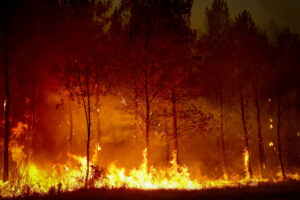
For Climate Commissioner Wopke Hoekstra, the summer’s devastating wildfires underscored the urgency: “The costs of inaction are enormous, and climate change poses a direct threat to our competitiveness. Staying the course is essential to safeguarding our economy.”
Risks to Security, Prosperity and Health
The report warns that unchecked climate change and environmental degradation will destabilize critical societal functions. Food security, access to drinking water, flood protection, and public health are already under strain. Increasingly frequent climate-related disasters are projected to continue even if mitigation targets are met.
The EEA stresses that achieving climate neutrality by 2050 depends not only on emissions cuts but on sustainable stewardship of land, water, and natural resources. Without this, Europe risks eroding its economic base.
Pathways Forward: Transformative Change
The report calls for accelerated implementation of the European Green Deal and alignment with the European Commission’s Competitiveness Compass, which prioritizes innovation, decarbonisation, and security.
Nature-based solutions, from restoring wetlands to urban green infrastructure, are highlighted as cost-effective tools to build resilience while reducing emissions. Decarbonising transport, curbing agricultural emissions, and advancing circularity in industry are identified as immediate priorities.
The EEA also stresses the opportunity side: Europe can lead globally in green innovation by investing in technologies for hard-to-abate sectors such as steel and cement, while reducing reliance on imported raw materials.
A Defining Decade
Europe’s Environment 2025 is the seventh state of the environment report since 1995, published every five years by the EEA in partnership with its European Environment Information and Observation Network. It offers what the agency calls “solid, science-based insights” for policymakers.
For EU and national leaders, the takeaway is unequivocal: Europe’s environment is in peril, but the policy tools exist. The choice is whether to scale ambition now or face rising costs, instability, and a diminished quality of life.
As Ribera put it, “By scaling up action now, we can build a cleaner, fairer and more resilient Europe for future generations.”
Related Content: Europe Urgently Needs to Increase Its Disaster and Climate Change Resilience
 Follow SDG News on LinkedIn