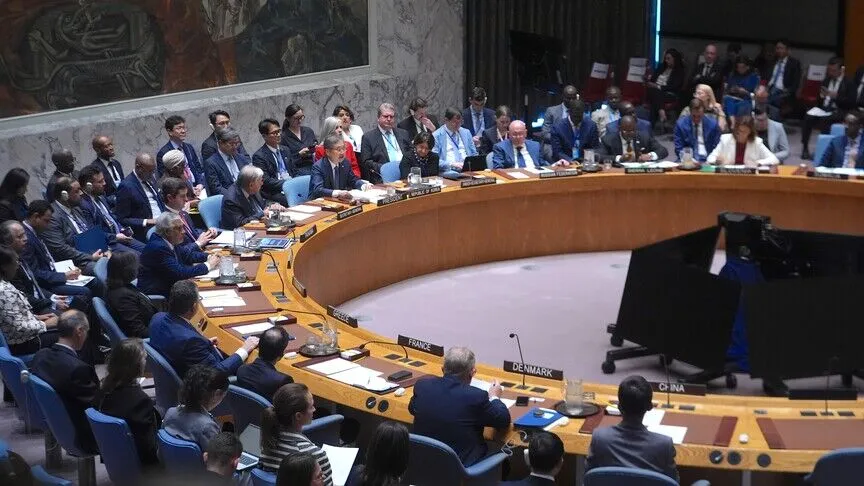
Strasbourg, November 2025 — Applause broke gently across the hemicycle in Strasbourg as the final tally appeared on the screen: 402 in favour, 250 against, eight abstentions. With that vote, the European Parliament agreed to slow down the EU deforestation regulation, the bloc’s flagship law meant to keep forest-risk commodities linked to deforestation out of its market. For forest countries, traders and multinationals already retooling their supply chains, the signal was clear but uncomfortable. The law is still coming, but later, looser and under review before it fully bites.
The EU deforestation regulation was designed to ensure that imports and exports of cattle, cocoa, coffee, oil palm, rubber, soya, wood and key derived products are not linked to deforestation or forest degradation. Companies would need to trace goods to the plot of land where they were produced, prove no forest loss occurred after 2020, and demonstrate compliance with relevant local legislation. It was initially set to apply from December 2024. That date slipped to the end of 2025, and now, after this vote, to late 2026 for larger operators and mid-2027 for smaller ones.
A softer entry into force for forest-risk supply chains
Under the revised timetable, medium and large operators will have until 30 December 2026 to comply with the EU deforestation regulation. Micro and small businesses will follow from 30 June 2027. The law’s core objectives remain, but the architecture of compliance has shifted. Only those operators that first place a product on the EU market will be responsible for filing due diligence documentation, relieving downstream operators and traders from submitting separate statements for the same goods.
For micro and small primary operators, the obligations are lighter still. A simplified, one-off declaration will replace repeated submissions into the EU’s IT system, and where information is already available, small operators may not need to act in the system themselves. Books, newspapers and other printed products are explicitly excluded from the reporting scope, responding to sustained lobbying from the publishing and print sectors.
Supporters of the changes frame this as pragmatic sequencing rather than retreat. Christine Schneider, a German MEP from the EPP group, called the vote essential to protect both environmental aims and economic reality. “A one-year postponement for all companies is essential to give authorities and operators the time needed to implement the rules properly,” she said.
Technical bottlenecks meet political realignment
Formally, the European Commission justified the delay on technical grounds, warning that the IT system designed to host due diligence statements may not yet withstand the expected data flows. EU ambassadors endorsed the extension in November, and Parliament’s vote now aligns its stance with that of member states. Behind the technical language, however, sits a broader political shift.
The revision passed with the backing of the EPP, parts of Renew Europe, the ECR, Patriots for Europe and Europe of Sovereign Nations, reflecting a pattern that has already emerged on other environmental files. Similar coalitions have moved recently to ease sustainability reporting and due diligence obligations, arguing that cumulative regulatory burdens threaten competitiveness and smaller firms. For critics, this is less about red tape and more about weakening the Green Deal’s enforcement spine.
Left-of-centre groups in Parliament warn that the decision risks undermining both forest protection and legal certainty for business. Delara Burkhardt, lead negotiator on the deforestation regulation for the S&D Group, called the alignment between the EPP and far-right groups “deeply worrying” and pointed to the timing of the new review clause. In her words, reviewing the law before it applies to a single company “creates a limbo and maximum planning uncertainty,” particularly for firms that have already invested in traceability and monitoring systems.
Early review clause keeps the rulebook open
The new text requires the Commission to conduct a simplification review of the EU deforestation regulation by 30 April 2026, months before larger operators must comply. That assessment will focus on administrative burden and overall impact, potentially opening the door to further changes or additional leniencies. For governments and companies in producer countries, this adds another layer of uncertainty to planning investments in deforestation-free production and verification.
At the same time, several large companies in forest-risk sectors have publicly cautioned against continuous adjustments. They argue that repeated delays and re-negotiations penalise early movers that have already adapted their systems and contracts to the original timelines. Instead of reducing complexity, these firms say, rolling revisions create a moving target, complicating long-term procurement decisions and engagement with smallholder suppliers.
What this means for forests and for Europe’s credibility
For tropical forest nations and communities facing direct pressure from land conversion, the Parliament’s decision will be read in two ways. On one hand, the EU deforestation regulation remains one of the most far-reaching attempts to align trade with forest protection, and its core due diligence logic survives. On the other, the delay and early review send a message that enforcement can be softened when implementation becomes politically difficult.
For the European Union, the outcome tests its credibility as a standard-setter on deforestation at a time when other jurisdictions are exploring similar measures. How the law is operationalised between now and 2027 will determine whether it consolidates a global benchmark for deforestation-free supply chains or becomes another example of ambition diluted in the face of domestic pressures.
RELATED STORIES:
- Financial Giants Fuel $8.9 Trillion Deforestation Economy, Forest 500 Warns
- World Entrepreneurs Call for Harnessing Power of Innovation for SDGs
- Grenada Becomes First Nation to Activate Hurricane Bond Clause After Beryl Devastation
- UN Global Compact meets at the EU Parliament to advance corporate sustainability
- US Clean Energy Industry Faces Major Shake-Up as Tax Credits Cut Under New Bill
 Follow SDG News on LinkedIn