- Global renewable energy investment hit $386 billion in 1H 2025, the strongest half-year on record, but growth is uneven across markets and technologies.
- Banks still provide less than $1 in clean energy financing for every $1 in fossil fuel lending, far from the 4:1 ratio needed for a Paris-aligned pathway.
- Data center demand is set to quadruple by 2035, creating both a clean power opportunity and a surge in natural gas reliance.
A Divided Transition Landscape
As delegates converge on Climate Week NYC 2025, BloombergNEF’s latest analysis depicts an energy transition moving at radically different speeds across regions, sectors, and technologies. While renewables and electric vehicles continue to attract record levels of capital, lagging finance flows and uneven government policy are creating fractures in the global trajectory.
Renewable energy commitments surged to $386 billion in the first half of 2025, up 10% year-on-year. Offshore wind posted a sharp recovery, drawing $39 billion—more than all of 2024—while small-scale solar in China offset a slump in utility-scale projects triggered by curtailment risks and shifting power tariffs. Yet momentum is far from uniform. US investment fell 36% in the first half, reflecting policy uncertainty under the new administration, while the EU posted a 63% rebound. China maintained its dominant share, accounting for 44% of global renewable investment.
Financing Gaps Expose Policy-Private Sector Disconnect
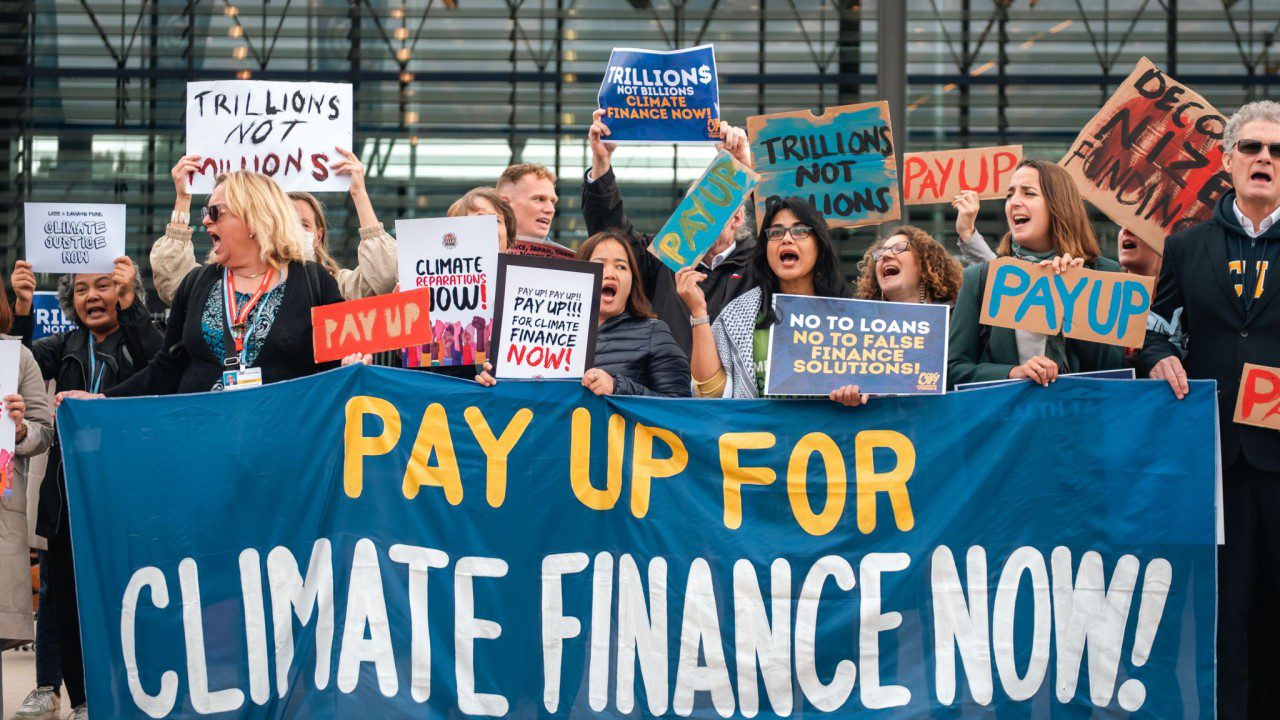
Despite surging real-economy investment, bank financing continues to lag. According to BNEF, the Energy Supply Banking Ratio (ESBR) sat at 0.89:1 in 2024, meaning banks supplied less than $1 in low-carbon financing for every $1 provided to fossil fuels. Fund managers performed worse, channeling twice as much capital expenditure into fossil fuel projects as low-carbon supply.
Scenarios aligned with limiting warming to 1.5°C require a reversal of this ratio—shifting to 4:1 in favor of clean energy by 2030. “The divergence between investment needs and financing flows is the starkest signal yet that policy momentum and capital markets are out of sync,” noted BNEF analysts in the run-up to the summit.
Net Zero: Costly or Cost-Saving?
BNEF’s New Energy Outlook 2025 estimates that global emissions may already have peaked in 2024, putting the world on a potential path of structural decline. Yet under its base-case Economic Transition Scenario, emissions only fall 22% by 2050—far from Paris alignment. Achieving net zero by mid-century requires accelerated deployment of renewables, storage, and electrification, but comes at a modest additional cost: just 0.7% of annual global GDP.
By contrast, Bloomberg Intelligence estimates climate-related damages in the US alone are already equivalent to 3.2% of GDP, underscoring the economic logic of faster decarbonization.
Related Content: Key Takeaways from Climate Week NYC for COP16 and COP29
Pledges and Politics
National climate pledges remain misaligned with global net-zero trajectories. Brazil and the UK stand out with targets more ambitious than BNEF’s modeled pathway, while Japan and Canada fall short. Key economies—including China, India, and the EU—have yet to declare 2035 targets. With COP30 looming, Climate Week is expected to serve as a critical pressure point for governments to recalibrate ambitions.
In the US, the passage of the One Big Beautiful Bill Act has reset the investment outlook. BNEF now projects 395 GW of new solar, wind, and storage capacity between 2025 and 2030, down 23% from earlier forecasts. Onshore wind takes the steepest hit, while solar and storage remain more resilient. “This slowdown will not derail clean power growth, but it will delay the pace of transition at a time when power demand is surging,” analysts warned.
Data Centers and Demand Surges
Perhaps the most urgent new challenge is the explosive rise in data center electricity use. BNEF projects demand to quadruple by 2035, reaching 1,600 terawatt-hours—comparable to India’s current consumption. Technology giants are driving record corporate clean power purchases, but the boom is also fueling fresh demand for natural gas, with US data center pipelines potentially adding 8.4% to current national consumption.
EV Growth Adds Momentum—But Unevenly
Global EV sales are expected to hit 26% of new passenger vehicles this year, rising to 42% by 2030. Yet the US trails, on track for just 27% penetration by the decade’s end. Zero-emission trucks are beginning to scale, with nearly 90,000 units sold in the first half of 2025, nearly matching the whole of 2024. China dominates commercial EV adoption, though Europe’s policy incentives are poised to shift momentum westward.
Global Stakes
The picture emerging at Climate Week is of an energy transition that is accelerating in parts, fragmenting in others, and facing mounting risks from policy reversals, financing shortfalls, and supply chain concentration. China still commands more than 70% of production capacity across key clean technologies, despite billions in subsidies elsewhere.
For C-suite leaders, investors, and policymakers, the lesson is clear: capital allocation, policy design, and technological deployment must converge more quickly if the world is to align with climate goals. The stakes are not only environmental but economic, as the costs of delay continue to outpace the costs of transition.
 Follow SDG News on LinkedIn