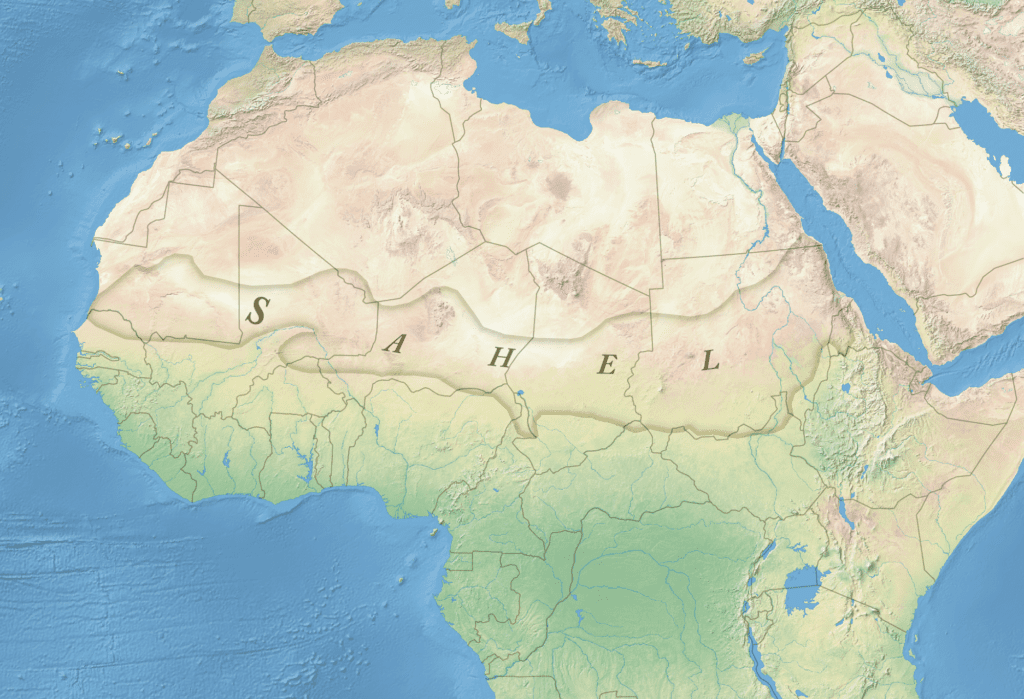
The Sahel stretches across the spine of Africa like a fragile thread, a vast semi-arid belt where the desert meets the savannah and where, today, the future of millions hangs in the balance. The UN warned on Friday that nearly four million people have been uprooted across the region, forced to flee again and again by the overlapping crises of conflict, hunger, and a rapidly changing climate.
It is a staggering figure, a two-thirds increase in displacement over the past five years, and behind every number lies a story of loss. In Burkina Faso, Mali, and Niger, entire villages have vanished, emptied by violence and despair.
The Epicenter of Displacement
“Across the central Sahel, people are being driven from their homes by violence, insecurity, and the devastating effects of climate change,” said Abdouraouf Gnon-Kondé, the UN refugee agency’s Regional Director for West and Central Africa.
Eight in ten of those displaced are women and children, and the dangers they face are escalating, from gender-based violence to trafficking and forced recruitment by armed groups.
As insecurity spreads across borders, families who once sought safety nearby are now taking desperate journeys across entire countries. Most displaced people remain within their national borders, but increasing cross-border movement reveals how survival itself is forcing migration.
“These onward movements highlight the urgent need to expand assistance and enable people to remain closer to home,” Gnon-Kondé said.
A Generation Out of School, a Region Without Care
Insecurity has shuttered over 14,800 schools, denying three million children not just education but protection. More than 900 health facilities have also closed, cutting millions off from basic care. The UN describes a “protection and survival crisis” that deepens with every passing season.
What began as a humanitarian emergency is hardening into a generational catastrophe. The closure of schools and clinics strips communities of hope, locking children into a cycle of poverty and trauma that may define their future long after the fighting stops.
Hunger as a Driver of Flight
Extreme weather and failed harvests are turning hunger into a primary reason for displacement. The proportion of people citing food insecurity as their main cause for fleeing has doubled in recent years. The World Food Programme estimates that 32 million people across the wider Sahel now need urgent food and nutrition assistance.
Farmers, once the backbone of the region’s economy, now find their lands barren and livelihoods broken. Families on the move can no longer plant or rear livestock, and the competition for what remains—land, water, pasture—grows fierce.
“Climate-related shocks further amplify risks,” Gnon-Kondé warned. “They intensify competition over scarce natural resources, fuelling new displacement and straining social cohesion.”
A Funding Crisis on Top of a Human One
As needs rise, aid is drying up. The UNHCR’s $409.7 million appeal for the Sahel is just 32 percent funded, forcing cuts to essential services from shelter to registration. The broader $2.1 billion humanitarian appeal for Mali, Burkina Faso, and Niger is faring even worse, with only 19 percent of the required funding secured.
Humanitarians describe the situation as a race against collapse.
“Protecting millions of displaced families and securing a safer future demands more than words,” Gnon-Kondé said. “It requires unified, sustained action and true solidarity with the Sahel.”
Related Content: Sewing Change: Saheli Women’s Empowerment Through Sustainable Fashion at the UN SDG Media Zone
 Follow SDG News on LinkedIn