The concern did not surface first in public statements or summit communiqués. It emerged quietly, in classified diplomatic cables exchanged among American officials and their allies, now obtained by Politico. Together, the documents offer a rare, unvarnished look at how Europe reacted as Greenland became a flashpoint in an increasingly fragile transatlantic relationship.
As President Donald Trump pressed aggressively to redefine Washington’s posture toward Greenland, European officials privately warned that the episode risked doing lasting damage to alliances built over generations. What unsettled them most was not American interest in the Arctic, which has long been understood, but the sense that old norms governing alliance behavior were being discarded.
“Let’s Not Get a Divorce”
In one cable summarizing a conversation with senior Finnish officials, the anxiety is laid bare. Finland’s foreign minister urged restraint and perspective, telling U.S. diplomats, “Let’s not get a divorce, especially not a messy one.” The remark, stark in its simplicity, captured the fear that what began as a dispute over Greenland could metastasize into something far larger, weakening the transatlantic bond at a moment of global volatility.
The cables suggest that officials across Northern Europe shared this concern. Privately, they worried that public pressure tactics could force smaller allies into untenable positions, even as they scrambled to reassure Washington of their loyalty. In one exchange, a Finnish official attempted to defuse tensions by describing the situation as “a misunderstanding,” adding that Finland had no intention “to do anything against the Americans.”
Small States, Big Precedents
For countries accustomed to relying on international law and alliance solidarity, the Greenland episode raised uncomfortable questions. Denmark, which retains sovereignty over the island, found itself navigating between a powerful ally and a self governing territory with its own political aspirations. Others worried about precedent. If Greenland could be treated as a bargaining chip, what did that mean for other strategically located but politically vulnerable states?
The reaction in Iceland was particularly sharp. After comments by a U.S. ambassadorial nominee joking that Iceland might become the 52nd American state, Icelandic officials responded with fury. According to one cable, a senior official told U.S. diplomats that “such talk has no place in international discourse,” demanding a formal apology. The episode underscored how quickly humor, or bravado, could be interpreted as threat in a tense geopolitical climate.
NATO’s Quiet Test
Inside NATO, the Greenland affair landed as an unwelcome stress test. The cables show European officials already questioning whether the alliance’s unwritten rules were holding. While public statements continued to emphasize unity, private conversations turned to hedging strategies, including stronger European defense capabilities and a more independent diplomatic posture.
American diplomats, for their part, sought to reassure allies that the United States remained committed to collective security. Yet the tone of the correspondence suggests those assurances were delivered against a backdrop of eroding trust.
How Beijing Was Watching
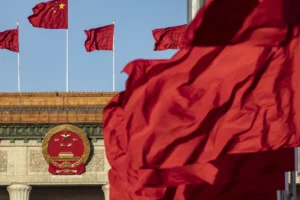
Perhaps the most revealing passages concern how China was perceived to be interpreting the dispute. A cable from the U.S. Embassy in Beijing warned that Chinese officials saw opportunity in the discord. “This situation offers China an opportunity to benefit from European hedging,” the cable noted, adding that the tension could “amplify trans-Atlantic frictions.”
In other words, even if a stronger U.S. presence in Greenland complicated China’s Arctic ambitions, the broader damage to Western cohesion was seen as a strategic gain.
Greenland and the New Arctic Reality
Beneath the diplomatic drama lies a deeper transformation. Climate change is rapidly reshaping the Arctic, opening new shipping routes and intensifying competition over minerals, infrastructure, and military positioning. Greenland sits at the center of this shift, its strategic value rising as the ice retreats.
The cables do not merely document a dispute over territory. They capture a moment when allies confronted the possibility that the assumptions underpinning the post Cold War order no longer apply. The Arctic, once treated as a distant frontier, has become a proving ground for how power, partnership, and trust will be exercised in a more contested world.
In that sense, the private words recorded in the cables are as telling as any public declaration. They reveal an alliance quietly asking itself whether it is prepared for the new realities taking shape at the top of the world.
RELATED STORIES:
- Europe Moves as Washington Talks, NATO Troops Join Denmark in Greenland
- Trump Wants Greenland. NATO Is Now the Story.
- Europe Stands Firm on Sovereignty as Greenland Tensions Escalate
- Trump Threatens Tariffs Over Greenland, Forcing Europe Into a High-Stakes Test of Alliance Unity
- Canada’s New Playbook: How Mark Carney is redefining Canada’s place in a fractured world
 Follow SDG News on LinkedIn