A deeply consequential shift in global diplomacy is unfolding in Zambia, where lifesaving HIV/AIDS assistance is now being positioned as leverage in negotiations over critical mineral access.
The development marks one of the clearest and most troubling examples yet of a purely transactional approach to international partnerships, where humanitarian support is no longer treated as a moral imperative, but as a bargaining chip in pursuit of strategic and economic gain.
A Lifeline Turned Into Leverage
For Zambia, the stakes are immediate and existential.
Approximately 1.3 million people depend on daily HIV treatment supported by U.S.-funded programs. For decades, these initiatives have been a cornerstone of global health progress, helping transform HIV from a death sentence into a manageable condition and stabilizing entire communities.
Now, that lifeline is being placed at risk.
The United States is weighing whether to withhold or condition continued HIV/AIDS support unless Zambia agrees to terms that would expand U.S. access to its mineral wealth and align more closely with American strategic interests.
The implications are stark. Any disruption to treatment programs would not unfold gradually. It would trigger immediate consequences, including rising infections, treatment interruptions, and preventable deaths, particularly among the most vulnerable populations.
Redefining the Meaning of Partnership
At the center of the negotiations is a proposed multi-year funding agreement that would provide significant health support. But the terms represent a departure from precedent.
Beyond expectations that Zambia increase its own health spending, the agreement is linked to broader economic concessions tied to the country’s reserves of copper, cobalt, and lithium, minerals that are essential to the global energy transition and increasingly central to geopolitical competition.
This is not traditional development assistance. It is conditional engagement, where access to critical resources and alignment with strategic priorities are being directly tied to the continuation of lifesaving aid.
For many observers, the shift raises urgent ethical questions.
When access to medicine becomes contingent on resource negotiations, the boundary between partnership and coercion begins to blur.
A Precedent With Global Consequences
Zambia’s position is uniquely difficult. It must weigh the immediate health needs of its population against the long-term sovereignty of its natural resources and economic future.
But this is not just Zambia’s dilemma.
If this model takes hold, it could reshape how global health assistance is delivered worldwide. Countries reliant on external funding for essential services may find themselves navigating increasingly complex and politicized negotiations, where humanitarian needs are subordinated to strategic interests.
Such a precedent risks undermining decades of trust built between donor nations and recipient countries. It could also weaken the very systems that have made global progress against HIV/AIDS possible.
Minerals, Power, and the New Global Order
The backdrop to this moment is a rapidly intensifying competition for critical minerals, driven by the global shift toward clean energy and advanced technologies.
Zambia, with its vast reserves, has become a strategic prize.
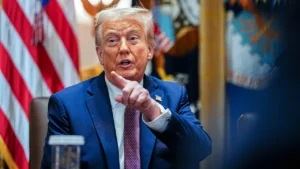
In this context, the Trump administration’s approach reflects a broader recalibration of foreign policy, one that prioritizes direct economic returns and geopolitical advantage over traditional frameworks of alliance-building and development cooperation.
But the method matters.
Leveraging public health programs in pursuit of these goals introduces a level of risk and moral complexity that extends far beyond resource access. It signals that even the most foundational forms of international support are no longer insulated from geopolitical bargaining.
A Defining Test for Global Leadership
This moment will test not only Zambia’s leadership, but the broader international system.
Will global health remain a shared priority, protected from political negotiation? Or will it become another arena for transactional diplomacy, where the value of human life is weighed against strategic interests?
The answer will shape far more than a single agreement.
It will define the future of international partnerships in an era where power, resources, and survival are becoming increasingly intertwined.
RELATED STORIES:
- Why Investing in Nature-based Solutions Matters Now
- Trump Officials Target Green Nonprofits Ahead of Earth Day
- Global Coalition Proposes Levies on Premium Air Travel to Fund Climate Resilience
- Youth Guide Unveils Sustainable Practices for Critical Minerals in a Clean Energy Shift
- Sharp declines in critical minerals prices mask risks of future supply strains as energy transitions advance
 Follow SDG News on LinkedIn