The Hormuz Crisis Reveals a Changing Middle East Order
As tensions around the Strait of Hormuz continue to destabilize global energy markets and maritime security, a new geopolitical fault line is emerging behind closed doors: the increasingly complex relationship between the United States and Saudi Arabia.
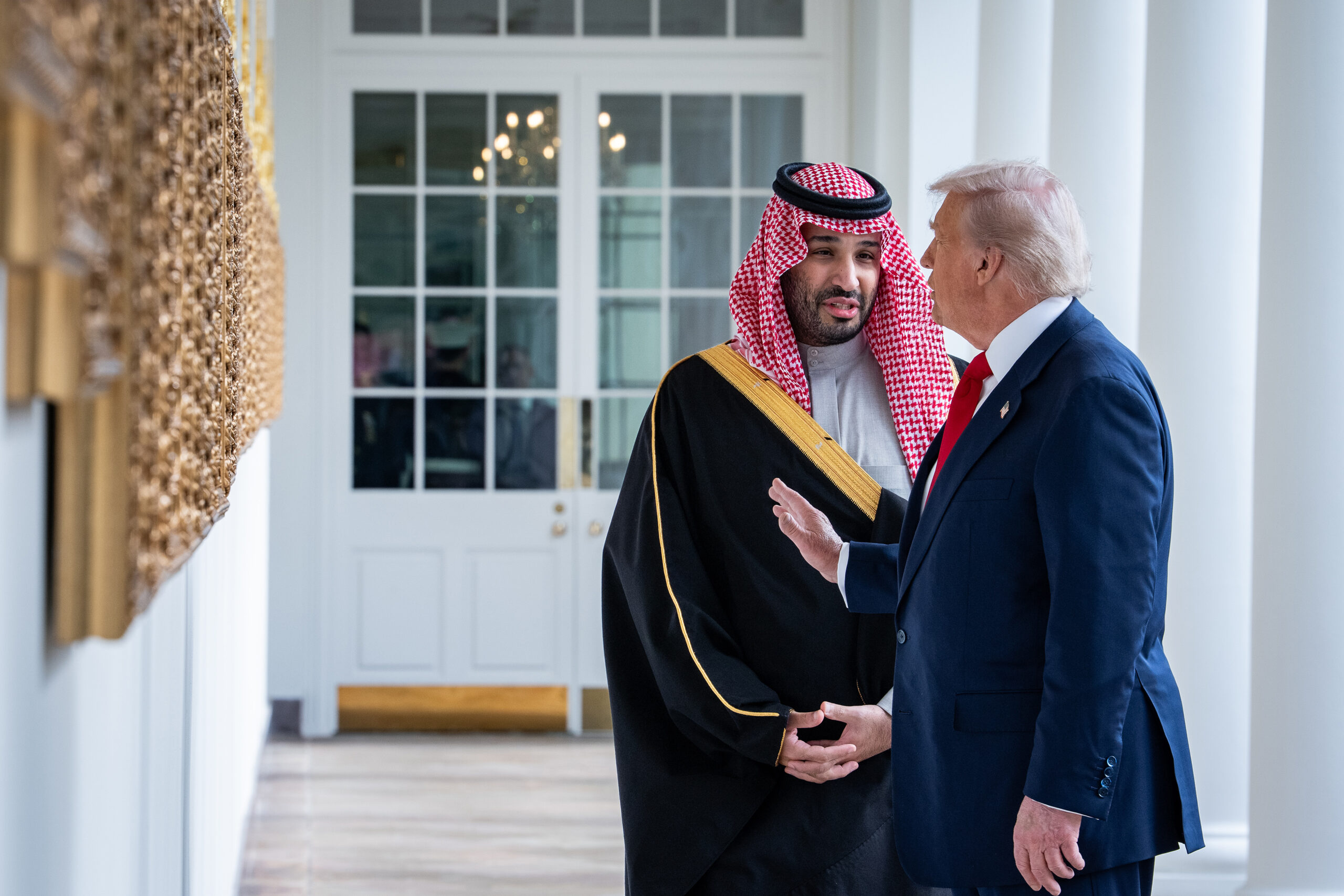
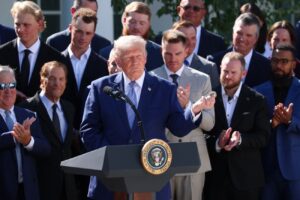
According to reports published this week, President Donald Trump quietly halted “Project Freedom” — a U.S.-led military initiative designed to escort commercial vessels through the Strait of Hormuz — after Saudi Arabia refused to allow American forces access to its airspace and military bases.
The development represents a striking moment in Middle East diplomacy.
For decades, the U.S.-Saudi relationship has been anchored by a relatively straightforward exchange: American security guarantees in return for regional stability and energy cooperation. But the current crisis suggests Gulf powers are increasingly unwilling to be drawn into direct confrontation with Iran — even under pressure from Washington.
The Strait That Powers the Global Economy
The Strait of Hormuz remains one of the most strategically important waterways on Earth.
Roughly one-fifth of the world’s oil supply passes through the narrow maritime corridor connecting the Persian Gulf to the Arabian Sea. Any disruption immediately reverberates through global markets, affecting inflation, shipping costs, energy security, and geopolitical stability worldwide.
The current crisis stems from the broader U.S.-Iran conflict that escalated earlier this year following coordinated U.S. and Israeli strikes on Iranian military and nuclear infrastructure. Iran subsequently moved to restrict maritime transit through Hormuz, leading to severe disruptions in commercial shipping.
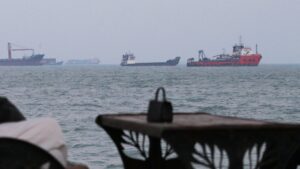
Shipping intelligence firms now estimate that thousands of crew members and more than a thousand vessels have been stranded across the Gulf region amid the instability.
Saudi Arabia Chooses Stability Over Escalation
What makes this moment particularly consequential is not simply the military standoff itself, but Saudi Arabia’s apparent strategic calculation.
Despite reportedly receiving direct appeals from Trump, Crown Prince Mohammed bin Salman and Saudi leadership declined to support the operation, fearing it could provoke a broader regional war and jeopardize fragile diplomatic efforts with Tehran.
The decision reflects a broader transformation underway across the Gulf.
Over the last several years, Saudi Arabia has increasingly pursued a foreign policy rooted in strategic autonomy — balancing its security partnership with the United States while simultaneously rebuilding ties with regional rivals, including Iran and China.
The kingdom’s Vision 2030 economic transformation agenda depends heavily on long-term regional stability, foreign investment, tourism growth, and mega-project development. A prolonged military escalation in the Gulf would threaten those ambitions.
In many ways, the Saudi response signals that Gulf powers may no longer automatically align with Washington’s military calculations.
Rising Risks for the Global Economy
The economic consequences of the Hormuz crisis are already being felt.
Oil prices have swung sharply in recent days amid uncertainty over shipping access and fears of broader conflict escalation. Fuel prices in several countries have surged, while shipping and insurance costs continue climbing.
Major shipping operators have warned that prolonged instability could trigger secondary inflationary pressures across global supply chains.
For developing economies already struggling with debt, inflation, and climate vulnerability, another major energy shock could prove devastating.
Small island developing states and import-dependent nations are especially exposed to disruptions in energy and food prices — underscoring how geopolitical instability in one strategic corridor can rapidly become a global sustainable development challenge.
A New Multipolar Reality
The unfolding Hormuz crisis is also exposing the limits of traditional geopolitical assumptions.
Rather than lining up behind a singular U.S.-led strategy, regional powers are increasingly pursuing independent calculations shaped by economics, domestic priorities, and long-term strategic positioning.
The Gulf itself is becoming more multipolar.
Saudi Arabia, the UAE, Qatar, Turkey, Iran, China, India, and even smaller regional actors are all maneuvering within a far more fragmented international system than existed during previous Middle East crises.
That reality presents both risks and opportunities.
On one hand, fragmentation can complicate coordinated responses during moments of crisis. On the other, it may also create space for diplomacy, de-escalation, and more regionally driven solutions.
For now, however, the Strait of Hormuz remains one of the most volatile flashpoints in the world — and a reminder that global resilience is increasingly inseparable from geopolitical stability.
 Follow SDG News on LinkedIn