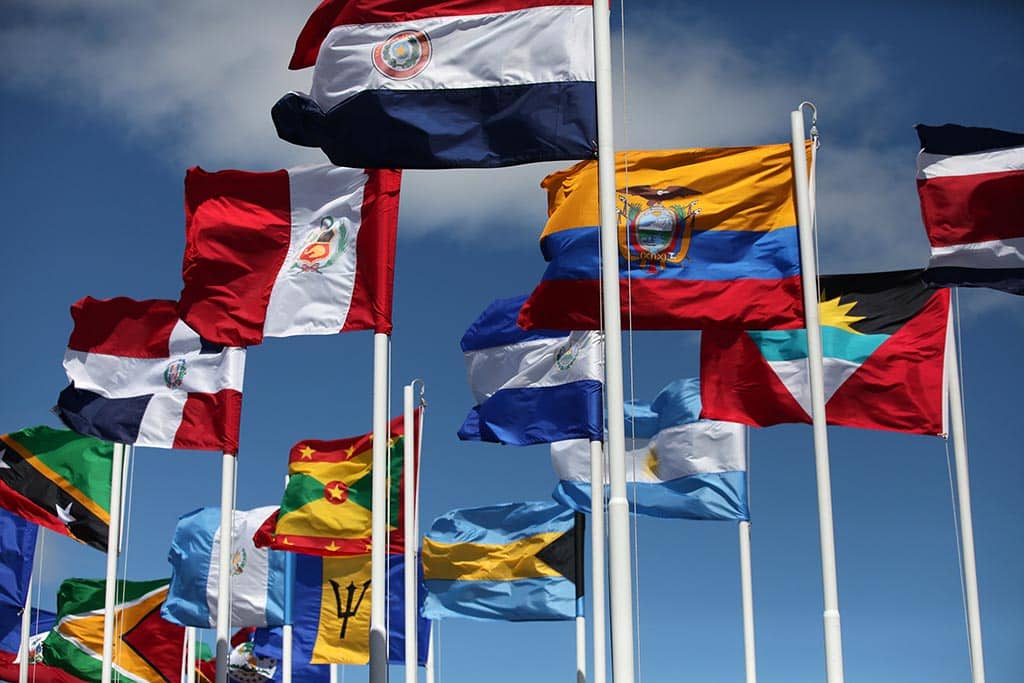
Small Island Developing States (SIDS) are confronting a convergence of climate pressures that threaten their long-term viability, as new UNCCD findings show SIDS drought and land loss accelerating at a scale unseen in previous decades. An information brief released during CRIC23 in Panama reports that 17 percent of SIDS land now endures at least six months of extreme drought annually, up from just 2 percent six decades ago. Nearly seven in ten people across these islands are now exposed to drought, underscoring rising stress on food production, water supplies and public health ahead of UNCCD COP17 in Mongolia.
Context and Significance
The brief situates SIDS at the leading edge of global climate vulnerability. With only a narrow resource base and limited arable land, the loss of even small areas of productive soil carries outsized consequences for food systems, energy access and infectious disease exposure. Although SIDS account for just 1 percent of the world’s population, they host over 20 percent of global biodiversity, linking their land degradation to wider consequences for coastal protection, pollination, water cycling and ecosystem resilience. As drought intensifies and climate extremes multiply, institutions across SIDS face mounting pressure to adapt governance structures, safeguard natural systems and address disruption that disproportionately affects women and girls.
Details from the Announcement
The UNCCD brief highlights rapid change across SIDS. Extreme drought exposure has increased eightfold since the 1960s, driven by climate change, urbanization, unsustainable agriculture and extractive industries. Food security is undermined by low soil fertility, high input costs, and exposure to droughts, cyclones and salinization. Most SIDS cannot meet domestic food demand, and the triple burden of malnutrition—undernourishment, micronutrient deficiency and obesity—complicates national responses.
Many of the region’s land management challenges trace back to colonial-era systems. In the Caribbean, tenure insecurity linked to historic plantation and forestry industries discourages investment in sustainable land use. In the Pacific, communities retaining ancestral territory rights now face accelerated urban expansion consuming scarce arable land. Water scarcity has intensified as well, with five SIDS falling below 1,000 m³ per person per year and three facing absolute scarcity under 500 m³.
Development finance remains limited. Between 2016 and 2023, only USD 487 million was directed to SIDS for desertification, land degradation and drought, and 65 percent of that funding went to just five countries: Papua New Guinea, Haiti, Dominican Republic, Solomon Islands and Fiji. Technical capacity constraints also hinder progress, as many local institutions lack access to high-resolution land data and staff needed to implement nature-based solutions.
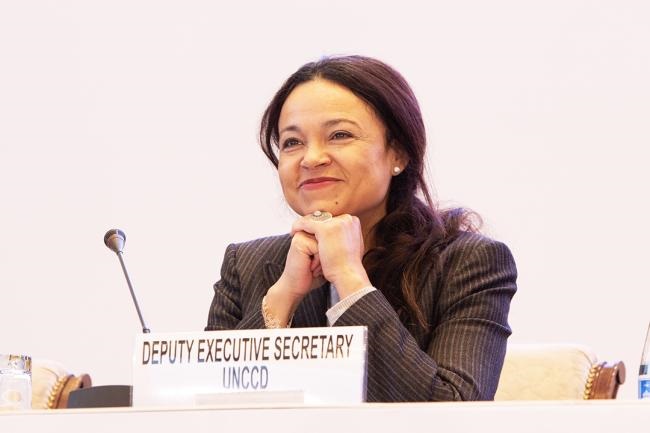
“Small Island Developing States remind us that taking care of our land is an existential matter. We must urgently transform our food systems and align our policies to harness land as the basis for sustainable development, as a matter of security, and as a climate and biodiversity solution. As the world sees more extreme weather and climate events, it is imperative we invest in healthy land to reduce the vulnerability of our communities in SIDS and beyond.”
Andrea Meza, Deputy Executive Secretary, UNCCD
Governments and communities are emphasizing land-use planning as a central tool for resilience.

“Spatial planning is a powerful tool: it helps protect healthy land, reduces conflict over limited resources, and strengthens resilience to drought and climate change,” said Fred Nicholas of the Cook Islands. “But its success depends on government agencies, traditional leaders, and communities working together to sustainably manage land, aquifers, and coastal areas through a true ridge-to-reef approach.”
Fred Nicholas, Cook Islands
SIDS leaders are also calling for stronger collaboration.
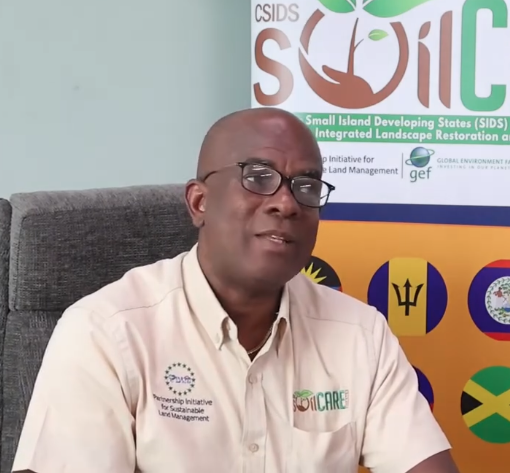
“SIDS know first-hand the brutal impacts of climate-related disasters, like the devastation hurricane Melissa recently caused in Jamaica,” said Calvin James, coordinator of the UNCCD SIDS Forum. “We must speed up land and drought action in our territories by exchanging good practices, sharing lessons learned, and raising awareness of our unique challenges and opportunities. We see the SIDS forum as a milestone towards COP17, where we hope that Parties formally recognize Small Island Developing States as a unified voice.”
Calvin James, Coordinator, UNCCD SIDS Forum
Implications for Policy, Finance, and Governance
The pressures described in the UNCCD brief highlight structural vulnerabilities that will shape national policy across SIDS. Food and water security strategies must integrate drought-resilient agriculture, indigenous agroforestry and improved soil management. Land governance remains central, requiring reforms that address tenure insecurity in the Caribbean and urban encroachment in the Pacific. As SIDS drought and land loss continue to intensify, ministries overseeing agriculture, planning, water, environment and finance will need coordinated approaches that reflect the interconnected hazards.
Financing remains a critical constraint. The USD 487 million allocated over seven years falls far short of the scale required for land restoration, water management and institutional strengthening. MDBs and development partners face growing expectations to adjust financing models for micro-scale economies with limited land and high exposure to climate extremes. High-resolution data, technical capacity and long-term institutional support will be essential components of any scaled response.
Regional and Global Relevance
SIDS serve as a bellwether for the global convergence of climate, biodiversity and development challenges. Their experience illustrates how land degradation can accelerate food insecurity, public health stress and economic disruption. Because SIDS hold more than one-fifth of global biodiversity on less than half a percent of the world’s land area, their degradation carries international ecological consequences. The findings in the UNCCD brief reinforce emerging UNFCCC and CBD discussions on integrating climate and biodiversity implementation and highlight gaps in global financing and governance frameworks.
The timing of the brief, ahead of COP17 in Mongolia, adds diplomatic weight. SIDS have intensified calls for recognition as a unified negotiating bloc, seeking stronger global support for land restoration, drought resilience and nature-based solutions. The forthcoming Global Land Outlook on SIDS is expected to inform these negotiations with additional evidence.
What Comes Next
SIDS are preparing for a decisive year of negotiations as COP17 approaches, using the new UNCCD data to advocate for land governance reforms, stronger adaptation financing and recognition of their unique vulnerabilities. Governments will continue refining LDN targets—already adopted by 26 SIDS—and may expand traditional and indigenous land-use practices to strengthen resilience. Development partners face rising pressure to address financing disparities and to support institutions in improving land data, planning systems and drought management. The Global Land Outlook on SIDS, expected before COP17, will provide further analysis to guide diplomatic and policy decisions.
RELATED STORIES:
 Follow SDG News on LinkedIn