July 4 Ultimatum Signals a More Confrontational Era for the Transatlantic Economy
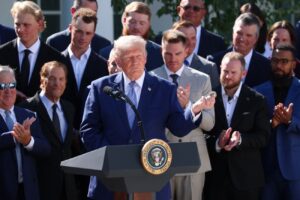
The fragile trade truce between the United States and the European Union is entering a volatile new phase after U.S. President Donald Trump warned that Europe faces “much higher” tariffs if it fails to ratify and implement a landmark trade agreement by July 4.
The ultimatum follows mounting tensions between Washington and Brussels over the pace of implementation of the 2025 U.S.-EU trade framework negotiated at Turnberry, Scotland. The agreement was designed to prevent a wider transatlantic trade war by establishing a 15% tariff framework on most European exports while securing major European commitments to purchase American energy and increase investment in the United States.
Trump’s latest warning came after a call with European Commission President Ursula von der Leyen, during which both sides publicly emphasized continued cooperation. Trump nevertheless accused the European Union of moving too slowly to formally implement the agreement, particularly around reducing tariffs on American industrial and agricultural goods.
The immediate flashpoint centers on automobiles.
Earlier this month, the Trump administration threatened to increase tariffs on European cars and trucks from 15% to 25%, sending shockwaves through European markets and political circles. German automakers including BMW, Mercedes-Benz, Porsche, and Volkswagen saw shares fall amid fears that a deeper trade confrontation could severely impact Europe’s manufacturing sector.
While the White House has now delayed those increases until July 4 — the 250th anniversary of American independence — the symbolic deadline underscores how trade policy has become deeply intertwined with Trump’s broader political narrative around sovereignty, economic nationalism, and American industrial revival.
Europe’s Slow-Moving Machinery
Part of the tension stems from the European Union’s own institutional complexity.
Although the European Parliament voted earlier this year to support the trade framework, the agreement still requires additional negotiations and formal ratification procedures between EU institutions and member states. European lawmakers have also pressed for safeguards that would allow the bloc to suspend concessions if Washington deviates from the agreement again.
The European Parliament reportedly paused portions of the ratification process amid broader tensions with the Trump administration, including disputes over Greenland and repeated tariff threats against Europe.
European Trade Commissioner Maroš Šefčovič has since described recent negotiations as showing “considerable progress,” while influential European lawmakers indicated that implementation talks are accelerating ahead of another round of negotiations scheduled later this month.
Still, the episode has deepened unease across Europe about the reliability of the United States as a long-term economic and geopolitical partner.
A Larger Reordering of the Global Economy
The dispute reflects far more than disagreements over tariffs.
At its core, the confrontation reveals a broader struggle over industrial competitiveness, manufacturing sovereignty, energy security, and geopolitical influence in an increasingly fragmented global economy.
Trump’s second administration has embraced tariffs as both an economic weapon and a negotiating instrument, arguing that decades of globalization weakened American manufacturing capacity and hollowed out strategic industries. The administration has repeatedly framed tariffs as necessary to pressure foreign companies into relocating production and investment to the United States.
For Europe, the challenge is becoming increasingly strategic.
European leaders are simultaneously attempting to reduce dependencies on both China and the United States while accelerating trade relationships with regions such as India and Latin America. The goal is not simply economic diversification, but resilience in an era where major powers are increasingly weaponizing trade, technology, and supply chains.
Legal Challenges and Economic Risks
The standoff also arrives amid growing legal uncertainty surrounding Trump’s tariff agenda.
Recent U.S. court rulings have challenged the administration’s authority to impose sweeping emergency tariffs, including decisions by both the Supreme Court and trade courts that questioned the legal basis for several of Trump’s global tariff measures. Nevertheless, many tariffs remain in effect while appeals proceed through the courts.
Economists continue warning that prolonged tariff conflicts could disrupt global supply chains, raise consumer costs, weaken industrial investment, and slow global economic growth. Recent academic research examining renewed trade conflicts projected significant employment losses and export declines under escalating tariff scenarios, particularly affecting low-income workers and export-oriented industries.
July 4 as a Political and Economic Test
By tying the deadline to America’s Independence Day celebrations, Trump has transformed the trade dispute into a symbolic demonstration of leverage and national strength.
For Europe, the coming weeks may determine whether the transatlantic alliance can stabilize its economic relationship or whether both sides enter a more confrontational era defined by retaliatory tariffs, industrial competition, and accelerating geopolitical fragmentation.
What began as a negotiated trade settlement increasingly appears to be a temporary pause in a much larger struggle over who will shape the rules, industries, and alliances of the emerging global economy.
RELATED STORIES:
- Tariff Turmoil: Trump Spares EU and Britain, but Global Trade Faces New Uncertainty
- The Red Line Moment: Trump’s 100 Percent Tariff Tests the Limits of Trade Power
- Breaking News: Supreme Court Blocks Trump’s Tariff Powers, Sending Shockwaves Through U.S. Diplomacy
- Trump Tariffs Spark Warnings Over U.S. Clean Energy Slowdown
- Tim Mohin: The Climate Impact of the ‘One Big Beautiful Bill’
 Follow SDG News on LinkedIn