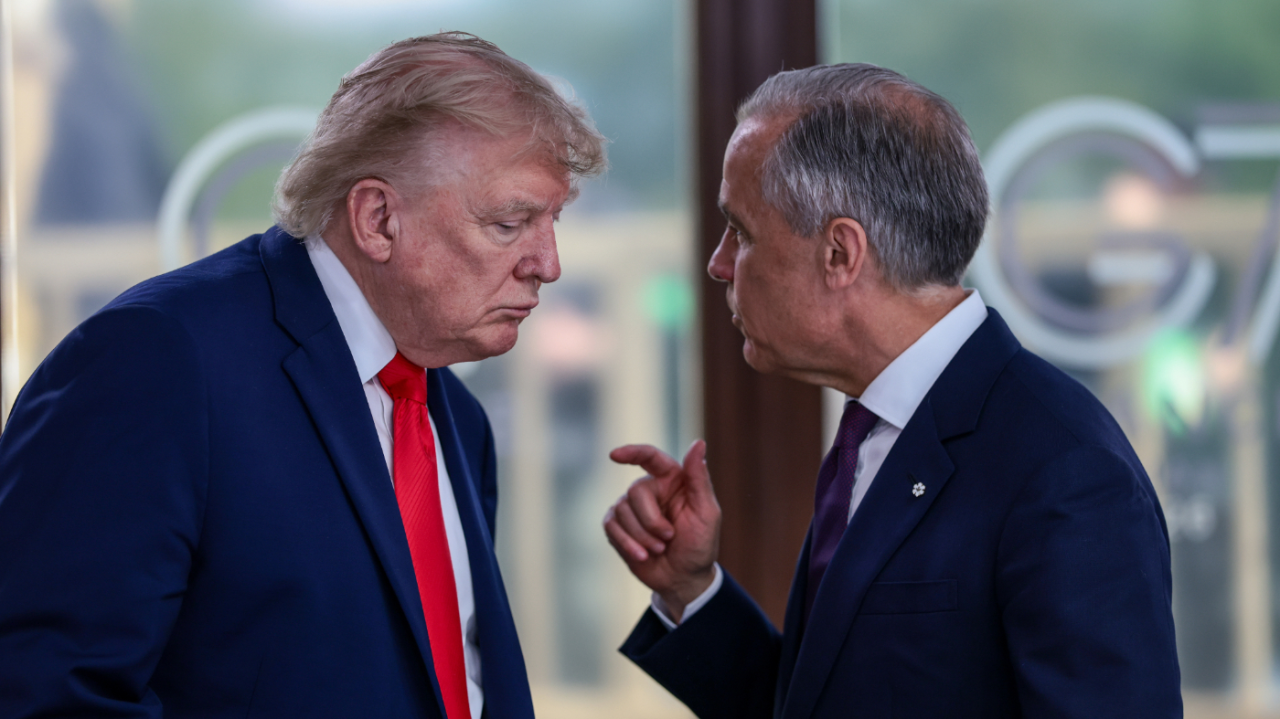
WASHINGTON — President Donald Trump has announced plans to impose 50% tariffs on most Canadian imports, significantly escalating the trade dispute between the United States and one of its largest trading partners. The measures, which the administration says would take effect after a 30-day negotiating period, represent the latest use of tariffs as a central element of U.S. trade policy.
The White House said the tariffs are intended to address what it describes as longstanding Canadian trade practices that disadvantage American producers, citing concerns involving automobiles, dairy products and alcoholic beverages. Certain sectors—including energy, critical minerals, and products already subject to separate tariffs on steel and aluminum—would remain exempt.
Canadian Prime Minister Mark Carney rejected the move, arguing it is inconsistent with the spirit of the United States-Mexico-Canada Agreement (USMCA), while reiterating that Canada will continue negotiations with Washington and take steps to protect Canadian workers and businesses.
Implications for North American Trade
The proposed tariffs add to recent tensions in one of the world’s largest bilateral trading relationships. The United States and Canada exchange hundreds of billions of dollars in goods annually through highly integrated supply chains spanning manufacturing, agriculture, energy and consumer products.
According to The New York Times, the latest action reflects the Trump administration’s broader strategy of using tariffs not only to address trade imbalances but also as a principal tool of economic policy in negotiations with major trading partners. That approach has become a defining feature of the administration’s economic agenda and has expanded well beyond traditional trade enforcement.
For businesses operating on both sides of the border, the proposed tariffs could require adjustments to sourcing strategies, pricing and investment decisions should they ultimately take effect.
Canada Continues Negotiations
Prime Minister Carney said Canada will continue engaging with the United States during the 30-day negotiating window while preparing measures to protect Canadian industries if necessary.
The BBC reported that Ottawa is seeking to balance a firm defense of Canadian economic interests with continued diplomatic engagement, reflecting Canada’s effort to preserve one of the world’s closest trading relationships despite the latest dispute.
Canadian officials have not ruled out retaliatory measures but have indicated that negotiations remain their preferred course.
Potential Economic Effects
Economists and businesses will be closely watching how the proposed tariffs could affect inflation, manufacturing costs and cross-border supply chains.
Many North American industries—including automotive manufacturing, construction materials, food production and consumer goods—depend on components that cross the U.S.-Canada border multiple times during production. If implemented, the tariffs could increase costs for manufacturers and importers, with downstream effects depending on how businesses adjust pricing, sourcing and production.
Because the tariffs have not yet taken effect, the magnitude of any economic impact remains uncertain and will depend in part on whether negotiations produce a revised agreement before implementation.
Trade Policy and Diplomacy
The latest announcement highlights the increasingly prominent role tariffs have assumed within U.S. foreign economic policy.
The Guardian reported that the administration has framed the measures as a response to what it considers unfair Canadian trade practices, while Canadian leaders continue to argue that the proposed tariffs are incompatible with the framework established under the USMCA.
The coming weeks will be closely watched by governments, businesses and financial markets as negotiators seek to determine whether an agreement can be reached before the proposed tariffs are implemented. The outcome will help shape not only U.S.-Canada economic relations, but also broader expectations for how the Trump administration may approach future trade negotiations with allies and major trading partners.
RELATED STORIES:
 Follow SDG News on LinkedIn