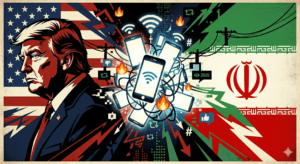
By rejecting the Sustainable Development Goals, the U.S. president may have fractured the postwar consensus and set the stage for new global leadership.
UNITED NATIONS HEADQUARTERS, New York, September 23, 2025
President Donald Trump strode into the United Nations General Assembly today and delivered the kind of speech that will be remembered for decades. It was not cautious or diplomatic. Instead, Trump launched a broadside against the very institutions gathered before him, casting doubt on the Sustainable Development Goals, dismissing climate action as a hoax, and urging nations to retreat behind their borders.
The effect was immediate. In a single address, the United States signaled that it is no longer committed to the common agenda that has guided international cooperation for eighty years. Trump’s message was stark: sovereignty first, global rules second. What he offered was not a policy adjustment but a rupture, a declaration that America will chart its own course even if it means abandoning frameworks built since 1945
A Break With the Past
This was not the rhetoric of a reluctant partner. It was the rhetoric of a country walking away. Trump accused the U.N. of promoting a globalist agenda that corrodes sovereignty. He dismissed Agenda 2030, the global blueprint for poverty reduction and climate action, as incompatible with U.S. interests. Where past presidents tempered criticism with gestures toward common ground, Trump tore down the scaffolding of consensus without apology.
For the United Nations, the fallout may be swift. Agencies dependent on U.S. funding face uncertainty. Partnerships tied to American endorsement could collapse. Countries that once relied on Washington to anchor global efforts may be forced to seek new alignments.
Momentum in the Global South
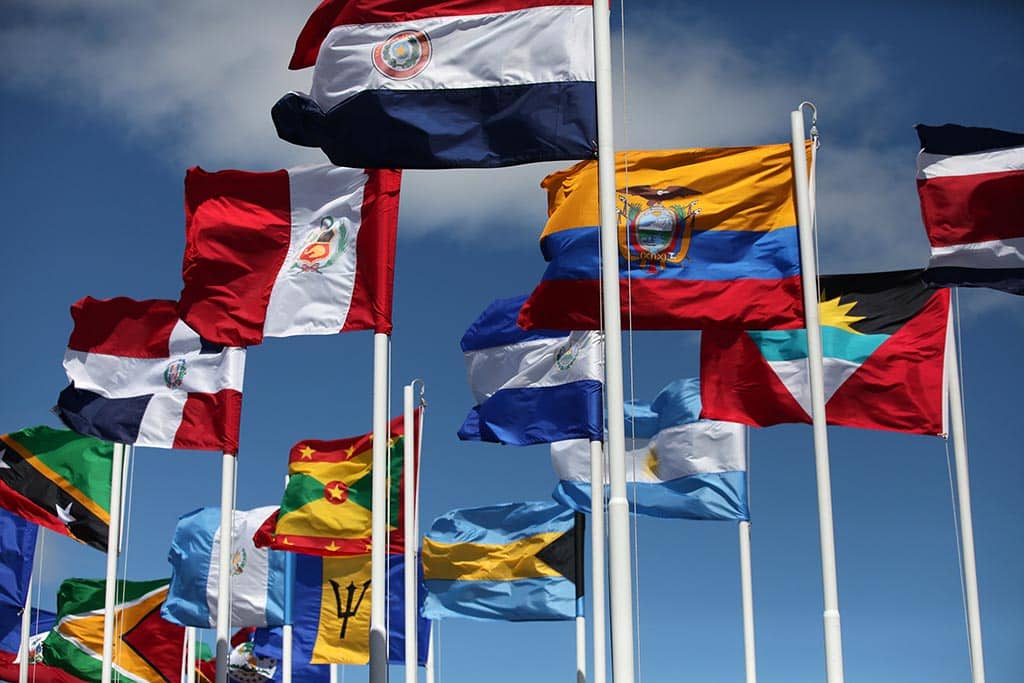
But if Trump’s words marked an unraveling, they also unleashed momentum. Around the world, leaders are treating America’s rejection as a catalyst rather than an end. Nations in Africa, Latin America, and Asia are stepping forward with new confidence, positioning the Global South as a driver of cooperation. Europe is preparing to double down on climate and development leadership. Regional alliances are strengthening their resolve to prove that multilateralism does not rest on any one capital.
American Values Without Washington
The Sustainable Development Goals remain universal. They were never meant to serve one nation alone but to guide humanity as a whole. While the U.S. government now rejects them, the goals represent values that have long defined the American experiment: equality, justice, opportunity, and care for one another. Those principles, etched into the nation’s identity for nearly 250 years, continue to live in its citizens, communities, and institutions.
For governments, the SDGs inform policy. For citizens, they reflect values. Trump’s words may weaken official U.S. policy, but they cannot erase that deeper legacy. Across the country, cities, universities, and businesses are likely to continue advancing climate action, gender equality, and poverty reduction in ways that align with the global goals, even without federal backing.
The World Moves On
Trump’s return to the General Assembly did not reaffirm American leadership. It buried the assumption that the United States would always stand as guarantor of the system it helped create. That shock will reverberate through every capital and every institution working toward the 2030 goals. Yet it may also galvanize others to step forward, proving that cooperation is larger than any single government.
Historians may one day mark this day as the hinge moment when the United States government walked away and the rest of the world discovered that its project was strong enough to stand without it. What was intended as a retreat could become the spark that forces a fractured international system to reinvent itself for a new century.
The United States may have chosen sovereignty over solidarity, but the world now faces its own choice. Nations can follow Washington into isolation, or they can carry forward the spirit of cooperation born in San Francisco in 1945 and renewed in the SDGs in 2015.
If today marks the twilight of one era, it also opens the dawn of another. The future of multilateralism will not be decided in Washington. It will be co-written by the rest of the world.
Related Content: UNGA 80 Opens: Trump Descends on NYC, SDG Leaders Gather
 Follow SDG News on LinkedIn