HANOI — In a move that may signal a turning point for energy strategy across emerging markets, Vingroup has proposed abandoning what was set to be Vietnam’s largest liquefied natural gas power project—opting instead for a massive renewable energy buildout.
The decision is not being driven by climate ambition alone. It is being forced by geopolitics.
At the center of the shift is the escalating fallout from the 2026 Iran war, which has upended global energy markets and exposed the fragility of fuel-dependent economies. LNG prices have surged in recent weeks, with supply disruptions rippling through the Strait of Hormuz and key production hubs in the Middle East.
For Vingroup, the math no longer works.
In a document submitted to the Vietnamese government, the company warned that the planned 4.8 gigawatt LNG plant would require roughly $3.5 to $3.8 billion annually in fuel imports—placing significant strain on the country’s foreign exchange reserves.
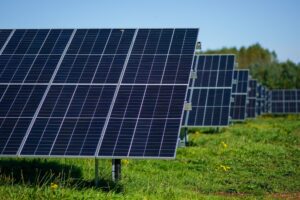
Instead, the conglomerate is proposing a $25 billion renewable energy project, supported by battery storage systems, that would fundamentally reshape Vietnam’s power mix.
A First Crack in the LNG Growth Story
The proposal marks one of the clearest signs yet that the Iran war is beginning to derail LNG expansion globally.
For years, liquefied natural gas was positioned as a “bridge fuel”—a scalable, lower-carbon alternative to coal that could power fast-growing economies across Asia. Vietnam, in particular, had leaned heavily into LNG, with plans for 16 plants by 2030.
Now, that strategy is under pressure.
With a significant share of global LNG flows disrupted by conflict in the Middle East, prices have surged to levels that are increasingly untenable for developing economies.
Across Asia, governments are being forced into uncomfortable trade-offs: some are reverting to coal to maintain energy security, while others are accelerating renewable investments to escape volatile global markets altogether.
Vingroup’s pivot suggests a third path—one where long-term energy independence outweighs short-term cost concerns.
Energy Security Becomes the New Climate Driver
What makes this moment distinct is the underlying motivation.
The shift toward renewables is no longer being framed primarily as a climate imperative. It is being driven by national security.
The Iran war has triggered one of the most severe energy disruptions in recent history, exposing how deeply global economies remain tied to fragile supply chains.
In response, governments and corporations alike are reassessing the value of localized, stable energy systems—wind, solar, and storage that are immune to geopolitical chokepoints.
Industry leaders increasingly expect the conflict to accelerate renewable investment globally, not because it is cheaper, but because it is more predictable.
The Cost of Transition—and the Cost of Inaction
Vingroup’s proposed renewable project is significantly more expensive upfront than the LNG plant it would replace. That reality underscores a broader challenge facing the global energy transition: clean energy may offer long-term stability, but it requires immediate capital and policy support.
The company has already signaled that government intervention—particularly in electricity pricing—will be critical to making the transition viable.
But the alternative may be even more costly.
As LNG markets tighten and volatility persists, countries that remain dependent on imported fuels risk exposure not just to price shocks, but to systemic economic instability.
A Signal to the Global Market
For global leaders and investors, the implications are clear.
This is no longer a theoretical debate about the future of energy. It is a real-time recalibration of risk.
What is unfolding in Vietnam is likely to be replicated across emerging markets: projects once deemed bankable under stable conditions are being re-evaluated in a world defined by geopolitical uncertainty.
And in that world, resilience—not cost—may become the defining metric.
The energy transition is no longer just about decarbonization.
It is about control.
RELATED STORIES:
- Canada Pulls Back on EVs as Carney Rewrites the Rules of Climate Power
- JPMorgan: Decarbonization and Sustainability Trends to Watch in 2025
- EU to Unveil Roadmap to End Russian Fossil Fuel Imports by 2027
- Vietnam’s First Blue Bond: IFC’s $150M Support to SeABank for Climate Finance Innovation
- ‘Resilience’ Replaces ‘ESG’ as the New Investment Buzzword Amid Political Scrutiny
 Follow SDG News on LinkedIn