Caracas woke to explosions and uncertainty. By nightfall in New York, Nicolás Maduro—Venezuela’s president—was in U.S. custody, set to face long-standing American drug-trafficking-related charges alongside his wife, Cilia Flores. The United States says the mission was a law-enforcement action. Venezuela calls it a kidnapping. The United Nations and the Organization of American States, meanwhile, are treating it as something larger: a stress test for the rules that keep geopolitical crises from sliding into open-ended conflict.
What happened and what Washington says it was doing
According to Reuters, President Donald Trump said the United States could “run” Venezuela until what he described as a “safe” transition, and warned a second strike was possible if remaining officials did not cooperate. U.S. officials have pointed to Maduro’s 2020 U.S. indictment and a broader security argument involving drug trafficking and transnational criminal networks. President Maduro has consistently denied criminal wrongdoing.
The operation has already widened regional tension rhetorically. Trump suggested Colombia and Mexico could face military action if drug flows are not reduced, injecting new volatility into an already fragile hemispheric security environment.
Caracas’ interim power shift—and the risk of a governing vacuum
In Caracas, Vice President Delcy Rodríguez has moved into an interim governing role backed by Venezuela’s top court and the military, according to AP, while senior officials insist President Maduro remains the country’s only legitimate president. The result is a constitutional grey zone: institutions still controlled by President Maduro loyalists, an interim leadership presented as temporary, and an opposition long arguing that President Maduro lacks democratic legitimacy.
For policymakers, the immediate concern is not only who governs, but whether fractured authority could trigger internal instability, border spillovers, or new displacement pressures across the region.
Multilateral alarm: sovereignty, force, and the “dangerous precedent” question
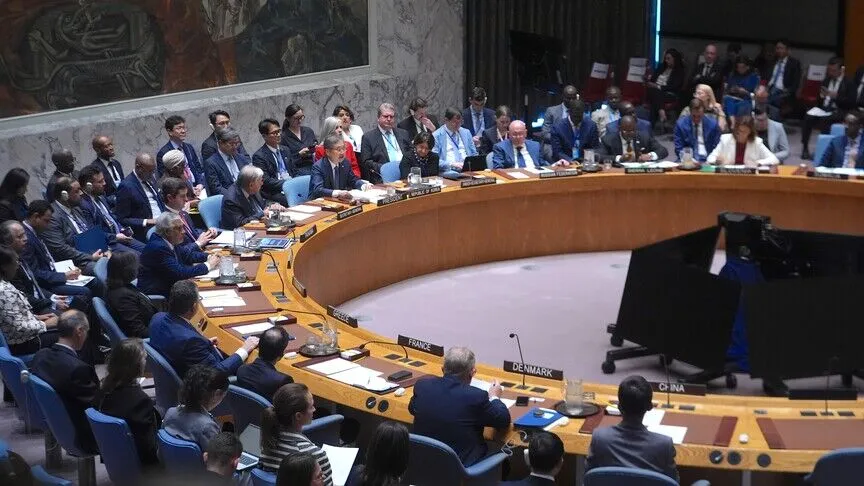
The UN Secretary-General has warned the U.S. action constitutes a “dangerous precedent,” emphasizing the need to uphold the UN Charter and international law. The UN Security Council is expected to debate the legality of the operation, though Washington’s veto power sharply limits formal outcomes. Legal experts cited by Reuters argue the action likely lacked a lawful basis absent UN authorization, Venezuelan consent, or a valid claim of self-defense under Article 51.
The Organization of American States has also moved quickly. Its Secretary General called for de-escalation, respect for international law, protection of civilian life and critical infrastructure, and announced that the OAS Permanent Council would be convened.
Regional reactions fracture—condemnation, pragmatism, and strategic hedging
A joint statement from Brazil, Chile, Colombia, Mexico, Spain, and Uruguay expressed deep concern and rejected unilateral military action in Venezuelan territory, urging a peaceful, non-interventionist approach consistent with international law. Their position reflects a long-standing regional sensitivity to external military intervention, even among governments critical of President Maduro’s rule.
Not all major governments, however, have rejected the U.S. action. Argentina’s president, Javier Milei, stopped short of condemnation, with his government reiterating that Nicolás Maduro lacks democratic legitimacy and framing the detention as a matter of criminal accountability rather than sovereignty. The United Kingdom has similarly avoided criticism. A spokesperson for Prime Minister Keir Starmer said London is closely monitoring developments while maintaining its long-standing position of not recognizing President Maduro as Venezuela’s legitimate leader. For diplomats, this quiet alignment—by omission rather than endorsement—highlights a widening divide between governments prioritizing territorial sovereignty and those emphasizing regime legitimacy and judicial accountability.
The human cost of the operation is also shaping diplomacy. Cuba said 32 of its citizens were killed during the raid, a claim that—if substantiated—adds a further layer of confrontation and raises questions about third-party involvement in Venezuela’s security apparatus.
Why this matters
This episode is no longer only about Venezuela’s political crisis. It is about whether the post-1945 rules governing state sovereignty hold when a major power asserts jurisdiction through force, and whether multilateral institutions retain meaningful influence when permanent Security Council members are directly involved.
For UN leaders and member states, the near-term agenda is clear: prevent further kinetic escalation, safeguard civilians and critical infrastructure, secure verifiable information about detainees, and preserve pathways for a credible, Venezuelan-led political process. For development, finance, and humanitarian actors, contingency planning is already underway—migration, energy market disruption, and regional fiscal stress are no longer abstract risks, but plausible second-order effects of a rapidly evolving crisis.
RELATED STORIES:
- Exclusive to Insiders: Peru’s Congress Removes President Dina Boluarte Amid Crime Wave and Corruption Scandals
- EU Adopts Sustainability Reporting Standard to Support Small Companies
- Brazil at the UN: Lula Confronts U.S. Pressure in Defiant Speech
- Peru’s Congress Removes President Dina Boluarte Amid Crime Wave and Corruption Scandals
- Trump Shakes the World: A U.N. Speech That Will Redefine Global Order
 Follow SDG News on LinkedIn