“There are 32 such countries globally, home to over half a billion people,” said H.E. Ms. Rabab Fatima, High Representative for the Least Developed Countries, Landlocked Developing Countries and Small Island Developing States, UN-OHRLLS. “They stem not just from being landlocked but from limited infrastructure, narrow export bases, and lack of access to finance.”
H.E. Ms. Rabab Fatima, High Representative for the Least Developed Countries, Landlocked Developing Countries and Small Island Developing States, UN-OHRLLS
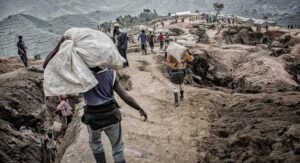
She noted LLDCs face deep structural disadvantages: 30% higher trade costs than coastal states, electricity access for just 61% of citizens (compared to 92% globally), and internet access for fewer than 40%.
“These are not just statistics. They reflect real human challenges,” she said.
Awaza Programme of Action: Roadmap for Change
H.E. Ms. Fatima called the Awaza Programme of Action “a milestone” to turn structural barriers into opportunities, but stressed that delivery depends on lawmakers.
“Parliaments have a decisive role,” she urged. “You are lawmakers, you are budget-makers — and champions of change. Your leadership is essential to ensure that the Awaza Programme delivers tangible and lasting results for the 600 million people of LLDCs.”
She called on MPs to align national strategies with the programme, secure financing, promote trade, support governance reforms, and establish dedicated parliamentary groups for implementation.
Parliament as a Bridge to Progress
UN General Assembly President Philémon Yang echoed the call, noting that “parliaments are essential to translating global commitments into measurable national progress.”
He said parliaments create the legal framework for infrastructure, innovation, and trade, while controlling funding for education, healthcare, and climate action. Yang also cited the International Court of Justice’s July 2025 ruling affirming climate action as a legal duty of all states.
“Parliaments monitor government performance and ensure the efficient use of public funds,” he said. “Beyond policy and budgets, they are the bridge between the State and citizens.”
Call for Stronger Cooperation
Yang urged stronger inter-parliamentary cooperation to tackle LLDC-specific challenges. “Let us strengthen this partnership between national parliaments and our global institutions,” he said, “so that we can deliver on the promise of sustainable development — a promise grounded in peace, prosperity, and dignity for everyone, everywhere.”


 Follow SDG News on LinkedIn