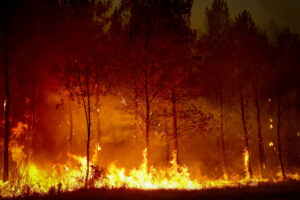
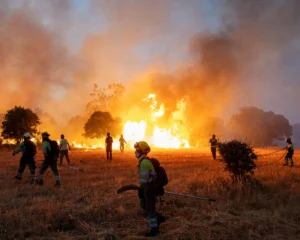
ÁVILA, Spain — The charred hills outside this historic city bear the marks of a summer firestorm that forced hundreds to flee with little more than the clothes on their backs. Crops were reduced to ash, homes were lost, and firefighters battled walls of flame for days. For Prime Minister Pedro Sánchez, scenes like these have become the defining image of a country on the front lines of the climate crisis.
This week, Sánchez responded with a sweeping ten-point plan to confront what he called the greatest test of Spain’s generation. His proposals, framed as both a moral and political imperative, seek to unify a divided nation while rallying Europe to act with greater urgency.
Mounting Pressures Across the Country
Spain has grown accustomed to summers of extreme heat, drought, and fire, but the scale of recent disasters has sharpened the sense of vulnerability. Over the past five years, tens of thousands of lives have been disrupted and billions of euros lost. This year’s fires alone destroyed more than 300,000 hectares of land, leaving scars on communities that may take decades to heal.
Sánchez said these tragedies should erase any lingering doubts about the gravity of the threat.
“There can be no more excuses or pauses, it is time to accelerate the ecological transition,” he told Spaniards, directly challenging those who continue to deny the crisis.
A Ten-Point Strategy for Resilience
At the center of the plan is the creation of a national civil protection agency to better coordinate responses during emergencies. A new network of climate shelters will be built across urban and rural areas to provide safe havens during extreme weather, particularly for the most vulnerable.
Other proposals include reforms in land and forest management, expanded firefighting resources, improved water resilience, and stronger support for sustainable agriculture. PM Pedro Sánchez emphasized that Spain must move beyond seasonal responses and embrace a culture of permanent preparedness.
Building a Pact for Unity
The prime minister called for a “state pact” that would bind together national and regional governments, farmers, scientists, unions, employers, and local councils in a shared framework. “There must be a pact built on solidarity,” PM Pedro Sánchez said, presenting the initiative as a national project to safeguard the country’s future.
A Regional and Political Test
Sánchez also extended the pact beyond Spain’s borders, inviting France and Portugal to collaborate and pressing European institutions to align resources with the scale of the threat. Yet at home, the proposal faces resistance. Opposition parties across the spectrum have questioned his record on past commitments, casting doubt on whether new pledges will lead to lasting change.
Even so, PM Pedro Sánchez framed the effort as a defining moment for Spain, warning that the country cannot afford delay in facing the dangers of a rapidly warming world.
Related Content: Norway Launches World’s First Full Carbon Capture and Storage Value Chain with $2B Government Investment
 Follow SDG News on LinkedIn