Marine resources seen as engine for growth, but governance, investment, and cooperation will determine outcomes
At dawn in coastal West Africa, the shoreline tells two stories. Fishing communities pull in ever smaller catches, their livelihoods eroded by overfishing, rising seas, and shifting ecosystems. At the same time, the same waters hold untapped potential: offshore wind, wave energy, blue carbon projects, and biotechnology that could fuel a new wave of economic growth.
A new monograph, Africa’s Blue Economy and Climate Change: Status and Emerging Pathways, maps this tension with unusual clarity. Commissioned as part of the African Union’s Agenda 2063 development vision, it details both the fragility of Africa’s marine and inland waters and their central role in the continent’s economic future.
The promise and the peril
The blue economy — defined as the sustainable use of ocean and aquatic resources for growth and jobs while protecting ecosystems — could transform Africa’s trajectory. Fisheries, aquaculture, marine transport, coastal tourism, and renewable energy together account for billions in potential GDP and employment. Yet unchecked exploitation has placed these resources under strain.
Pollution, habitat destruction, and illegal or unreported fishing are compounding the effects of climate change. Rising sea levels, acidification, and ecosystem shifts threaten food systems and coastal infrastructure. For nations with long coastlines and large inland lakes, these pressures hit directly at sovereignty and stability.
“Investment in a sustainable blue economy is necessary to support economic diversification and the security of food and livelihoods,” the report notes, warning that business-as-usual approaches risk deepening inequality and ecological loss.
Emerging opportunities
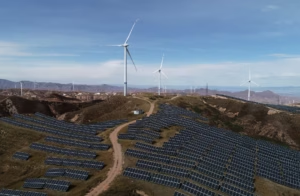
Even as vulnerabilities mount, the monograph points to practical entry points. Renewable energy looms largest. Offshore wind and wave energy could meet surging local demand while reducing reliance on imported fuels. Blue carbon — using mangroves, seagrasses, and wetlands as natural carbon sinks — is gaining traction as both a conservation and finance strategy.
Marine biotechnology is another frontier, with potential applications in pharmaceuticals, food production, and industrial processes. Diversifying away from reliance on oil and single-resource fisheries toward biotechnology, aquaculture, and ecotourism could create more resilient economies.
The authors stress that inclusive governance is key. Without local participation, benefits risk being captured by elites or foreign investors. Ensuring that small-scale fishers, indigenous groups, and coastal women’s cooperatives share in decision-making is described as central to both legitimacy and long-term success.
Governance and cooperation gaps
Governance is identified as the defining challenge. Fragmented policies, weak enforcement, and limited capacity leave shared resources exposed. Illegal, unreported, and unregulated fishing alone costs the continent billions annually.
The report calls for harmonised regional frameworks and stronger cooperation across exclusive economic zones. Shared enforcement, data exchange, and joint monitoring are highlighted as critical. International partnerships — with development banks, multilateral organisations, and bilateral donors — will be needed to secure financing and technical expertise.
Climate-resilient infrastructure is another priority. Ports and coastal cities must adapt to higher seas and more violent storms, integrating clean energy, waste management, and disaster risk planning. Building resilience now, the report argues, will save far greater costs later.
What leaders should take away
For African policymakers, diplomats, and global partners, the message is clear: the blue economy can drive diversification, stability, and growth, but only with deliberate choices. Three imperatives stand out:
- Finance: Mobilise capital through instruments such as blue bonds, concessional funding, and blended finance models that de-risk private investment.
- Governance: Invest in enforcement capacity, regional institutions, and inclusive governance mechanisms that give voice to vulnerable communities.
- Adaptation: Embed climate resilience into every sector — fisheries, ports, tourism, and energy — to safeguard long-term viability.
The monograph concludes that Africa’s waters will either become a source of fragility or a foundation for transformation. With nearly 40 percent of Africans living in coastal areas and millions dependent on fisheries, the stakes are high.
For global leaders preparing for upcoming climate and development negotiations, Africa’s blue economy is more than a regional issue. It is a test of whether the international community can align climate finance, trade, and governance with the realities of those most exposed. The outcome will reverberate far beyond Africa’s shores.
Read the full monograph here: Africa’s Blue Economy and Climate Change: Status and Emerging Pathways (ISS, Sept 2025)
 Follow SDG News on LinkedIn