Chişinău, 2 October 2025 — Moldova’s recent parliamentary elections, held on 28 September, have deep implications for the country’s future. The landslide win of the pro-European Party of Action and Solidarity (PAS), aligned with President Maia Sandu, places new focus on how political stability, inclusion, and institutional renewal can shape Moldova’s path forward.
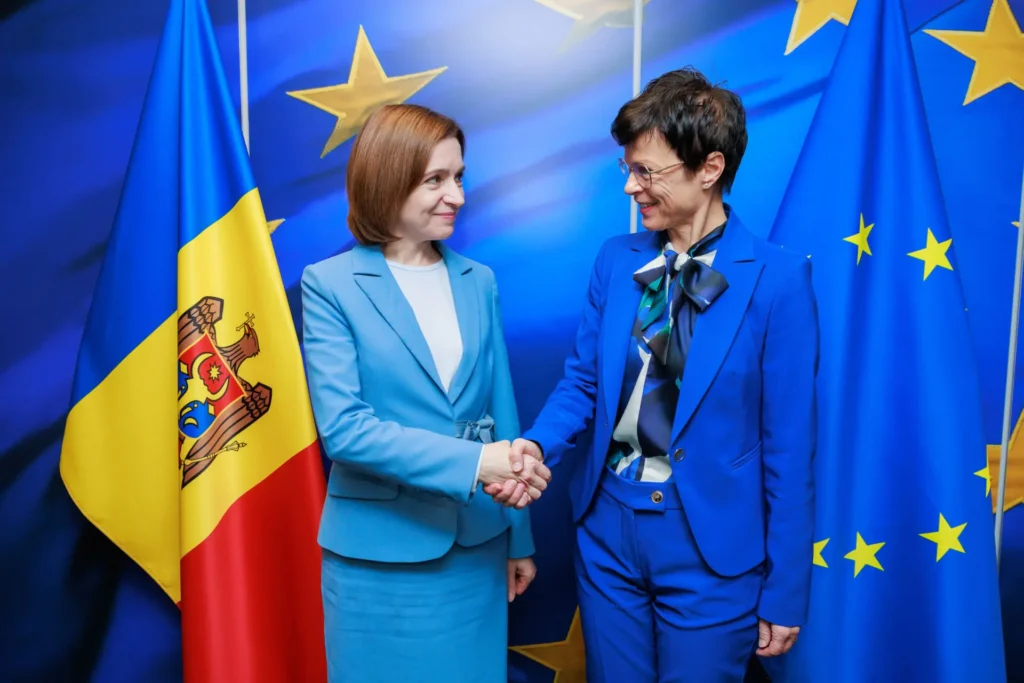
Election Outcome: A Pro-EU Mandate
Preliminary results show PAS capturing just over 50 percent of the vote, securing 55 out of 101 seats in Parliament. This gives the party an absolute majority, enabling it to govern without coalition partners. Meanwhile, the pro-Russia Patriotic Electoral Bloc, led by former President Igor Dodon, won roughly 24 percent, with other smaller parties trailing far behind. Voter turnout was about 52 percent, slightly higher than in previous parliamentary contests.
These results reinforce Sandu’s pro-European course and revive momentum for deeper integration with the European Union. Many observers see the outcome as a signal that Moldova has reaffirmed its Western orientation despite foreign pressure. Opposition leaders, however, have already contested the results, alleging irregularities and demanding further scrutiny. Whether those challenges gain traction remains to be seen.
Governance and Institutions
With full parliamentary control, PAS now has the opportunity to accelerate reforms in the judiciary, anti-corruption measures, public procurement, and oversight mechanisms. These reforms are vital to strengthening the rule of law and building trust in institutions.
At the same time, a single party with strong control must guard against overreach. Safeguards and checks and balances will be essential to prevent democratic backsliding. The integrity of the electoral process will continue to be evaluated in the weeks ahead, including how well the country addresses disinformation, cyber threats, and political pressure.
Gender and Participation
Moldova has made progress on gender representation through legislated quotas requiring at least 40 percent women on candidate lists. While this has incrementally improved female participation in politics, cultural and social barriers persist. The new Parliament now has the opportunity to advance inclusive policies that ensure women’s meaningful participation at decision-making levels.
Key Challenges
- Delivering reforms quickly: Public expectations are high. The new government must show visible progress in anti-corruption, justice, and public services to maintain legitimacy.
- Balancing power with pluralism: With a strong majority, PAS must remain open to opposition voices, minority groups, and civil society to avoid growing polarization.
- Managing foreign influence: Russia’s hybrid tactics are likely to continue. Building resilience in media, cybersecurity, and public awareness will be crucial.
- Addressing economic hardship: Many Moldovans face migration pressures, low productivity, and inequality. Development policies must deliver tangible improvements in daily life.
Sustaining European integration: The accession process will require credibility, sustained reform, and careful diplomacy.
Related Content: President Irfaan Ali Declares Victory as Guyana’s Oil Boom Redefines Politics
 Follow SDG News on LinkedIn