At Davos, the reset was meant to sound definitive.
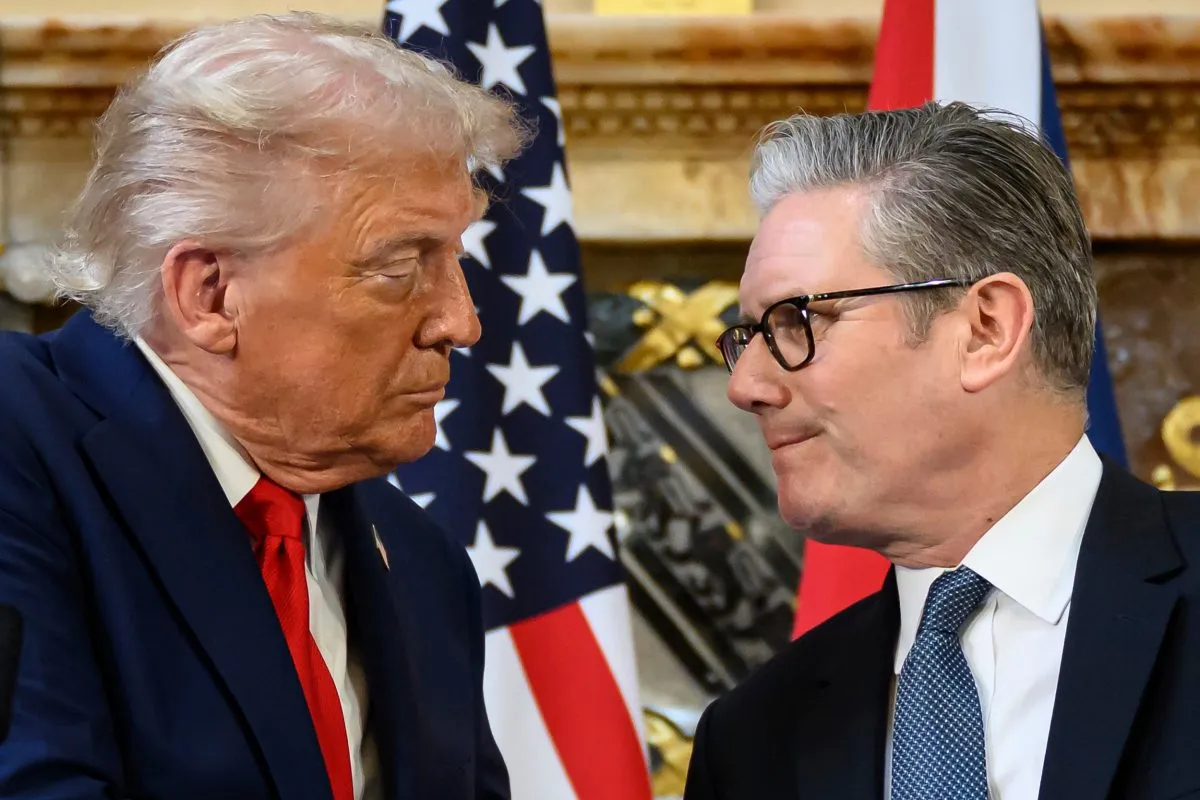
Pressed on whether the United States might use military force over Greenland, President Donald Trump offered what appeared to be a clean retreat. “I won’t do that. Now everyone is saying ‘oh good.’ That’s probably the biggest statement I made because people thought I would use force. I don’t have to use force. I don’t want to use force. I won’t use force.”
For markets and headlines, the reassurance landed.
For allies, it arrived too late to undo what had already been said.
Just weeks earlier, the White House had explicitly stated that “utilising the US military is always an option at the commander in chief’s disposal” as Washington explored ways to pursue its Greenland objective. To place military force on the table when dealing with a treaty ally was not merely a negotiating tactic. It crossed a psychological line that had defined transatlantic relations since the end of World War II.
The crisis may have cooled in public. Its consequences did not.
Davos, Wall Street, and the Sudden Softening
Trump’s shift in tone did not occur in a vacuum.
In the days leading up to Davos, threats of tariffs on European allies, linked implicitly to Greenland and defense cooperation, rattled financial markets. Stocks fell sharply as investors reacted to the prospect of a renewed trade war layered onto an already fragile global economy. The message from Wall Street was blunt. Strategic brinkmanship with allies carries economic consequences.
The pullback on tariffs and the softened language on Greenland followed quickly.
Diplomats took note. So did European leaders. The reversal appeared driven less by persuasion from allied capitals than by signals from markets that instability would not be absorbed quietly.
A Framework That Was There All Along
What emerged in place of confrontation was talk of a “framework of a future deal.”
Yet the contours of that framework were strikingly familiar. Expanded defense cooperation in the Arctic. Updated security arrangements. Greater coordination through NATO. All of it firmly anchored in respect for sovereignty.
These were not American concessions. They were proposals Denmark had been advancing from the start.
The substance never required coercion. The crisis was manufactured by framing, tone, and threat, not by a lack of shared strategic interests.
Loyalty That Cannot Be Priced
Nowhere was the rupture felt more acutely than in Copenhagen.
Denmark has long been among Washington’s most loyal allies, a relationship measured not in rhetoric but in sacrifice. In Afghanistan, Denmark sustained the highest casualty rate among NATO countries, a reality that remains deeply embedded in the nation’s collective memory.
For Danish leaders and the public alike, the Greenland episode was not simply about Arctic policy. It was about whether loyalty has value when it cannot be monetized, leveraged, or converted into immediate gain.
The answer, many concluded, was unsettling.
The Limits of the Transactional Lens
The episode exposed a deeper danger in treating foreign policy as a series of transactions.
Alliances are not balance sheets. Trust cannot be priced. Credibility does not show up in quarterly earnings. The benefits of restraint, predictability, and mutual respect are intangible, but they are foundational.
Approaching alliances through a purely transactional lens risks undervaluing precisely what makes them endure. When relationships are assessed only by what can be extracted in the moment, what is lost is the accumulated capital of decades: shared sacrifice, institutional trust, and the willingness of allies to stand together in moments of real crisis.
Greenland did not change hands. Military force was not used. Tariffs were walked back.
But something else shifted.
The United States remains powerful. It remains indispensable. Yet the assumption that it instinctively values what cannot be quantified has been weakened.
The art of the deal, as practiced here, revealed its blind spot. Some of the most important assets in global leadership are the ones that cannot be bought, threatened into submission, or quickly repaired once damaged.
RELEVANT STORIES:
- A Reckoning Between Allies in Davos: How Greenland turned the World Economic Forum into a transatlantic showdown
- Europe Moves as Washington Talks, NATO Troops Join Denmark in Greenland
- Trump Wants Greenland. NATO Is Now the Story.
- Europe Stands Firm on Sovereignty as Greenland Tensions Escalate
- Madagascar in Turmoil: President in Hiding as Youth Uprising and Military Mutiny Engulf the Nation
 Follow SDG News on LinkedIn