Canada is quietly rewriting its foreign policy.
The global order is coming apart. Canada is stepping forward.
Under Prime Minister Mark Carney, Ottawa is no longer standing on the sidelines of a world being remade. It is moving into the center of the debate, acting with clarity and confidence at a moment when alliances are shifting and assumptions are collapsing.
At Davos, Carney articulated what diplomats across multilateral institutions have increasingly come to accept. The postwar system that once governed trade, security, and cooperation is eroding. A different world is taking shape, and Canada intends to help shape it.
“The world is still determining what that order is going to be,” Carney said. The multilateral system that once set the rules has been eroded or undercut. Instead, he argued, like minded countries will form coalitions around specific sectors, from trade and technology to climate and security. Governance, in other words, is becoming more fragmented, more flexible, and more strategic.
For Canada, this is not philosophy. It is strategy.
Canada looks beyond Washington
Carney’s approach is rooted in a blunt reality. Dependence on the United States has become a vulnerability.
Trump’s tariff threats, transactional diplomacy, and renewed pressure over Greenland have made it impossible for Ottawa to assume that American leadership will be predictable or aligned with Canadian interests.
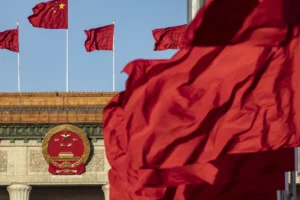
Rather than retreat, Carney has advanced. His outreach to China, including negotiations to ease trade barriers and deepen economic cooperation, is part of a deliberate effort to diversify Canada’s partnerships.
Canada will engage major powers, but it will not be trapped between them. This is not alignment with Beijing. It is autonomy from Washington.
Davos and the Greenland fault line
At Davos, Carney rejected any use of tariffs tied to Trump’s Greenland ambitions. He called for diplomacy, Arctic cooperation, and respect for sovereignty instead of coercion.
By standing with Denmark and Greenland, Canada aligned itself with European allies and with the principle of a rules based order, even when that meant pushing back against its closest partner.
The message was clear. Canada will defend norms, even when the United States does not.
A new model of Canadian leadership
Three shifts now define Carney’s Canada.
First, diversification. Ottawa is building partnerships across Asia, Europe, and the Global South rather than relying on a single anchor power.
Second, principle over pressure. On Greenland and beyond, Canada is prioritizing sovereignty and international law over unilateral demands.
Third, realism with values. Carney engages China because it matters economically, but without abandoning democratic commitments or security concerns.
The risks Carney must manage
This strategy carries real challenges.
Deeper engagement with China invites domestic criticism and unease among traditional allies. Coalition based diplomacy may prove less stable than formal multilateral institutions. And Canada must still manage an intensely interwoven relationship with the United States even as trust becomes more fragile.
Carney’s central test is whether he can keep Canada economically secure, diplomatically credible, and strategically independent at the same time.
A New Canadian Identity
What is unfolding is larger than policy. It is identity.
For decades, Canada defined itself through others. Loyal ally to the United States. Reliable multilateral partner. Quiet consensus builder. Respected, comfortable, and safe, but also reactive.
Carney is rewriting that story.
Canada is now defining itself by choice, not proximity. By strategy, not habit. By conviction, not convenience.
Instead of orbiting Washington, Canada is becoming a coalition architect, a bridge builder, and a middle power with a clear voice. It remains democratic, cooperative, and committed to rules, but it is no longer deferential.
In a world of uncertainty, Carney’s Canada is positioning itself as a country that shapes outcomes rather than waits for them, that convenes rather than follows, and that acts rather than absorbs.
This is the real transformation underway.
A new Canadian identity is emerging. Confident, independent, and prepared to navigate the new world order on its own terms.
- UN plastics treaty: reasons to be optimistic
- Canada Introduces Mandatory Climate Disclosure Law to Enhance Sustainable Investment
- The Olympics and Human Rights: Lessons from the Modern Games
- KPMG Highlights Audit Committees’ Role in Mandatory ESG Reporting Compliance
- Private Equity’s Decarbonization Playbook: Five Key Actions Driving Value
 Follow SDG News on LinkedIn