Key Impact Points:
- The third UN Ocean Conference in France (9–13 June) aims to fast-track SDG 14 implementation: “Life Below Water.”
- The ocean economy sustains over 100 million jobs and moves 90% of global trade, but is threatened by pollution, acidification, and overfishing.
- Without urgent policy shifts, OECD warns ocean economic growth could stagnate or reverse.
UN Ocean Conference 2025 Set to Drive SDG 14 Action
The third UN Ocean Conference (UNOC), co-hosted by France and Costa Rica, takes place in Nice from June 9–13, 2025, under the theme: “Accelerating action and mobilizing all actors to conserve and sustainably use the ocean.”
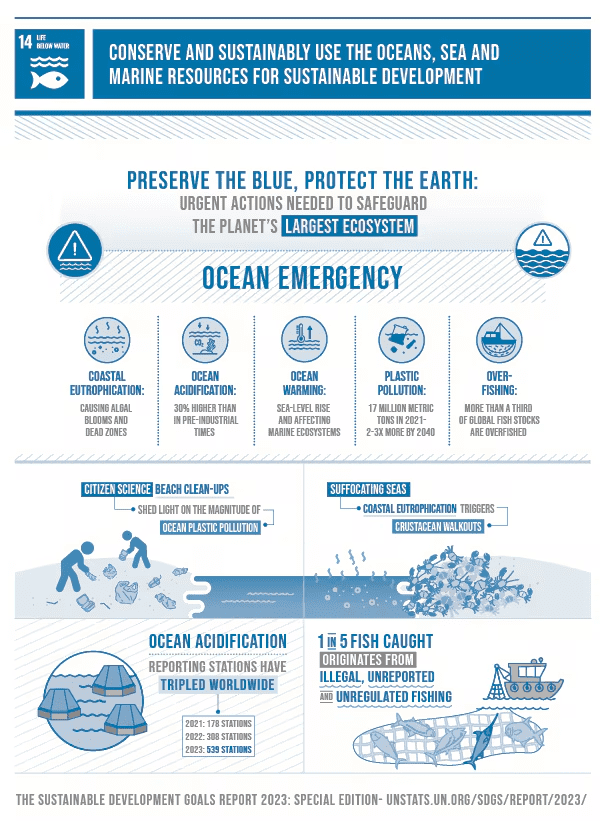
More than 30% of fish stocks are overexploited and ocean health is declining rapidly, the UN reports. UN Secretary-General António Guterres emphasized, “Our failure to care for the ocean will have ripple effects across the entire 2030 Agenda.”
The summit targets implementation of Sustainable Development Goal 14 — protecting marine resources — through global cooperation and private sector engagement, facilitated in part by the World Economic Forum.
UNOC: From Voluntary Pledges to Political Declarations
The first UNOC, held in 2017 by Sweden and Fiji, led to:
- An intergovernmental Call for Action
- 1,328 voluntary commitments
- Core takeaways from partnership dialogues
The second, in Lisbon (2022), ended with a Political Declaration acknowledging the global shortfall in achieving SDG 14 and calling for urgent corrective measures.
UN Ocean Envoy Peter Thomson described the 2022 conference as focused on “providing solutions to those problems.”
Ocean Health Is Economic Health
The ocean is Earth’s largest ecosystem and essential to human survival. It regulates climate, produces oxygen, stores carbon, and sustains biodiversity — but it also underpins the global economy.
“Addressing ocean degradation benefits both nature and human wellbeing.”
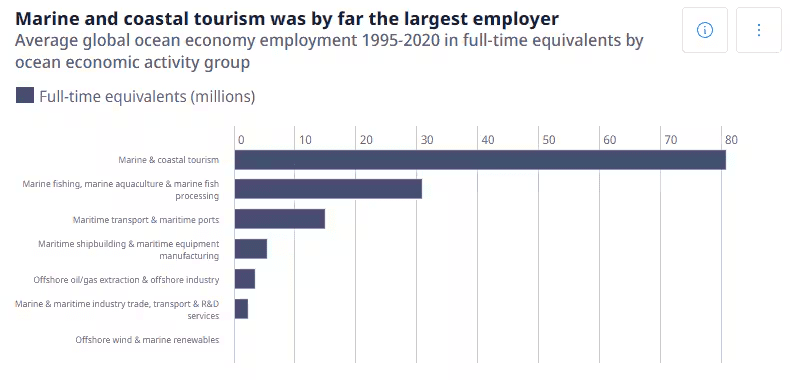
According to the OECD, over 100 million full-time jobs are sustained by the ocean economy, which has doubled in real terms since 1995.
Key sectors include:
- Tourism (largest employer)
- Shipping (transports ~90% of global trade)
- Marine renewables (growing rapidly in Asia-Pacific)
Growth at Risk Without Stronger Policies
The ocean economy’s growth has been strongest in Eastern Asia, responsible for 56% of its expansion from 1995 to 2020. But this progress is fragile.
“Ocean-based industries must now pivot to ensure they support rather than deplete marine ecosystems.”
Without coordinated global policy and sustainable practices, the OECD cautions that the ocean economy could stagnate — or reverse.
As the UNOC convenes, World Oceans Day on June 8 reminds global leaders that protecting the ocean is not just an environmental imperative — it’s an economic and social one, too.
Related Article: UN Launches Ocean Investment Protocol to Guide $5.5 Trillion Sustainable Blue Economy by 2050
 Follow SDG News on LinkedIn