A High-Stakes Vote for Economic Stability
BRUSSELS — The European Parliament has approved legislation implementing a long-delayed trade agreement between the European Union and the United States, marking a significant effort to stabilize one of the world’s most consequential economic relationships and prevent a renewed transatlantic tariff war.
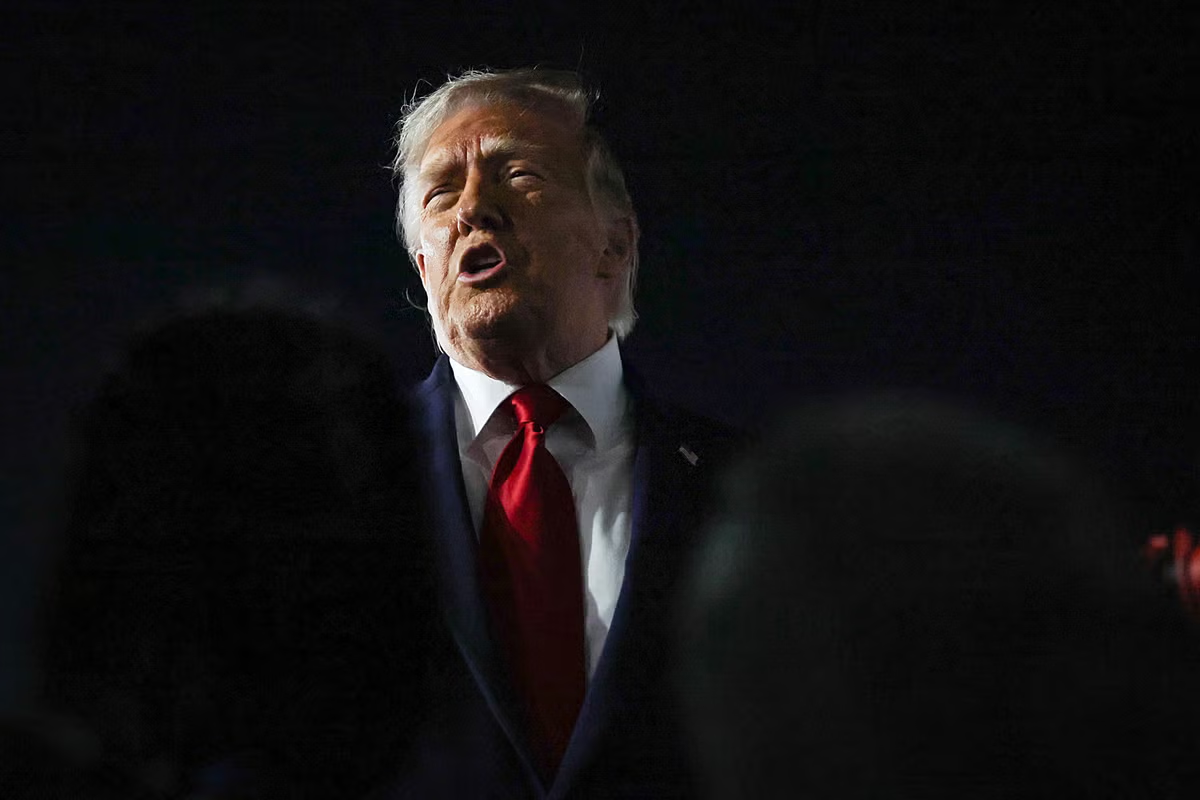
The vote formalizes commitments made under the trade framework negotiated between European Commission President Ursula von der Leyen and U.S. President Donald Trump. Under the arrangement, the European Union will eliminate tariffs on most U.S. industrial goods and extend duty-free treatment for select American products, including lobster imports. In return, the United States will maintain a 15 percent tariff regime on most European exports while refraining from imposing substantially higher duties that had previously been threatened.
For European leaders, the choice was ultimately a pragmatic one. Facing the prospect of escalating tariffs and growing uncertainty in global markets, lawmakers concluded that preserving stability in the transatlantic economy outweighed the political costs of approving a deal that many in Brussels view as imperfect.
Why the Deal Matters
The stakes are enormous. The transatlantic economy represents nearly €1.8 trillion in annual trade and supports millions of jobs, investments, and deeply integrated supply chains on both sides of the Atlantic.
Industries ranging from automotive manufacturing and advanced technologies to pharmaceuticals and agriculture depend on predictable commercial relations between Europe and the United States. At a time when geopolitical tensions, industrial competition, and economic fragmentation are reshaping global commerce, even incremental improvements in stability carry significant implications.
President Trump had previously warned that tariffs on European products, including automobiles, could rise sharply if the European Union failed to implement its commitments by early July. The parliamentary vote removes the immediate threat of a broader trade confrontation and signals a willingness by both sides to maintain economic engagement despite ongoing disagreements.
What It Means for Business
For corporations, the agreement is less about opening entirely new markets and more about restoring predictability to the world’s largest commercial relationship.
By averting the threat of escalating tariffs, the deal reduces immediate uncertainty for companies that manufacture, invest, and operate across the Atlantic. Businesses in sectors including automotive manufacturing, industrial goods, pharmaceuticals, technology, agriculture, and consumer products now have greater visibility into their operating environment, allowing executives to make decisions on procurement, pricing, hiring, and long-term capital investments with more confidence.
The agreement also provides relief to global supply chains that remain vulnerable to geopolitical shocks and trade disruptions. For multinational corporations, avoiding a full-scale tariff confrontation helps protect margins and reduces the risk of sudden increases in costs for components, raw materials, and finished goods moving between Europe and the United States.
In many respects, the agreement represents a corporate risk-management victory rather than a transformative trade breakthrough. It delivers greater stability and predictability for businesses on both sides of the Atlantic while postponing more difficult economic and regulatory battles.
Not a Comprehensive Free Trade Agreement
Despite the breakthrough, significant disputes remain unresolved.
The agreement does not settle disagreements over steel and aluminum tariffs, the European Union’s Carbon Border Adjustment Mechanism, industrial subsidies, sustainability regulations, or emerging supply chain requirements. Many lawmakers in Brussels also remain cautious about the durability of the arrangement, noting that transatlantic trade relations have become increasingly vulnerable to political shifts and policy reversals.
Recognizing these uncertainties, European lawmakers included safeguards in the legislation, including review mechanisms, suspension clauses, and expiration provisions that would allow the European Union to withdraw concessions or reimpose tariffs should Washington fail to uphold its commitments.
As a result, many companies are unlikely to abandon efforts to diversify supply chains and build greater resilience into their operations. Instead, the deal buys time while larger structural questions in the transatlantic relationship remain unresolved.
Europe’s Strategic Calculation
The parliamentary vote reflects a broader strategic reality facing Europe.
In an era defined by geopolitical competition, slowing growth, and rising economic nationalism, European leaders increasingly view stable relations with the United States as essential, even amid persistent disagreements. The agreement demonstrates Brussels’ willingness to pursue pragmatic engagement with Washington while continuing its efforts to strengthen Europe’s economic resilience and strategic autonomy.
The deal may not mark the beginning of a new era of transatlantic free trade, but it does represent an important pause in an escalating tariff confrontation. For governments, investors, and businesses alike, the agreement offers something that has become increasingly valuable in today’s economy: predictability.
For now, Europe and the United States have chosen cooperation over confrontation—a decision likely to be welcomed by global markets and corporate boardrooms on both sides of the Atlantic.
RELATED STORIES:
- US Tariff Wars Threaten Africa’s Trade and Investment Prospects
- King Charles Issues Subtle Warning to America as Transatlantic Alliance Enters a New Era
- President Trump Calls Europe “Decaying and Weak” in Stark Interview That Shakes Transatlantic Confidence
- WTO Digital Trade Talks Hit Breaking Point as Tariff Moratorium Teeters
 Follow SDG News on LinkedIn