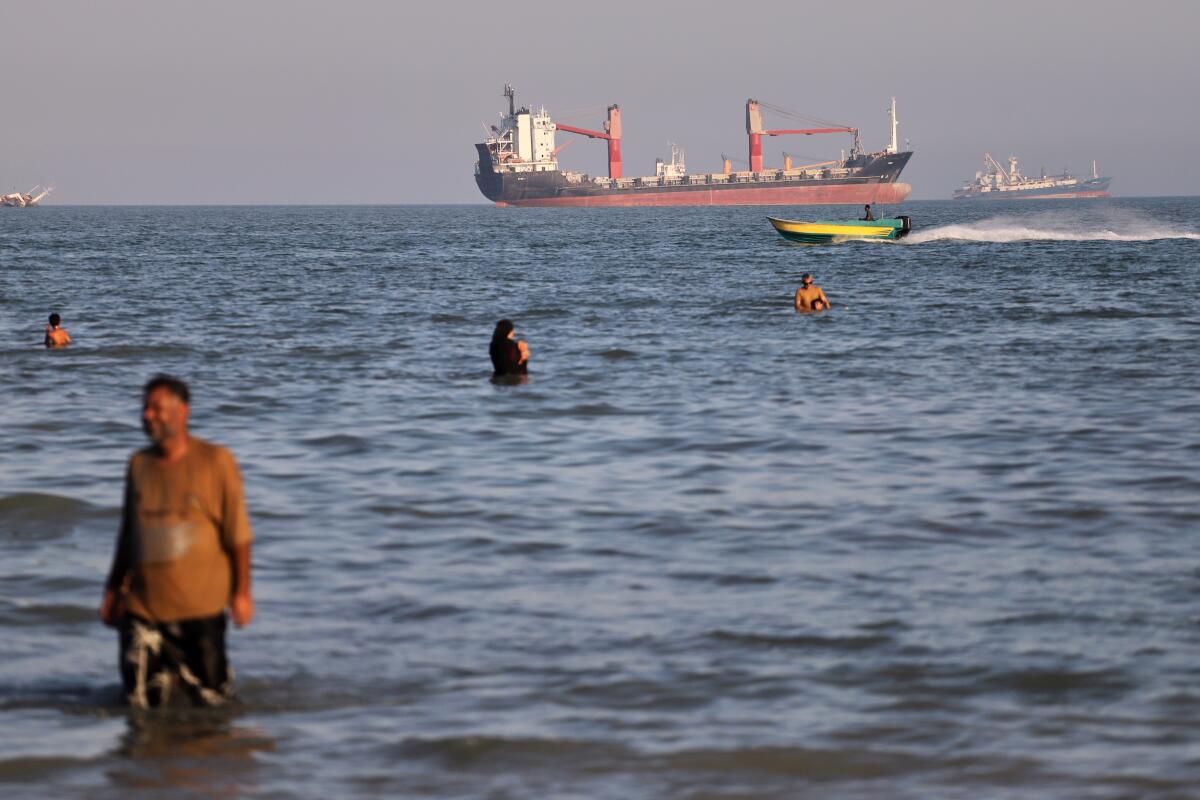
The war’s economic shock has rippled through global energy, food, fertilizer, and shipping markets. But inside Iran, the frontlines are now households, markets, and vulnerable communities bearing the cost of both conflict and government failure.
The ceasefire between Iran, Israel, and the United States has eased some of the immediate fears that gripped global markets. Oil prices have stabilized, shipping through the Strait of Hormuz is beginning to recover, and governments around the world are calculating whether a fragile pause in the fighting can prevent a wider economic crisis. Reuters reported Friday that oil prices remained broadly stable as traders watched peace efforts and the prospect of improved shipping through the Strait of Hormuz.
But for millions of people living closest to the conflict, the damage is not abstract. It is showing up in the cost of bread, rice, eggs, meat, medicine, fuel, rent, and transportation.
That is the story now unfolding inside Iran.
NBC News reported that Iranians are facing sharply higher prices for food and everyday goods even as the ceasefire holds, with families in Tehran and beyond struggling to absorb the economic toll of war. The fighting may have paused, but the price shock has moved into the home.
A Global Shock, Felt First by the Vulnerable
The Iran conflict has underscored how quickly war in a strategic region can become a global development crisis. Disruption around the Strait of Hormuz affects not only oil and gas markets, but also food imports, fertilizer supply chains, shipping costs, insurance premiums, and the price of goods far from the battlefield.
Those pressures are especially dangerous for frontline and vulnerable communities. When fuel prices rise, food costs rise. When fertilizer supply is disrupted, farmers face higher production costs. When shipping becomes more expensive or uncertain, import-dependent countries and low-income households pay first.
A recent analysis from the Policy Center for the New South warned that the disruption around Hormuz has moved through the world economy through higher fuel bills, food and fertilizer pressures, and rising costs for households and companies far beyond the Gulf.
But Iran is not merely one country affected by the ripple effects. It is the epicenter of the human economic fallout.
Inside Iran, Food Is the New Front Line
For ordinary Iranians, the most immediate measure of the war’s impact is not the oil price. It is the market price.
The National reported that Iran’s overall prices were 77 percent higher at the end of May than a year earlier, according to the country’s central bank, while staples such as rice and eggs had tripled in price over the past year. Al Jazeera reported in May that Iran’s Statistical Centre recorded food inflation of 115 percent for the first month of the Iranian year compared with the same period a year earlier.
That kind of inflation changes daily life. Families cut back on meat. Parents substitute cheaper foods. Medicines become harder to afford. Small businesses lose customers. Workers see wages erased by the currency’s collapse.
This is the brutal arithmetic of war: even when the bombs stop falling, the costs keep compounding.
Government Failure Is Deepening the Crisis
The Iranian government has tried to frame the country’s hardship as the result of foreign aggression, sanctions, and wartime disruption. Those factors are real. But they do not tell the whole story.
Iran’s leaders have also exacerbated the crisis through years of economic mismanagement, currency instability, repression, subsidy cuts, internet restrictions, and policies that have shifted more of the burden onto ordinary citizens. Iran International reported in April that the country’s worsening cost-of-living crisis was being compounded by medicine shortages, mass layoffs, food insecurity, and an extended internet blackout that cut off online work, e-commerce, and freelance income for millions.
The Guardian reported in May that partial lifting of internet restrictions revealed widespread anger over food inflation, with IMF data showing food inflation between 140 percent and 200 percent and overall inflation around 70 percent.
The government’s decisions have made households more vulnerable at precisely the moment they needed protection. Subsidy reductions, weak social safety nets, currency controls, restrictions on information, and the prioritization of regime security over economic transparency have all deepened the strain.
The result is a population trapped between external pressure and internal failure.
The Ceasefire Is Not a Recovery Plan
A ceasefire can stop escalation. It cannot automatically restore purchasing power, rebuild supply chains, stabilize a currency, or refill medicine shelves.
That is why Iran’s postwar challenge may prove more politically difficult than the conflict itself. The government must now confront a public that is exhausted not only by war, but by years of inflation, isolation, corruption, and declining living standards.
The Strait of Hormuz remains central to the global picture. Shipping may be improving, but uncertainty remains high. MarketWatch reported that while oil prices have returned near prewar levels, the market has not fully normalized, with shipping disruptions, high insurance costs, and lower tanker traffic still weighing on the system.
For Iranian households, even a full return of global trade flows would not immediately undo the damage. Prices rarely fall as quickly as they rise. Businesses that closed may not reopen. Workers who lost income may not recover savings. Children who lost access to nutritious food or medicine carry consequences that last beyond the news cycle.
The Human Cost of Economic War
The global economy may remember the Iran conflict as an energy shock narrowly contained. But for vulnerable communities, the shock is still unfolding.
In countries dependent on imported food and fuel, the war has raised the cost of survival. In the Gulf, it has exposed the fragility of supply chains. In Iran, it has revealed something more severe: a country where ordinary people are being squeezed by war, sanctions, inflation, and a government that has repeatedly failed to protect them.
The ceasefire has lowered the temperature of the conflict. But inside Iran, the crisis has moved from the battlefield to the bakery, the pharmacy, and the family table.
For the Iranian people, peace will not be measured only by the absence of airstrikes. It will be measured by whether food becomes affordable again, whether medicine is available, whether work returns, whether the currency stabilizes, and whether a government that helped deepen the crisis can be held accountable for the suffering it continues to impose.
The war may have paused. The economic toll has not.
RELATED STORIES:
 Follow SDG News on LinkedIn