Survey shows resilience and maturing strategies as Asia Pacific and nature-based solutions emerge as leading priorities
HONG KONG — Even as political and financial headwinds unsettle global markets, family offices are quietly deepening their commitments to sustainable finance. A new survey by the Sustainable Finance Initiative (SFI) of 144 family office representatives worldwide reveals that over 90 percent have allocated part of their portfolio to sustainable investments. For nearly six in ten respondents, such investments now account for at least 10 percent of their holdings, and one in five have committed more than half of their portfolios.
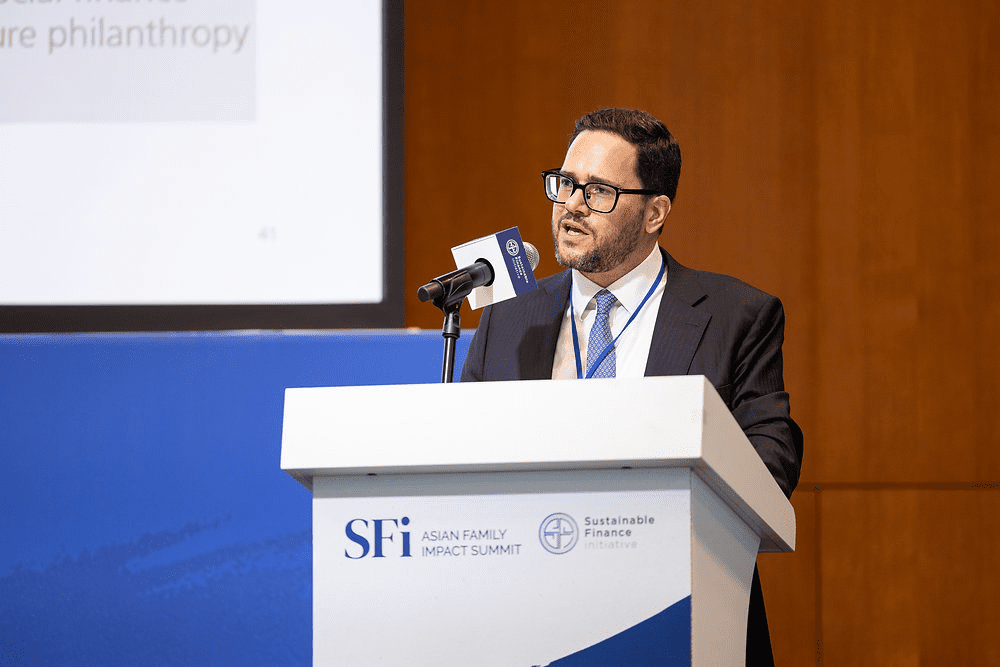
“These results show real and genuine commitment to sustainable investment,” said Katy Yung, CEO of SFI. “Our survey in 2024 showed promise, but these figures demonstrate that family offices have not only maintained their focus, but have refined their strategies to capture the twin benefits of social impact and robust returns. Our community’s resilience exemplifies the forward–thinking approach that continues to drive this sector.”
A resilient asset class
The findings carry weight in a period when interest rates, energy shocks, and geopolitical tensions have tested investor confidence. Despite these pressures, sustainable portfolios are performing: a majority of survey respondents reported meeting or exceeding their benchmark expectations. This track record has reinforced the perception that sustainability and financial performance are not in conflict but increasingly intertwined.
The survey also confirms that the drivers of family office commitments remain consistent. As in 2024, respondents cited the desire to address environmental and social challenges as their top priority, with competitive financial returns following closely. The stability of these motivations suggests that sustainable finance has matured from a niche interest into a structural allocation across generations of wealth holders.
Asia Pacific takes center stage
One of the strongest signals from this year’s data is geographical. Asia Pacific ranked as the primary focus for 42 percent of respondents, underscoring the region’s centrality to the future of sustainable finance. For many family offices, Asia offers a dual opportunity: high-growth economies with expanding consumer markets, and acute environmental and social challenges where targeted impact finance can make a measurable difference.
This regional emphasis also highlights the shifting balance of influence. While North America and Europe remain significant players, family offices are positioning Asia Pacific as a proving ground for strategies that link financial performance with development outcomes.
Shifting thematic priorities
The survey indicates a notable evolution in thematic focus. Last year, family offices prioritized food and agriculture, circularity and innovative materials, and healthcare. This year, nature-based solutions, biodiversity, and regenerative practices emerged as the leading themes, reflecting growing recognition of natural regeneration as both cost-effective and scalable. Food and agriculture and healthcare remain high on the agenda, but the pivot toward biodiversity signals a sharper alignment between capital allocation and global climate and conservation debates.
For policymakers, this shift carries implications: demand for investable projects in restoration, reforestation, and regenerative agriculture is rising rapidly. Governments and development banks may face pressure to accelerate pipelines that can absorb this influx of private wealth.
Alternatives dominate
On asset allocation, the survey underscores the family office appetite for alternatives. Venture capital and private equity captured 25 percent of responses, while direct investments into ventures accounted for 22 percent. The preference for alternatives reflects both a desire for control and the opportunity to back innovative companies aligned with sustainability themes.
The leaning toward venture and private equity also places family offices at the frontier of risk capital — an area where institutional investors often hesitate. This could accelerate the commercialization of climate technologies, regenerative agriculture tools, and healthcare innovations, provided regulatory frameworks keep pace.
What leaders should take away
The latest findings suggest that family offices, often overlooked in global policy conversations, are increasingly critical to scaling sustainable finance. Their ability to move quickly, absorb higher risk, and pursue multi-generational strategies positions them as valuable partners in addressing structural challenges.
For diplomats and policymakers, three takeaways stand out:
- Family offices are not retreating under uncertainty; they are refining strategies with long-term horizons.
- Asia Pacific is now the strategic center of family office sustainable investment, a trend likely to shape regional development priorities.
- Nature-based and biodiversity solutions are rising fast, creating demand for credible investment channels that link private wealth with conservation outcomes.
As Yung concluded: “From last year’s early signals to this year’s robust and refined data, our findings underscore the dynamism and determination of family offices in Asia Pacific. The evolution in geographic focus, thematic priorities and asset allocation speaks to a maturing investment approach that marries societal impact with financial rigour.”
For governments preparing development strategies and multilateral leaders designing global finance frameworks, the message is clear: family offices are no longer peripheral actors. They are shaping where sustainable capital flows — and increasingly, how it performs.
Related Article: Sustainable Investing in 2025: Five Themes to Watch
 Follow SDG News on LinkedIn