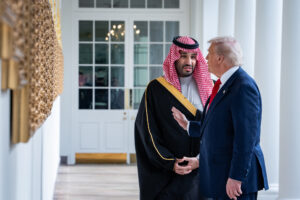
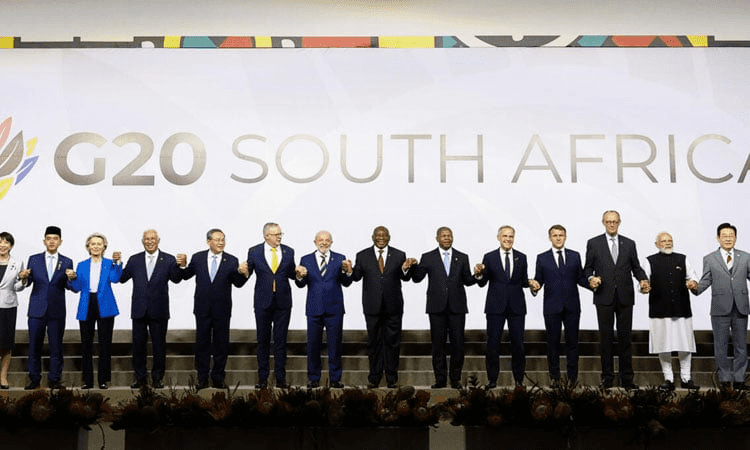
Johannesburg, November 2025 — The G20’s first Leaders Summit on African soil ended with a diplomatic rupture that few in Johannesburg had anticipated. Days after members adopted a declaration on multilateral cooperation, President Donald Trump announced that South Africa, the outgoing G20 president, will not be invited to next year’s summit in Miami, escalating a long running dispute over domestic politics into a direct challenge to the forum’s cohesion.
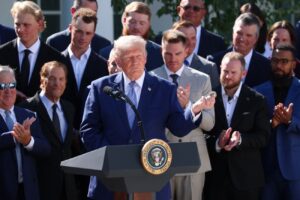
In a post on Truth Social, Trump said that “at my direction, South Africa will NOT be receiving an invitation to the 2026 G20, which will be hosted in the Great City of Miami, Florida next year.” He went further, declaring that “South Africa has demonstrated to the World they are not a country worthy of Membership anywhere, and we are going to stop all payments and subsidies to them, effective immediately.”
For South Africa, the timing is striking. They had just concluded what many participants hailed as one of the G20’s most successful summits, bringing leaders together in Johannesburg and steering a declaration on climate, inequality and multilateral economic cooperation.
South Africa defends its G20 standing
Within hours of Trump’s remarks, President Cyril Ramaphosa issued a formal response through the Presidency. The statement described Trump’s comments as “regrettable” and underscored that South Africa’s place in the G20 is determined collectively, not at the discretion of a single member.
“South Africa is a sovereign constitutional democratic country and does not appreciate insults from another country about its membership and worth in participating in global platforms,” Ramaphosa said. The Presidency stressed that South Africa is “a member of the G20 in its own name and right,” and that its G20 membership is “at the behest of all other members.”
The statement also recalled that the United States “elected not to attend the G20 Leaders Summit in Johannesburg out of its own volition,” even as American companies and civil society organisations took part in G20 related events such as the B20 and the G20 Social. South Africa, it added, “values their participation.”
The gavel handover, normally performed between leaders at the close of the summit, became an early flash point. With Trump absent, the United States attempted to send an embassy representative to receive the instruments during the closing session. South Africa rejected this as a breach of protocol. The Presidency later clarified that the handover was completed instead at the Department of International Relations and Cooperation, where the G20 instruments were “duly handed over to a US Embassy official.”
A contested narrative on human rights
Trump’s decision to disinvite South Africa from the Miami summit is framed explicitly in terms of human rights and the treatment of white South Africans, especially Afrikaner farmers.
In his post, he claimed that the government “refuses to acknowledge or address the horrific Human Rights Abuses endured by Afrikaners, and other descendants of Dutch, French, and German settlers,” asserting that “they are killing white people, and randomly allowing their farms to be taken from them.”
This narrative has been promoted for years by Trump and media allies such as former Fox News host Tucker Carlson, but it has been repeatedly challenged by South African officials and crime statistics. National crime data indicate that murders of white farmers account for less than one percent of the approximately 27,000 murders recorded annually.
In an earlier Oval Office meeting following a US decision to grant refugee status to some white South Africans, Trump showed Ramaphosa videos he described as proof of “genocide.” The South African president reportedly responded, “I’d like to know where that is, because this I’ve never seen.”
The Presidency’s latest statement returns to this point, describing Trump’s current stance as grounded in “misinformation and distortions about our country.” It adds that it is “regrettable that despite the efforts and numerous attempts by President Ramaphosa and his administration to reset the diplomatic relationship with the US, President Trump continues to be vindictive and seek to apply punitive measures against South Africa.”
G20 procedures meet presidential politics
The dispute now moves into institutional terrain. G20 members do not receive formal invitations in the way non member guests do. Participation is tied to membership, which in turn is anchored in consensus among the group.
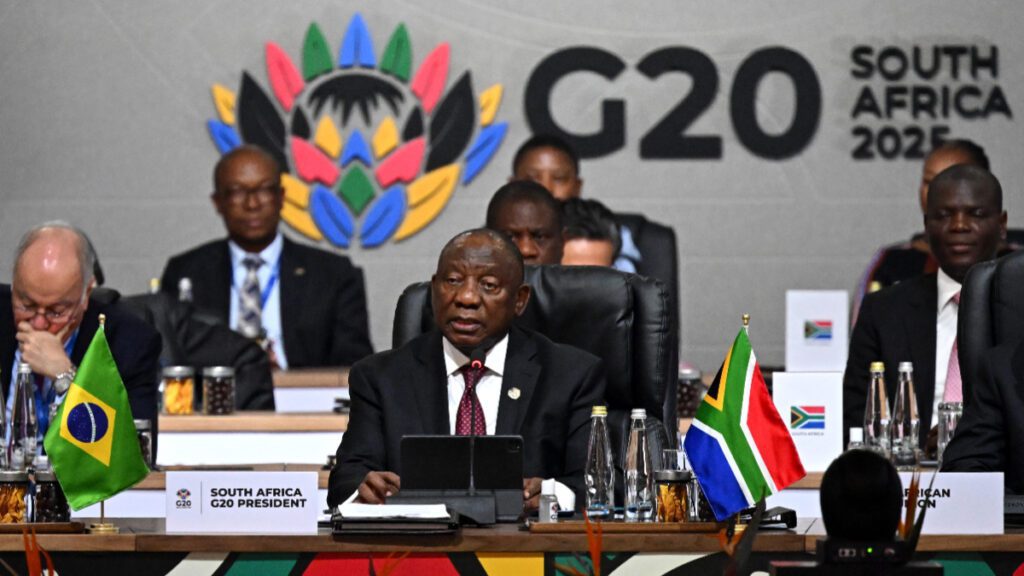
South Africa has signalled that it will continue to act as a “full, active and constructive member of the G20” and has urged other members to “reaffirm its continued operation in the spirit of multilateralism, based on consensus, with all members participating on an equal footing in all of its structures.” Officials have also called on other G20 states to defend “the integrity of the gathering and the rights of all its member states.”
In practice, however, the host government controls border access and visa policy. South Africa’s presidential spokesperson, Vincent Magwenya, told the BBC that if US authorities deny visas for South African officials, “we will have to move on and look beyond the G20 in the US.” For South Africa, that would signal a serious breach in G20 practice but not an end to its membership.
For other members, the episode raises a precedent setting question. If a host administration can selectively bar a founding member over a bilateral dispute, it may weaken the expectation that G20 participation remains insulated from domestic political narratives.
A wider test of multilateral resilience
The fallout comes at a moment when the G20 is central to decisions on climate finance, global inequality and international debt architecture. The Johannesburg summit, the first held in Africa, closed with a declaration that “affirmed the indisputable strength and value of multilateralism” in tackling global challenges, according to the South African Presidency.
Trump’s decision to disinvite the country that crafted that declaration therefore lands as a symbolic rebuke of both the host and the summit’s core message. It also compounds the broader absence of US leadership from recent multilateral climate and economic forums, a pattern that has left other actors to fill the space.
For South Africa, the episode is both a diplomatic setback and a test of its ability to mobilise support among G20 partners. For the group as a whole, it crystallises a deeper issue: whether global economic governance can remain rules based and consensus driven when major powers seek to turn summit hosting into an instrument of political punishment.
As preparations for the Miami summit begin, the outcome will signal more than the status of one member. It will indicate whether the G20 can absorb unilateral shocks of this kind, or whether its cohesion is now contingent on the domestic politics of whoever holds the presidency.
RELATED STORIES:
 Follow SDG News on LinkedIn