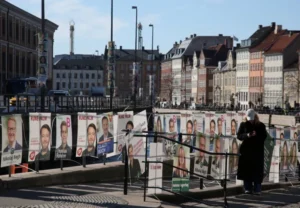
Denmark has entered a period of political uncertainty after Prime Minister Mette Frederiksen resigned following an inconclusive general election that delivered a sharp rebuke to her governing coalition and underscored shifting dynamics across Europe.
A Victory Without Power
Frederiksen’s Social Democrats emerged as the largest party, but the result fell far short of a governing mandate. Her center-left bloc secured roughly 84 seats—six short of a parliamentary majority—while the right-leaning opposition trailed with 77 seats, leaving neither side able to form a government alone.
The outcome reflects a broader trend reshaping democracies across Europe: voters are increasingly fragmenting traditional party systems, rewarding no single bloc with decisive authority. In Denmark, that fragmentation has elevated centrist forces—particularly the Moderates party led by former Prime Minister Lars Løkke Rasmussen—into kingmaker status.
Resignation, Not Exit
Following the results, Prime Minister Mette Frederiksen formally handed in her government’s resignation, triggering coalition negotiations that could stretch for weeks.
Yet her political future remains unresolved. Despite the electoral setback, she is still widely seen as a leading contender to form the next government, given that her party remains the largest in parliament.
This paradox—losing ground yet retaining relevance—captures the essence of Denmark’s current moment: a system in transition, where leadership is determined less by electoral dominance and more by coalition-building skill.
A Historic Decline
The election marked one of the Social Democrats’ weakest performances in more than a century, with the party dropping significantly in both vote share and parliamentary seats.
The reasons were largely domestic. Rising cost-of-living pressures, debates over taxation, and dissatisfaction with economic policy overshadowed Frederiksen’s international leadership.
Even policies designed to balance fiscal priorities—such as tax reforms and adjustments to public spending—became political liabilities in a climate of economic anxiety.
The Greenland Factor
While domestic concerns dominated, geopolitics played an unusual and highly visible role in the campaign.
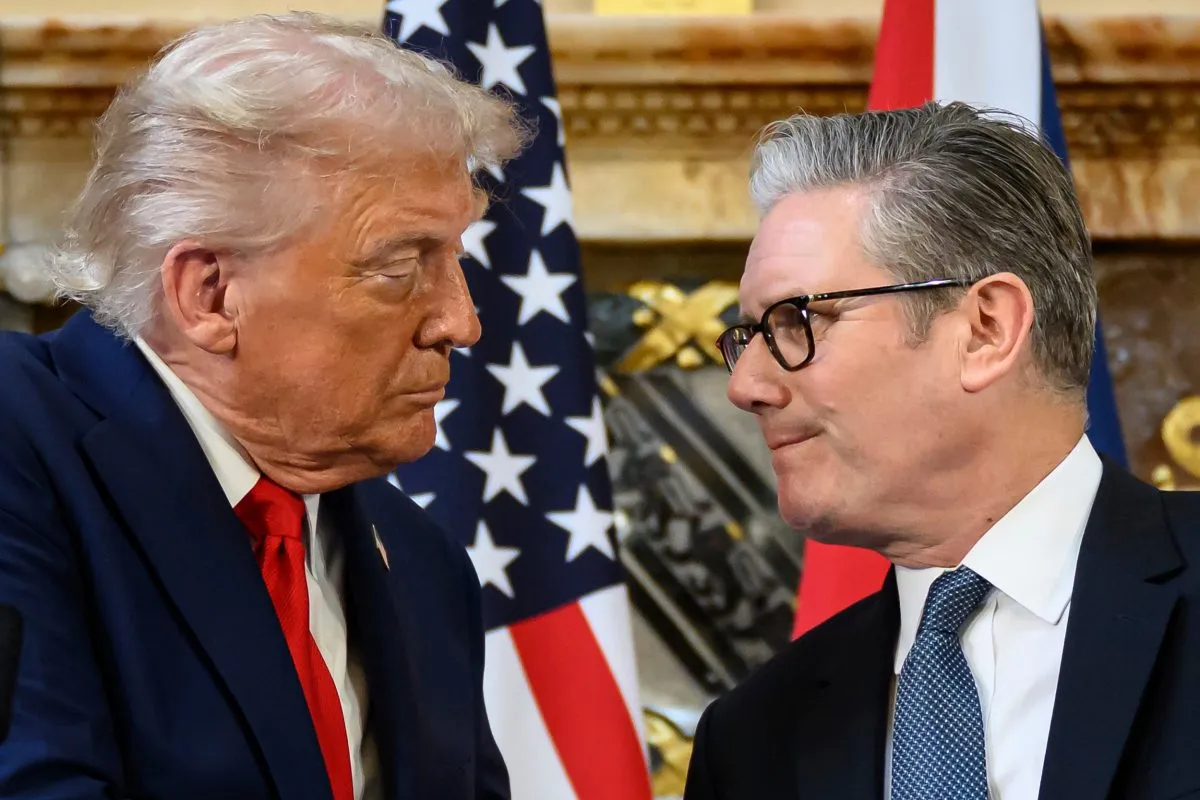
Frederiksen’s firm stance against renewed U.S. interest in acquiring Greenland—revived by former President Donald Trump—briefly boosted her standing and shaped the decision to call early elections.
The episode placed Denmark at the center of a global geopolitical flashpoint, reinforcing the strategic importance of the Arctic and the growing tension between national sovereignty and great-power competition.
Yet, in the end, voters appeared more focused on everyday economic realities than on geopolitical theater.
The Rise of the Center
With no bloc able to govern alone, attention now turns to Denmark’s political center.
Rasmussen’s Moderates, holding a pivotal number of seats, are positioned to determine the country’s next government.
Their role signals a deeper shift in European politics: the growing importance of centrist coalitions capable of bridging ideological divides in an era of fragmentation.
In Denmark, this could result in a broad-based government that blurs traditional left-right lines—an approach increasingly common across Europe as countries grapple with economic volatility, security challenges, and institutional strain.
A Bellwether for Europe
Denmark’s election is not an isolated event. It reflects a broader recalibration underway across advanced democracies.
Fragmented electorates are weakening traditional majority governments. Economic pressures are overriding foreign policy narratives. Centrist actors are gaining disproportionate influence. Coalition politics is becoming the default mode of governance.
For global leaders, the lesson is clear: stability in the modern era will depend less on electoral victories and more on the ability to govern across divides.
What Comes Next
Denmark now enters a critical phase of negotiations that will determine not only who governs, but how.
Whether Mette Frederiksen returns to power or a new coalition emerges, the next government will be shaped by compromise—and tested by a complex global environment that spans economic uncertainty, geopolitical tension, and the accelerating demands of the green transition.
In that sense, Denmark is not simply navigating a domestic political transition. It is offering a preview of governance in the new world order—one defined not by clear mandates, but by the constant negotiation of competing priorities in an increasingly interconnected world.
RELATED STORIES:
- Denmark Calls a Snap Election as Trump’s Return Rewrites the Politics of U.S. Allies
- France Plunged Into Political Uncertainty After Prime Minister’s Resignation
- Trump Wants Greenland. NATO Is Now the Story.
- Europe Moves as Washington Talks, NATO Troops Join Denmark in Greenland
- Denmark Votes at a Crossroads: Greenland, Green Energy, and the Politics of a Fragmenting World Order
 Follow SDG News on LinkedIn