Belém – Under humid skies at the mouth of the Amazon, COP30 opened with an unusual asset for a UN climate summit: a negotiated agenda agreed on time. After a long night of talks, countries signed off on the programme for the next two weeks, elected Ambassador André Corrêa do Lago as COP30 President and signalled that this meeting is intended to be about implementation, not redesigning the Paris Agreement from scratch.
For governments and financial institutions, the question on COP30 Day 1 was not whether the process survives, but whether it can now convert a decade of promises into a workable architecture for finance, technology and resilience.
Implementation first: loss and damage and MDB adaptation capital
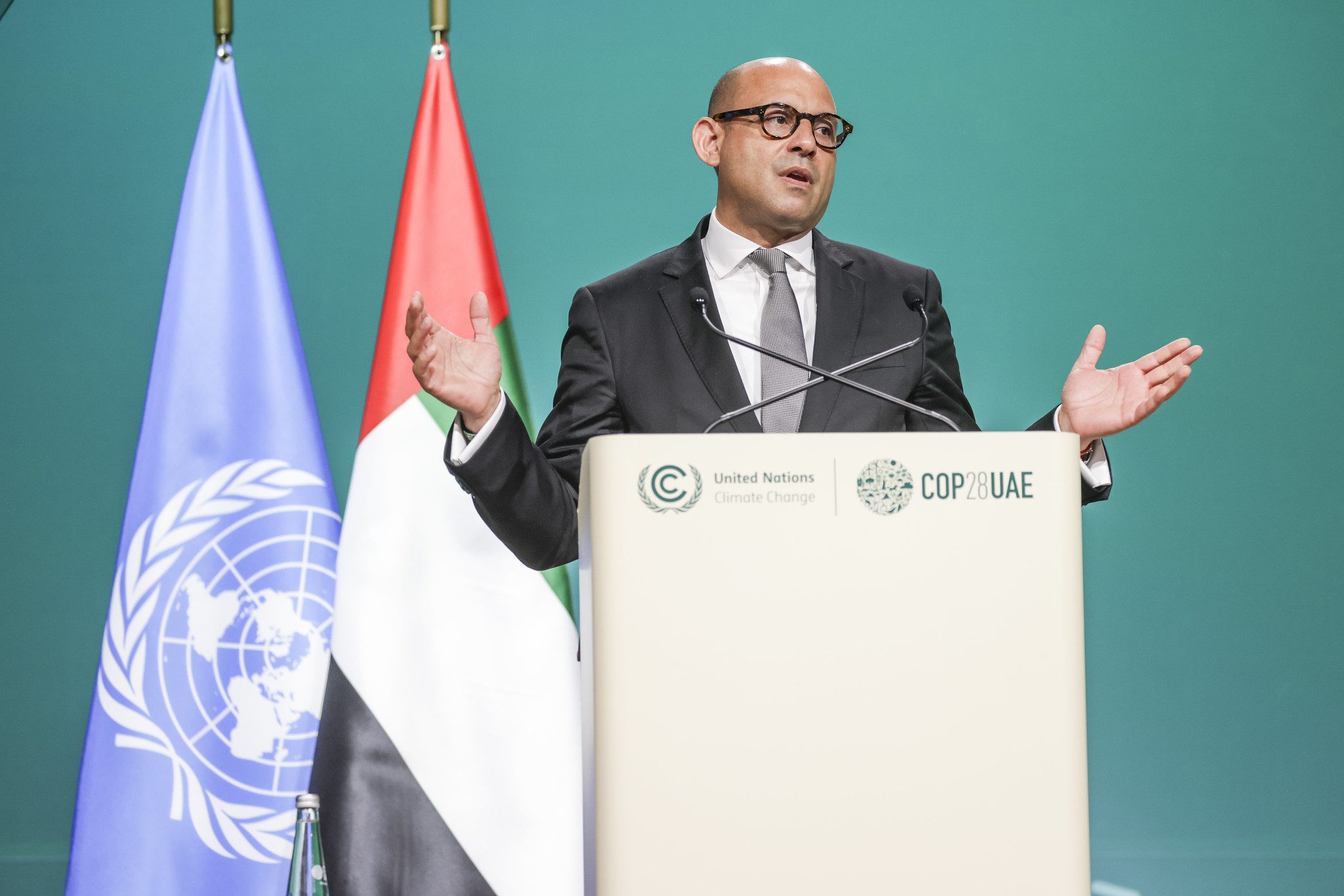
“In this arena of COP30, your job is not to fight one another — your job is to fight this climate crisis, together.”
— Simon Stiell, UN Climate Change Executive Secretary
Day 1 by the numbers
- $250 million – first call for proposals from the new Loss and Damage Fund
- $26 billion – MDB adaptation finance delivered in 2024 to low- and middle-income economies
- 12 percent – projected global emissions reduction by 2035 vs 2019 levels (NDC update)
The Fund for Responding to Loss and Damage, created at COP28, issued its first call for proposals worth $250 million, moving from design to operation in under two years. That speed matters for countries on the frontlines of climate impacts and for finance ministries watching how quickly new funds can deploy capital without losing accountability.
Multilateral Development Banks reinforced the implementation theme, reporting doubled adaptation investments since 2019 and unveiling a new framework for nature finance with common tracking principles and results-metrics guidance — early indicators of how private capital could be crowded in.
Stiell anchored his opening remarks in economics: renewables are now cheaper than most fossil fuels, have overtaken coal as the world’s top energy source and attract clean-energy investment at roughly twice the fossil-fuel rate. Delay, he warned, will exact a cost in GDP, food prices and social stability.
Technology and AI move to the centre of climate resilience
If the finance architecture showed signs of maturing, technology set the tone. Day 1 elevated AI, digital public infrastructure and nature-inspired innovation from side conversations to central tools of the climate agenda.
The Green Digital Action Hub launched as a new cooperation platform anchored in Brazil to help governments scale green digital solutions. The AI Climate Institute was announced to train policymakers and technical professionals in developing nations to design and deploy AI-driven climate applications, with courses, advanced labs and an open digital repository.
Alongside them, the Nature’s Intelligence Studio — a Latin America-based partnership between the University of Oxford’s TIDE Centre, INPA and CAF — will link biodiversity research with policy and innovation, including an ideathon and AI-based Energy Atlas of Nature’s Innovations.
Brazil’s Ministry of Management and Innovation released a Plan to Accelerate Solutions combining digital public infrastructure and open-source climate tools. The DPI for People and Planet Innovation Challenge awarded five innovators $100 000 each to test scalable digital resilience solutions.
For sustainability and decarbonisation professionals, Day 1 was a clear signal that mitigation and adaptation strategies will be built not only on emissions targets but on AI capacity, digital infrastructure and open-source data.
Food systems, social protection and the new adaptation politics
A Climate-Resilient Social Protection and Smallholder Agriculture Finance Partnership was launched to support adaptive social protection and smallholder farming in Benin, Ethiopia, Kenya, Zambia and the Dominican Republic, building on the Belém Declaration on Hunger and Poverty. By 2028 donors plan a coordination group to align finance portfolios.
At the Agricultural Innovation Showcase, donors announced $2.8 billion for smallholder resilience. Brazil and the UAE, with the Gates Foundation and Google, launched the world’s first open-source AI language model for agriculture and the AIM for Scale forecasting tool to aid 100 million farmers by 2028.
The Race to Resilience campaign reported 437 million people now benefit from greater climate resilience, supported by $4 billion in adaptation finance and 18 million hectares of protected land and ecosystems.
Politics, absence and what to watch next
Brazil’s control of the agenda helped avert a procedural crisis, keeping disputes over carbon taxes and climate-finance mechanisms from stalling negotiations. President Lula warned against climate denial and attacks on science. Stiell urged delegates to fight the crisis rather than each other.
The absence of the U.S. federal government was conspicuous. Subnational leaders such as California Governor Gavin Newsom sought to signal continued engagement, but the message to other capitals was clear: the geometry of climate leadership is changing.
Indigenous leaders arrived after a 3 000-kilometre journey from the Andes, calling for real protection as extractive industries push deeper into forests. Cryosphere scientists warned that glaciers and ice sheets are destabilising rapidly, calling climate change the defining security risk of our time.
What can we expect from Day 2?
As COP30 moves into Day 2, the centre of gravity shifts from global pledges to subnational delivery. Ministers, governors and mayors will focus on how cities and regions translate national targets into projects and policy. The agenda prioritises multilevel governance, urban implementation and the Paris Agreement in practice.
High-level sessions will cover city-level planning, waste and circular economy, water and climate under the Waters of Change banner, and buildings through the Intergovernmental Council for Buildings and Climate. Further events will examine early-warning systems, extreme-heat responses under the Beat the Heat initiative, and a $20 billion Latin America and Caribbean Water Investment Programme.
For finance ministries, city treasurers and corporate strategy teams, these sessions will signal where urban finance and resilience standards are heading — from mandatory municipal disclosures to bankable infrastructure pipelines. Day 2 will test whether local action can match global ambition.
The opening day did not close the ambition gap, but it showed that the machinery of climate implementation is starting to move at a different speed. For senior officials and business leaders, the question is whether they are ready to plug into that machinery fast enough.
Key events include:
● 10:30 – 12:00 High-Level Ministerial Panel – Multilevel Governance for the Implementation of the Paris Agreement and Climate Strategy
● 10:30 – 12:00 High-Level Ministerial Event: Waste Management and Circular Economy
● 12:30 – 14:00 High Level Ministerial Event on Water and Climate Action: “Waters of Change – Shaping Resilient and Sustainable Pathways
● 12:30 – 13:30 Showcase of Highlighted Results & Solutions “Scaling Early Warnings for All: Governance & Local Action
● 12:30 – 14:00 Ministerial Meeting: Intergovernmental Council for Buildings and Climate (ICBC)
● 14:30 – 16:00 High-Level Session on the Beat the Heat/Mutirão contra o Calor Extremo
● 14:00 – 15:00 Showcase of Highlighted Results & Solutions “Global Transformation Agenda on Water Investments: Launch of the 20B LAC Water Investment Programme”
● HOLD: Climate Scanner Event – AACL, IDB
● 16:30 – 18:00 High-Level Closing Plenary – Mutirão for Multilevel Climate Action Ministerial Meeting on Urbanization and Climate Change
UNFCCC/COP30 Daily Events Schedule:
- COP 30 – Overview Schedule
- Belém Climate Summit Documents
- COP 30 – Main conference schedule
- Global Climate Action at COP 30 | UNFCCC
- Climate High-Level Champions Website
- 2025 Action Agenda Granary of Solutions
RELATED STORIES
- Marina Silva: The Amazon’s Voice Guiding Brazil Toward COP30
- The Power Players of COP30 and the Future They’re Negotiating
- Road to COP30: Five Negotiation Outcomes That Could Reshape Global Finance
- Tropical Forest Forever Facility Launches at COP30 With $5.5 Billion and 53 Nations to Transform Forest Finance
 Follow SDG News on LinkedIn