Few individuals have reshaped humanity’s understanding of Earth as profoundly as Robert Ballard. To the public, he is the man who found the RMS Titanic. To scientists, he is something far more consequential: a pioneer who revealed that life can thrive in total darkness, independent of the sun, deep beneath the ocean’s surface.
Ballard’s career sits at the intersection of exploration, technology, and storytelling. A former U.S. Navy officer turned oceanographer, he has spent decades pushing the boundaries of what is possible in the most inaccessible environment on Earth.
Beyond the Titanic
In 1985, Robert Ballard led the expedition that located the wreck of the RMS Titanic nearly 4,000 meters below the North Atlantic. The discovery captivated the world and redefined deep-sea exploration, proving that advanced submersible technology could uncover even the most elusive mysteries of the ocean floor.
But Robert Ballard himself has long been clear: the Titanic was not his most important discovery.
Years earlier, in 1977, he was part of the team that discovered hydrothermal vents along the Galápagos Rift. These underwater volcanic systems revealed entire ecosystems thriving without sunlight, powered instead by chemical energy in a process known as chemosynthesis.
This finding fundamentally altered scientific understanding of life on Earth and opened new possibilities for life beyond it, suggesting that ecosystems could exist in extreme environments far removed from solar energy.
A New Era of Exploration
Ballard’s impact extends beyond what he discovered to how he discovered it.
He was an early architect of telepresence exploration, developing remotely operated vehicles that allowed scientists to explore the deep ocean in real time from the surface. This approach transformed oceanography from a niche discipline into a globally accessible, collaborative endeavor.
Over the course of his career, Ballard has led more than 150 deep-sea expeditions, uncovering not only Titanic but also historic wrecks such as the German battleship Bismarck and the aircraft carrier USS Yorktown.
Through organizations like the Ocean Exploration Trust and missions aboard the research vessel E/V Nautilus, he has prioritized real-time public engagement, broadcasting deep-sea discoveries to audiences around the world.
Education as Exploration
Robert Ballard recognized early that discovery alone was not enough. The future of exploration depended on inspiring the next generation.
In 1989, he launched the JASON Project, an ambitious effort to bring live scientific expeditions into classrooms. It was a direct response to the thousands of letters he received from students after the Titanic discovery, a signal that curiosity about the unknown could be harnessed into scientific ambition.
Today, his legacy in education continues through global livestreams, STEM programs, and collaborations that democratize access to science.
The Ocean as Humanity’s Final Frontier
Robert Ballard has often argued that humanity knows more about the surface of the Moon than the depths of its own oceans. His work underscores a central truth: the ocean is not just a frontier of discovery, but a critical system for understanding climate, biodiversity, and the future of life on Earth.
At a time when global attention is increasingly focused on space, Ballard’s career serves as a reminder that the most transformative discoveries may still lie beneath our feet.
His life’s work reframes the ocean not as a void, but as a dynamic, living system rich with untapped knowledge and opportunity.
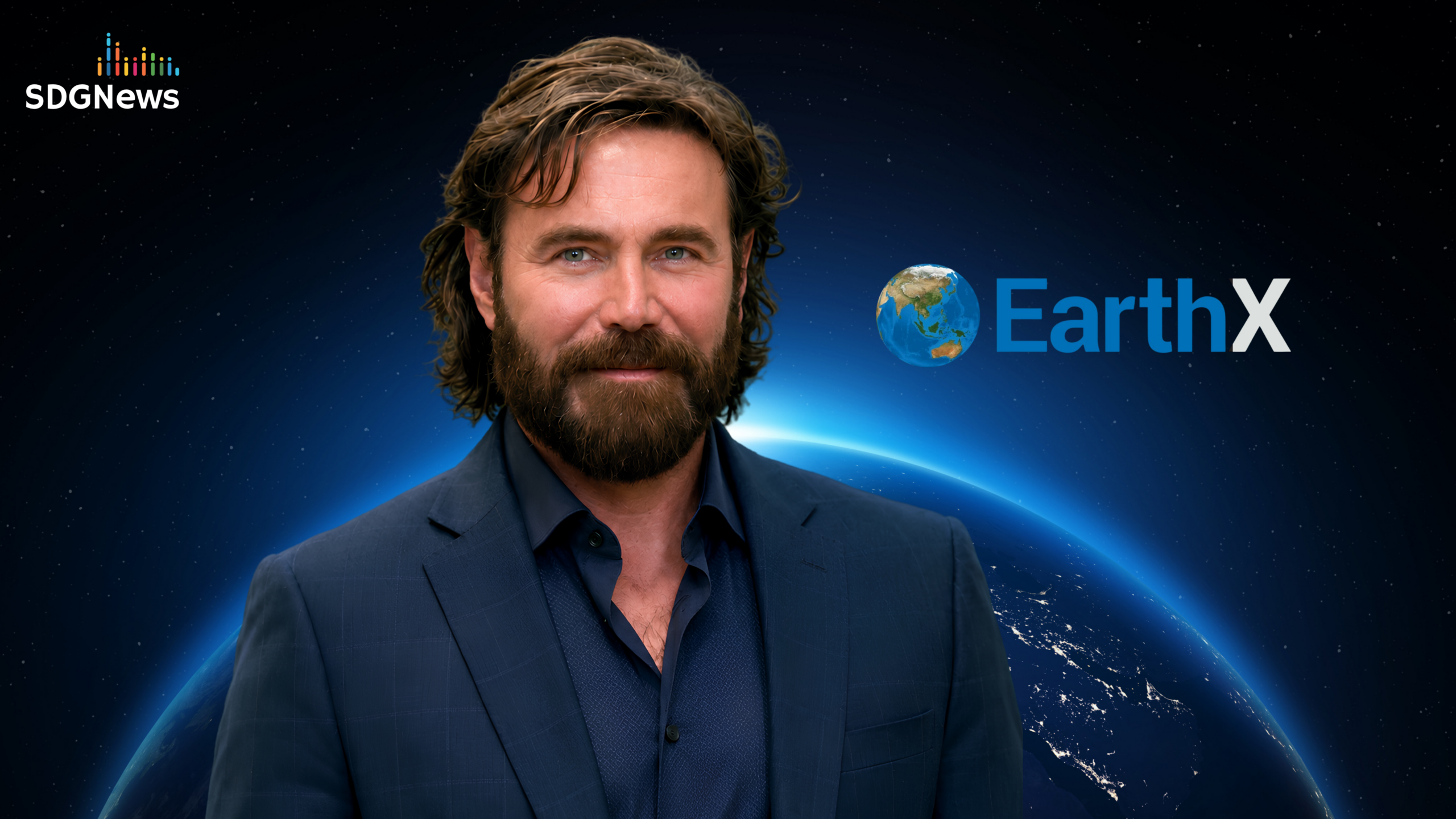
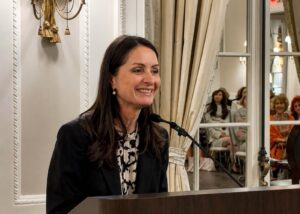
That perspective was on full display at Earthx2026, where Ballard delivered a keynote presentation that underscored both the urgency and the optimism of ocean exploration. His leadership continues to inspire a new generation to look not outward, but inward, toward the vast and largely unexplored world beneath the waves.
RELATED STORIES:
- SDG News Spotlight: Robert Mærsk Uggla and the Race to Reinvent Global Trade
- Robert Maersk Uggla on the Future of the Blue Economy at the Nature Summit in Panama City
- SDG News Spotlight: Andrea Meza Muraillo
- “Her Deepness” Sylvia Earle: The Voice of the Ocean at a Turning Point for Humanity
- Alyssa Carson – Pioneering the Mars Generation
 Follow SDG News on LinkedIn