In a move that signals both economic reinvention and geopolitical realignment, Venezuela has opened its vast mineral sector to foreign investment—with the United States not just watching, but actively shaping the outcome.
What was once a lawless frontier dominated by illicit mining is now being recast as a strategic asset. And for the first time in decades, Washington is seated firmly at the table.
A Resource Play Years in the Making
Venezuela’s National Assembly has approved a sweeping mining law designed to attract foreign capital into gold and other strategic minerals. The legislation allows both domestic and international companies to operate through long-term concessions, some stretching decades, while maintaining state ownership of the resources.
The goal is clear: revive an economy devastated by years of mismanagement, sanctions, and overreliance on oil. Beneath Venezuela’s soil lies immense untapped value—gold, coltan, copper, and other minerals critical to modern industry and energy systems.
But this is not simply a story of economic reform. It is a story of power.
Washington Steps Inside the Deal
The United States has played a decisive role in creating the conditions for this shift. Following a dramatic political reset earlier this year, Washington has moved quickly to normalize relations, loosen restrictions, and actively encourage American companies to enter Venezuela’s mining sector.
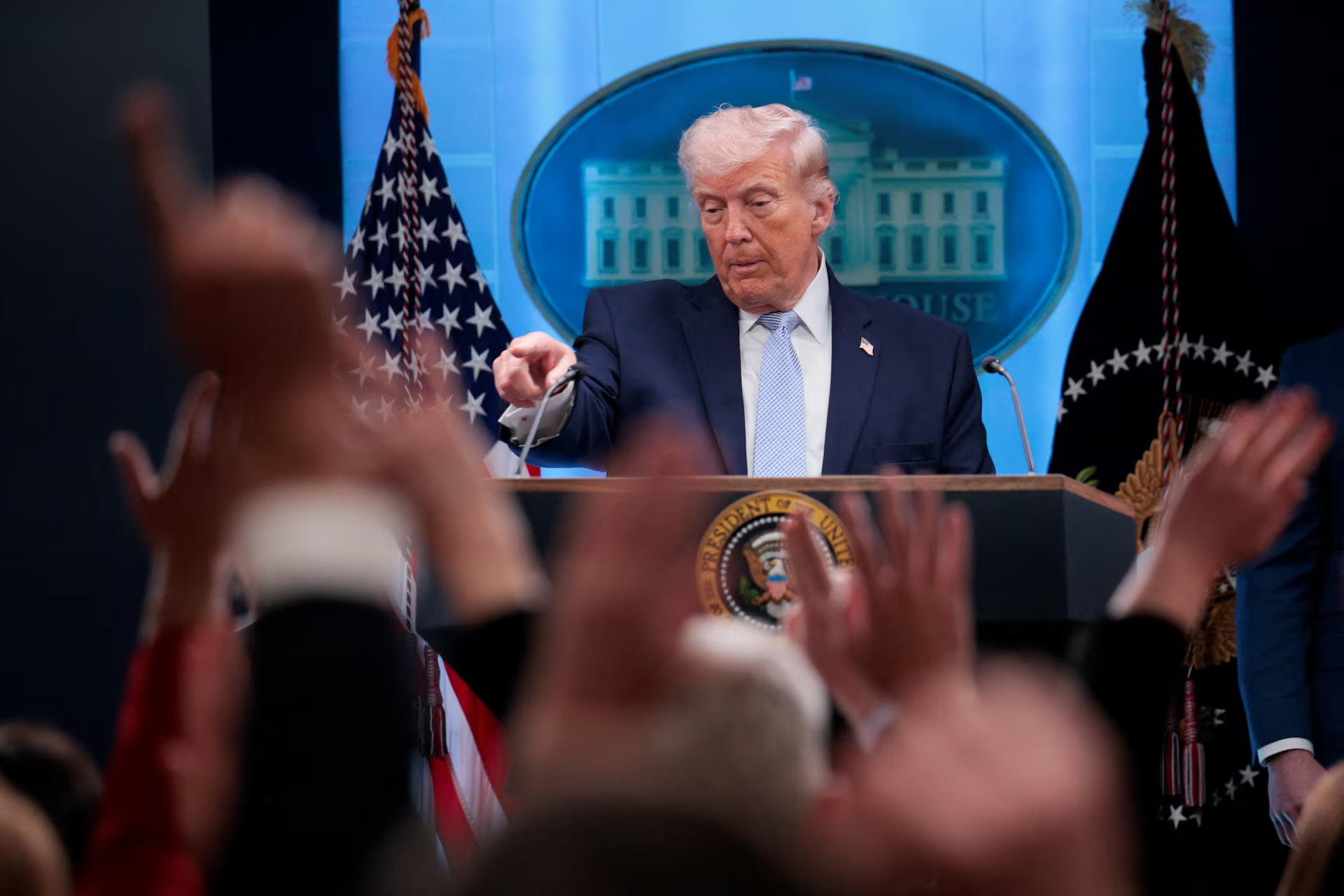
This moment reflects a broader doctrine taking shape under the Trump administration: a foreign policy defined less by ideology and more by transaction.
In this framework, access to strategic resources becomes a central negotiating tool. Sanctions are not simply punitive instruments but leverage points. Diplomatic recognition, economic relief, and market access are increasingly tied to tangible returns—whether in energy, minerals, or geopolitical alignment.
Venezuela’s opening is one of the clearest expressions yet of that approach.
From Illicit Economy to Strategic Market
For years, Venezuela’s mining regions—particularly in the Orinoco belt—have been synonymous with violence, environmental destruction, and criminal control. Illegal mining networks generated billions in revenue, much of it outside state oversight.
The new legal framework aims to bring order to that chaos. It introduces formal licensing, dispute arbitration, and investor protections—measures designed to reassure foreign companies wary of past expropriations.
There are also indications that Venezuelan authorities are moving to stabilize security conditions in key mining zones, a prerequisite for any serious international investment.
If successful, the shift could transform one of the world’s most opaque extractive economies into a structured, investable market—one aligned, at least in part, with U.S. strategic interests.
Transactional Diplomacy and the New Rules of Engagement
The implications extend far beyond Venezuela.
Under a transactional model of foreign policy, countries rich in critical resources may find themselves newly relevant—provided they are willing to negotiate access. The traditional barriers of ideology, governance concerns, or past hostility can be recalibrated if strategic value is high enough.
This creates a new global calculus.
Resource-rich nations may gain leverage by positioning themselves as essential nodes in supply chains for minerals tied to energy transition, defense, and advanced technologies. In turn, major powers—particularly the United States—may prioritize access and stability over long-standing political conditions.
For allies and adversaries alike, the signal is clear: alignment may increasingly be defined by deal-making capacity rather than shared values.
The Risk Beneath the Opportunity
Yet the risks are as significant as the opportunity.
Venezuela’s history with foreign investors is fraught. Nationalizations, legal uncertainty, and governance failures have left deep scars. Even with new protections, trust will take time to rebuild.
There are also profound environmental and social concerns. Mining expansion threatens fragile ecosystems and indigenous communities, particularly in regions already degraded by years of unregulated extraction.
From an SDG perspective, Venezuela now sits at a crossroads. This could become a model for responsible resource development—or a continuation of extractive practices under a new legal framework shaped by external demand.
A New Era of Resource Diplomacy
What is unfolding in Venezuela is part of a broader shift in global power dynamics.
Oil once defined the country’s relationship with the world. Now, minerals are emerging as the new currency of influence. And unlike previous eras, this transition is happening with active U.S. participation, driven by a transactional approach that ties diplomacy directly to access.
The question is no longer whether Venezuela will develop its resources. It is who will shape that development—and on what terms.
For now, one thing is certain: Venezuela has opened its mineral frontier. And Washington is already in the room.
RELATED STORIES:
- Venezuela’s Environment at a Crossroads
- US Government’s National Security Strategy, Decoded: The Signals Washington Is Sending the World
- After the Seizure: Maduro’s Court Case, Prisoner Releases, and the Next Phase of the Venezuela Crisis
- The Cost of Trump’s Transactional Alliance Doctrine Is Now Unfolding in Real Time
- EU Leaders Summit Exposes Europe’s Fault Lines as Wartime Unity and Economic Pressure Collide
 Follow SDG News on LinkedIn