As Trump and Xi Prepare for a Defining Summit, Artificial Intelligence Has Become the Center of Global Power
The relationship between the United States and China is entering a new phase — one no longer defined primarily by tariffs, manufacturing, or even military posture alone.
Instead, the defining contest of the 21st century is increasingly centered around artificial intelligence, semiconductors, and the infrastructure of digital power.
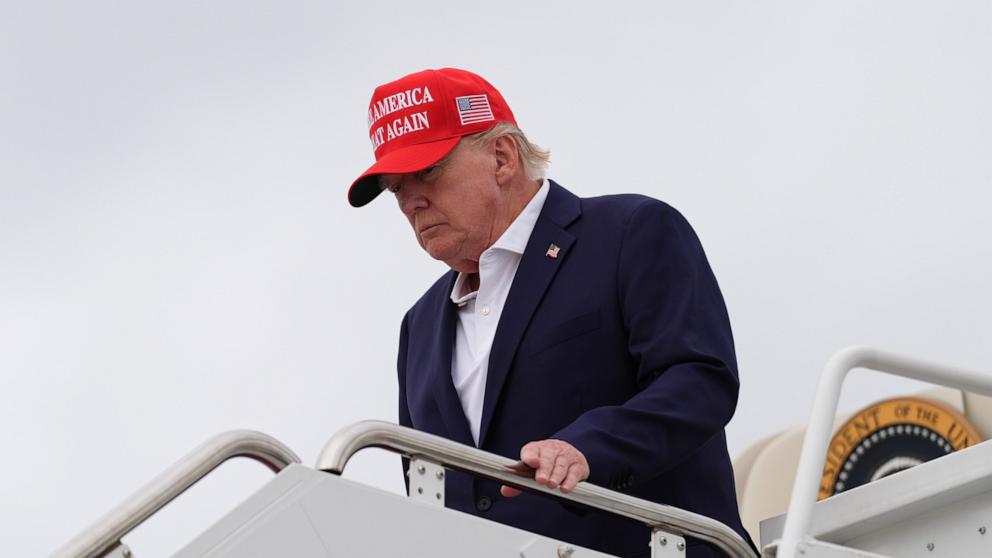
This week’s high-stakes summit between Donald Trump and Xi Jinping in Beijing arrives at a moment when geopolitical tensions, technological competition, and economic uncertainty are converging into a single global fault line.
At the center of the negotiations are three deeply interconnected issues: Taiwan, advanced semiconductor controls, and the accelerating race to dominate artificial intelligence.
Taken together, they are reshaping the global economy — and increasingly determining which nations will define the future world order.
Taiwan and the Geopolitics of Silicon
Taiwan remains the most dangerous flashpoint between Washington and Beijing.
President Trump confirmed ahead of the summit that he intends to discuss U.S. arms sales to Taiwan directly with Xi, an issue Beijing views as inseparable from questions of sovereignty and national reunification.
But Taiwan’s significance extends far beyond military tensions.
The island sits at the center of the global semiconductor ecosystem through companies like TSMC, whose advanced chips power everything from smartphones and cloud infrastructure to next-generation AI systems and military technologies.
In many ways, Taiwan has become the physical bottleneck of the AI age.
That reality has transformed semiconductor manufacturing capacity into a matter of national security for both Washington and Beijing.
The United States has spent years tightening export controls designed to limit China’s access to advanced AI chips and semiconductor manufacturing equipment, while China has simultaneously accelerated efforts to build a fully sovereign domestic technology stack.
China’s AI Surge Is Reshaping the Competition
For years, the dominant assumption in Washington was that the United States maintained a decisive lead in artificial intelligence.
That assumption is now being challenged.
Chinese firms such as DeepSeek have emerged as symbols of China’s rapidly improving AI capabilities, alarming policymakers and executives across the West. Recent developments suggest Chinese AI models are narrowing the performance gap with leading U.S. systems while operating under vastly different political and regulatory frameworks.
At the same time, American AI leaders including OpenAI and Anthropic are increasingly framing AI competition with China as both an economic race and a national security imperative.
The growing concern in Washington is no longer simply whether China can replicate U.S. breakthroughs.
It is whether China can scale AI faster through industrial policy, state-backed deployment, data access, and vertically integrated manufacturing ecosystems.
This is helping fuel a broader shift in U.S. strategy: from globalization toward technological containment.
AI Is Becoming a Sovereign Capability
The summit between Trump and Xi underscores a larger transformation underway globally: AI is no longer viewed as merely a commercial technology sector.
It is increasingly being treated as sovereign infrastructure.
Governments now recognize that control over compute, chips, data centers, models, and energy systems may determine economic resilience, military capability, and geopolitical influence for decades to come.
That shift is reshaping alliances, investment strategies, industrial policy, and international diplomacy.
Even as both sides compete aggressively, the scale of AI’s potential risks — including cyberwarfare, misinformation, autonomous systems, and systemic economic disruption — is creating pressure for new forms of coordination and governance. Leading researchers have warned that society remains dangerously unprepared for the speed and magnitude of AI advancement.
The irony is increasingly difficult to ignore: while Washington and Beijing compete to dominate AI, both may ultimately require unprecedented cooperation to safely govern it.
Markets Are Watching Closely
The geopolitical tensions come amid broader concerns about slowing economic momentum in both countries.
Recent signals from China’s economy — including weakening consumer confidence, property sector instability, and pressure on exports — have added urgency to Beijing’s efforts to stabilize relations with the United States. Meanwhile, the Trump administration faces mounting pressure to maintain American technological leadership while protecting domestic manufacturing and supply chains.
Investors increasingly understand that the future of global markets may hinge on a relatively small set of variables:
- Who controls advanced chips.
- Who builds the dominant AI systems.
- Who secures energy abundance for compute infrastructure.
- And who succeeds in building trusted international partnerships around these technologies.
This is why the Trump–Xi summit is being watched so closely by governments, sovereign wealth funds, institutional investors, and technology executives worldwide.
Because beneath the diplomatic choreography lies a much larger reality:
The contest between the United States and China is no longer simply about trade.
It is about who will architect the operating system of the future global economy.
RELATED STORIES:
- No Xi, But China Turns Out Large Delegation for COP29
- Artificial Intelligence Risks Triggering a New Era of Global Inequality, UNDP Warns
- JPMorgan Expands $1.5T Push Into Defense, AI, and Energy Security in Europe
- Norway’s $2.2 Trillion Wealth Fund Deploys Artificial Intelligence to Strengthen ESG Oversight
- Google Outlines New Plan to Cut AI’s Energy, Water, and Carbon Footprint
 Follow SDG News on LinkedIn