Key Impact Points:
- The Sevilla Commitment sets a new global financing framework focused on investment, debt solutions, and fair financial rules.
- The Sevilla Platform for Action launches 130+ concrete initiatives for immediate implementation.
- Global business and government leaders commit to joint action, despite the U.S. exiting negotiations.
Global Financing Framework Takes Shape in Sevilla
World leaders gathered in Sevilla for the Fourth International Conference on Financing for Development (FFD4) and adopted the Sevilla Commitment (Compromiso de Sevilla) — a new global framework to address mounting development challenges, close the $4 trillion SDG financing gap, and reform an outdated financial system.
“We are here in Sevilla to change course. To repair and rev up the engine of development… and to restore a measure of fairness and justice for all,” said UN Secretary-General António Guterres.
The agreement is the culmination of an intergovernmental negotiation involving more than 190 countries, marking a major milestone ahead of the 2030 SDG deadline.
What the Sevilla Commitment and Platform for Action Actually Do
The Sevilla Commitment focuses on three strategic pillars:
- Mobilizing investment at scale to drive progress on the SDGs
- Addressing unsustainable debt burdens, including new approaches to restructuring
- Reforming the global financial architecture to make it fairer, more transparent, and centered on people’s needs
To move quickly from pledge to delivery, countries also launched the Sevilla Platform for Action — a set of 130+ concrete, time-bound, and fundable initiatives that align with these pillars.
“The Sevilla Commitment document is a global promise to fix how the world supports countries as they climb the development ladder,” said Guterres.
“The platform represents a critical opportunity to restore trust in multilateralism and deliver tangible financing,” added Spain’s Prime Minister Pedro Sánchez.
Examples of early initiatives include:
- A Global Hub for Debt Swaps for Development, led by Spain and the World Bank
- A Debt Pause Clause Alliance, supported by Spain, Canada, the UK, and multilateral development banks
- A push to expand public-private guarantees via the PDB Market Access & Guarantee Facility
- An initiative by the OECD and partners to support SME access to sustainable finance in Africa
“Sevilla is not an endpoint. It is a launchpad for a new era of implementation, accountability, and solidarity,” said UN Economic and Social Affairs Chief Li Junhua.
A Critical Moment Amid Global Strains
The commitment comes at a time of surging public debt, shrinking aid, and sluggish investment — with the 2030 SDG deadline just five years away. Delegates emphasized that the existing system must adapt to meet today’s global challenges, from climate shocks to conflict.
Despite the absence of the United States — which exited negotiations in early June — Guterres remained firm:
“It’s a question of political will… To have the United States on board would be excellent but it can be done in any case by those willing to do so.”
He called on powerful nations to embrace change:
“It’s better to lead the reform of the system now than to wait and eventually suffer the resistance later when power relations change.”
Private Sector Mobilization Underway
Held alongside the main conference, the International Business Forum brought together CEOs, investors, and heads of state to unlock more private capital for sustainable development.
“Development is everyone’s business,” Guterres told delegates, emphasizing the need for public-private cooperation.
A communiqué from the Business Steering Committee outlined five areas for immediate action:
- Make it easier to invest in SDG-aligned projects
- Collaborate with governments from the early planning stage
- Harmonize sustainability rules across countries
- Reform outdated financial regulations
- Improve funding access for small businesses
“Private finance is essential to bridge the global gap,” said José Viñals, Co-Chair of the Global Investors for Sustainable Development (GISD) Alliance.
Developing countries showcased over $1 billion in investable projects, spanning energy, agriculture, and digital infrastructure.
From Dialogue to Delivery
FFD4 builds on the momentum of the Pact for the Future adopted in September 2024, and earlier frameworks like the Monterrey Consensus (2002) and the Addis Ababa Action Agenda (2015).
“FFD4 offers us a once-in-a-decade opportunity to shift the tide,” said Li Junhua. “The focus now must be on action.”
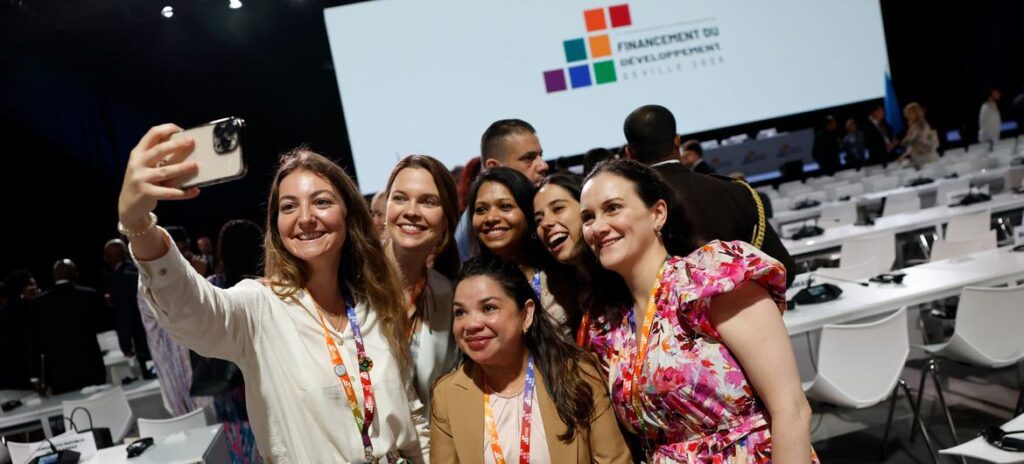
With 15,000 attendees, 60 heads of state, and 470 side events, Sevilla signals a new chapter in global cooperation on financing for development — one rooted in shared responsibility and practical implementation.
Full List of Initiatives:
Download the official FFD4 Sevilla Platform for Action: Full List of Initiatives here (PDF)
 Follow SDG News on LinkedIn