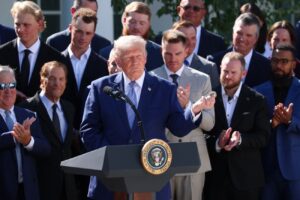
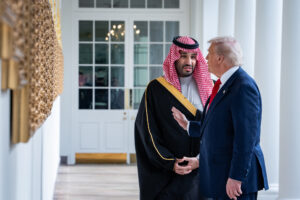
As global diplomacy fractures and new power centers assert themselves, the idea of peace is being rebranded in real time. The launch of the Board of Peace by U.S. President Donald Trump has introduced a parallel, highly personalized vision of global peacemaking, one that sits uneasily beside long-standing multilateral institutions. Against that backdrop, one figure remains central to the United Nations’ traditional architecture of peace and security: Jean-Pierre Lacroix.
Jean-Pierre Lacroixdoes not command headlines. He commands systems.
As Under-Secretary-General for Peace Operations, he oversees the UN’s vast peacekeeping portfolio, from fragile ceasefires to complex political missions operating in some of the world’s most volatile environments. While new peace initiatives grab attention through spectacle and geopolitics, Lacroix runs the machinery that actually keeps soldiers deployed, civilians protected, and diplomatic space open when politics fail.
The Man Behind the Missions
A career French diplomat, Lacroix brings a distinctly European pragmatism to global peacekeeping. Before assuming his current role in 2017, he served as France’s Permanent Representative to the UN and held senior positions in Paris focused on international security and crisis management. His experience bridges theory and practice: negotiation rooms in New York, conflict zones in Africa, and policy debates inside major capitals.
That background has shaped his leadership style. He is methodical, cautious, and deeply institutional. In an era when diplomacy is increasingly personalized and performative, Lacroix represents the opposite instinct: continuity, legitimacy, and process.
Peacekeeping in an Age of Parallel Power
The emergence of the Board of Peace underscores a larger shift. States are experimenting with alternative frameworks for conflict resolution, often outside the UN system. Some view this as innovation. Others see it as fragmentation.
For Jean-Pierre Lacroix, the challenge is not rhetorical. It is operational. UN peacekeeping today faces shrinking budgets, contested mandates, and growing skepticism from powerful member states. Missions are asked to do more with less, in conflicts that are harder to resolve and political environments less forgiving of failure.
Yet the UN’s peace operations remain unmatched in scale and legitimacy. They are authorized by the Security Council, staffed by multinational forces, and embedded in international law. Lacroix’s task is to preserve that credibility while adapting to a world that no longer defaults to multilateral solutions.
Leadership Without a Podium
Unlike high-profile envoys or political figures, Lacroix rarely steps into the spotlight. His influence is felt through decisions that rarely trend online: whether a mission is renewed, reconfigured, or withdrawn; how peacekeepers engage with local communities; how political strategies align with military realities.
Jean-Pierre Lacroix works closely with the UN Secretary-General, António Guterres, but his role is distinct. Where the Secretary-General sets tone and vision, Lacroix manages execution. In a moment when peace is increasingly branded and politicized, that distinction matters.
Why Jean-Pierre Lacroix Matters Now
As global leaders test new models of peacemaking outside traditional institutions, the UN’s peacekeeping chief embodies a quieter truth: peace is not declared, it is maintained. It requires logistics, legitimacy, patience, and an unglamorous commitment to multilateral cooperation.
The Board of Peace may redefine who claims ownership over peace in the 21st century. Jean-Pierre Lacroix defines who actually does the work.
In a world growing louder about peace, he remains one of the few still responsible for keeping it.
RELATED STORIES:
 Follow SDG News on LinkedIn