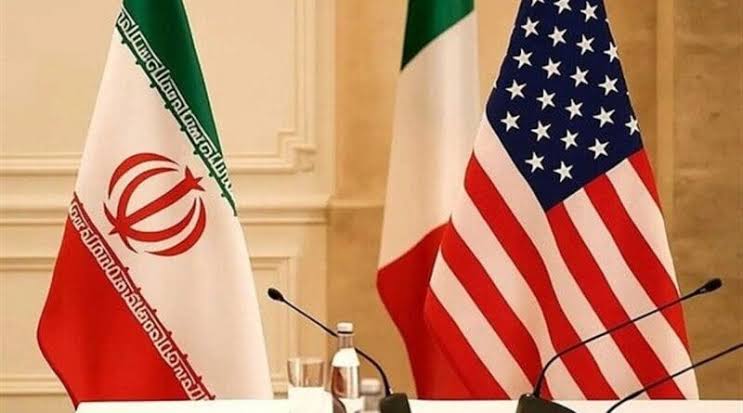
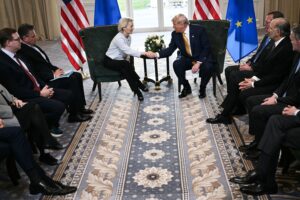
Évian-les-Bains, France — As leaders gather for the G7 Summit in the French lakeside town of Évian-les-Bains, they do so against an extraordinary geopolitical backdrop. Just hours before arriving in France, U.S. President Donald Trump announced what he described as a breakthrough agreement with Iran to end hostilities and reopen the Strait of Hormuz, immediately reshaping the summit’s agenda.
Yet beneath discussions on Iran, Ukraine, artificial intelligence, and global economic stability lies another defining story: the evolving relationship between the United States and each of its closest allies.
The G7 was founded on the premise that the world’s leading democracies are strongest when acting in concert. But in 2026, the alliances around the table are increasingly transactional, shaped by diverging economic interests, security priorities, and differing views on America’s role in the world.
For perhaps the first time in decades, there is no singular transatlantic consensus. Instead, there are seven nations navigating seven distinct relationships with Washington.
Canada: The Most Important Neighbor, and the Most Frustrated
No country is more economically integrated with the United States than Canada. The two nations share one of the world’s largest trading relationships, extensive energy interdependence, and deep security cooperation through NATO and NORAD.
Yet relations have become increasingly complicated. Canadian leaders have expressed concern over rising U.S. protectionism and America’s increasingly unilateral approach to foreign policy and trade. Prime Minister Mark Carney has emphasized strengthening Canada’s ties with Europe and other democratic partners, signaling Ottawa’s desire to reduce strategic dependence on Washington.
Canada still views the United States as indispensable. But increasingly, it also sees diversification as a necessity.
United Kingdom: America’s Closest Ally Faces New Realities
The so-called “special relationship” remains one of Washington’s most important bilateral partnerships. Intelligence cooperation, defense integration, and diplomatic alignment remain exceptionally strong.
However, recent disagreements over tariffs and Arctic security have exposed new tensions. London continues to support American leadership on major security issues, including Iran, but Prime Minister Keir Starmer has simultaneously sought to preserve Britain’s strategic autonomy and strengthen ties with Europe.
The United Kingdom remains America’s closest ally—but perhaps no longer its most unquestioning one.
France: Cooperation Through Strategic Independence
President Emmanuel Macron has spent years advocating for greater European strategic autonomy, arguing that Europe must become more capable of acting independently of Washington.
France has shown cautious support for Trump’s Iran framework while demanding greater transparency and multilateral involvement before committing military assets to securing the Strait of Hormuz. Macron has carefully designed the Évian summit agenda to avoid unnecessary confrontations with Trump while preserving European unity.
Paris increasingly sees itself not merely as an ally of Washington, but as a balancing force capable of shaping global outcomes alongside—and occasionally apart from—the United States.
Germany: Security Dependence Meets Economic Anxiety
Germany’s relationship with the United States remains anchored in security cooperation and NATO. Chancellor Friedrich Merz has welcomed efforts to de-escalate tensions with Iran and remains deeply committed to transatlantic defense partnerships.
At the same time, Berlin is increasingly anxious about geopolitical fragmentation, trade disputes, and America’s unpredictable policy shifts. Germany’s export-driven economy is particularly vulnerable to disruptions in global trade and energy markets.
For Germany, the central question is no longer whether America leads—but how predictable that leadership will be.
Italy: The Bridge Builder
Prime Minister Giorgia Meloni has positioned herself as one of Europe’s most effective interlocutors with President Trump. Rome has consistently sought to maintain close relations with Washington while remaining firmly embedded within European institutions.
Italy sees opportunity in acting as a bridge between the United States and Europe, particularly as geopolitical crises demand greater coordination on energy security, migration, and industrial policy.
Among European capitals, Rome may currently possess the strongest ability to navigate both worlds simultaneously.
Japan: America’s Most Indispensable Partner in Asia
For Japan, the alliance with the United States is existential.
The U.S.-Japan security partnership remains the cornerstone of stability in the Indo-Pacific, particularly amid concerns surrounding China, North Korea, and regional supply chain security.
At the same time, Tokyo has become increasingly proactive in shaping global governance on technology, trade, and economic resilience. Japan’s strategy is not simply to follow American leadership, but to help define it.
In many respects, Japan may now be America’s most strategically indispensable democratic ally.
The United States: The Unavoidable Power
Every leader arriving in Évian shares one reality: despite frustrations, disagreements, and strategic hedging, none can afford to ignore the United States.
The agenda itself reflects this reality. Discussions on Iran, Ukraine, global trade imbalances, artificial intelligence, and debt sustainability are all ultimately shaped by American decisions and capabilities. Trump’s announcement of an Iran framework agreement has already altered the summit’s priorities before leaders even sit down together.
The question confronting the G7 is therefore not whether America remains the central power within the democratic world.
It does.
The question is whether the United States and its allies can adapt their relationships for a new era in which leadership is increasingly transactional, alliances are more fluid, and global crises demand cooperation despite growing differences.
A Summit About More Than Iran
The Iran agreement and the reopening of the Strait of Hormuz may dominate headlines this week. But the deeper story unfolding in Évian is about the future of Western cooperation itself.
The G7 was created because democracies believed they were stronger together than apart.
The challenge in 2026 is determining what “together” now means.
 Follow SDG News on LinkedIn