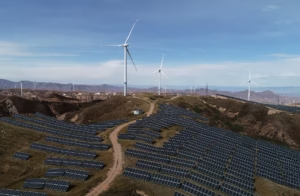
Beijing’s first binding renewable generation goal shifts the focus from building clean energy capacity to delivering more renewable electricity—and strengthening the grid’s ability to rely on it.
China has announced a legally binding national target to increase electricity generation from wind and solar by 53% by 2030, marking the country’s first binding renewable electricity generation goal.
Under the new plan, renewable electricity generation will increase from the equivalent of 1.18 billion tonnes of standard coal in 2025 to 1.8 billion tonnes by 2030—a 53% increase. The policy also seeks to improve the reliability of renewable power during periods of peak demand, reflecting a shift from measuring installed capacity to measuring the amount of clean electricity actually delivered to the grid. Reuters reported that the plan is designed to strengthen the role of renewable energy as China’s electricity system continues to evolve.
From Capacity to Electricity Generation
For more than a decade, China has led the world in deploying wind turbines, solar farms, batteries, and electric vehicle infrastructure. That investment has expanded renewable electricity generation domestically while helping lower the global cost of many clean energy technologies.
The new policy reflects a change in emphasis. Rather than measuring progress primarily through installed generating capacity, Beijing is placing greater weight on how much renewable electricity is produced and delivered to consumers. As wind and solar account for a larger share of China’s electricity mix, integrating those resources into a reliable power system has become an increasingly important focus of the country’s energy planning.
The plan also establishes new benchmarks for renewable performance during periods of high electricity demand. By 2030, China aims for wind and solar—supported by energy storage—to provide 20% of electricity consumed during peak demand, underscoring the government’s focus on making renewable energy a more dependable component of the national grid, according to Reuters.
Energy Security and the Global Transition
The policy comes as many governments are placing greater emphasis on the relationship between renewable energy and energy security.
The Financial Times has reported that geopolitical tensions, supply chain disruptions, and volatility in fossil fuel markets have increased interest in domestically generated renewable energy, battery storage, and modernized electricity grids as components of long-term energy security. China’s latest target comes amid that broader international trend.
While coal continues to play an important role in China’s electricity system, the country is also investing heavily in renewable generation, transmission infrastructure, and energy storage to support a growing share of wind and solar power.
Global Significance
Because China is the world’s largest electricity producer, largest emitter of greenhouse gases, and largest manufacturer of many clean energy technologies, changes in its energy policy can influence global energy markets, supply chains, and emissions trajectories.
That influence is already becoming evident. Earlier this year, the Associated Press, citing analysis from energy think tank Ember, reported that growth in renewable electricity generation has begun outpacing growth in global electricity demand—a milestone driven in large part by China’s rapid expansion of solar power.
China’s new renewable generation target places greater emphasis on increasing clean electricity output while improving the ability of the country’s power system to integrate growing levels of renewable energy. As countries seek to balance economic growth, energy security, and emissions reduction goals, the policy highlights a common challenge facing electricity systems worldwide: expanding renewable generation while maintaining reliable and resilient power supplies.
RELATED STORIES:
 Follow SDG News on LinkedIn