Panama City — The second day of the Nature Summit placed a powerful spotlight on the leadership, wisdom, and resilience of Indigenous peoples, reminding the world that solutions to the planet’s greatest challenges often begin in the forests, mountains, and coastal territories of those who have protected nature for generations.
A Day Rooted in Ancestral Knowledge
The day opened with high-level remarks from Minister of Environment Juan Carlos Navarro, whose leadership was once again on display as he emphasized the importance of placing Indigenous leadership at the heart of sustainable and scalable solutions. His words set the tone for a day that celebrated ancestral wisdom not as a relic of the past, but as a roadmap for humanity’s future.
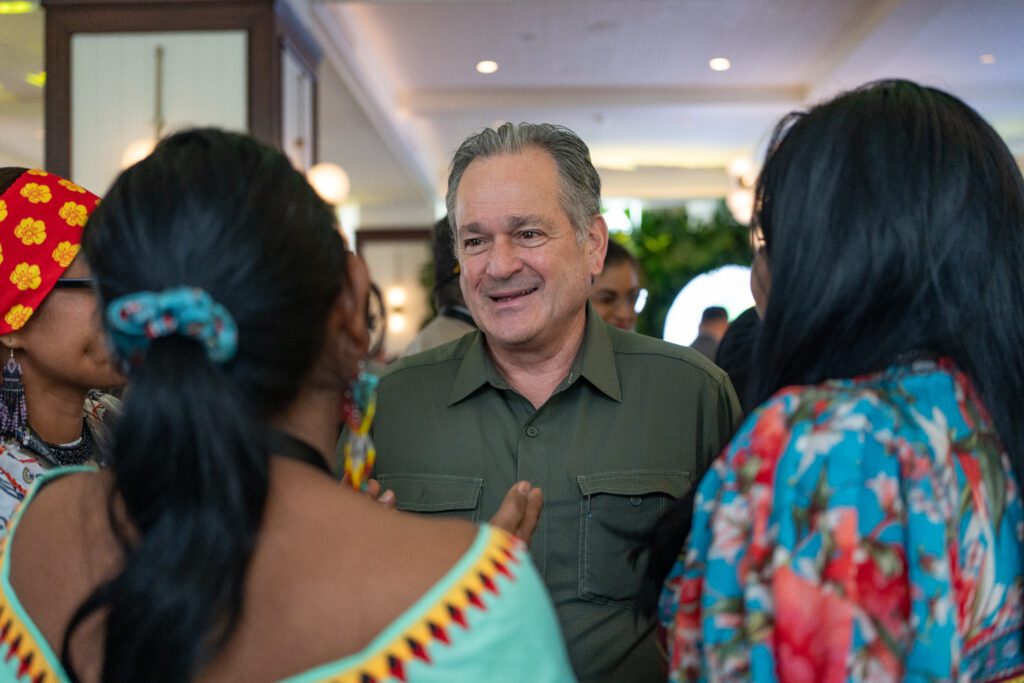
The opening segment was led by Fany González, Head of the Office of Environment for Indigenous Peoples at Panama’s Ministry of Environment, who has played a pivotal role in ensuring that Indigenous communities are represented in national and regional environmental policy. Her leadership has helped institutionalize Indigenous participation in climate and biodiversity governance, ensuring that their perspectives shape decisions from the local to the global level.
The first dialogue, “Economía Basada en la Naturaleza: Perspectivas y Caminos desde los Pueblos Indígenas,” featured Efraín Castillero Boyd, President of Fundación Kalu Ibaky, in conversation with Juan Carlos Monterrey, Panama’s Special Representative for Climate Change. Their exchange underscored how traditional ecological knowledge is not only vital for adaptation but also foundational for creating equitable economic systems that regenerate both ecosystems and livelihoods.
Voices of Resilience and Cultural Pride
Through panels and performances, the Nature Summit gave center stage to communities whose resilience defines the word itself.
A Guna dance performance filled the hall with color and rhythm, honoring the connection between culture and conservation. Later, a dialogue moderated by Fany González brought together Indigenous leaders including Cacique General Jaime Enrique Pérez Pérez of Madugandí and the Cacique of Wargandí, who spoke about governance rooted in harmony with nature and the importance of territorial rights in safeguarding biodiversity.
The session “Territorios Indígenas como Guardianes Climáticos” highlighted Teovaldo Hernández Thompson, Director of Geoconversación Kuna, who articulated how Indigenous territories function as critical carbon sinks, an often-overlooked contribution to global climate mitigation efforts.
Regeneration, Representation, and Renewal
A mid-morning panel on “Turismo Regenerativo y Economías Basadas en la Naturaleza” brought together community leaders Sandra Vásquez of Pro Eco Azuero, Efraín Guerrero of Movimiento Cultural Identidad, and Viveca Yasmín Pinzón of Ecogranja El Paraíso. Each shared tangible examples of how regenerative tourism can both preserve ecosystems and provide sustainable livelihoods, embodying the “protect, preserve, and provide” ethos that has become the Nature Summit’s signature.
Meanwhile, Jessica Wakauma from Amigos del Bosque OBC shared her organization’s efforts to engage youth and local communities in forest conservation, linking climate action to generational stewardship.
Bridging Traditional Wisdom and National Policy
In the afternoon, attention turned to Panama’s Sistema Nacional de Áreas Protegidas (SINAP), where Luis Carles, Segundo Sugasti Berrio, and Anita Mong presented how Indigenous knowledge is being woven into the management of protected areas like Darién National Park. Their approach signaled a shift toward co-governance, ensuring that those who live closest to nature have a seat at the table shaping its protection.
A presentation by Rebeca Reiber of Nueva Vida introduced the EcoAldea 8va Vida Panamá project, designed to bridge ecological design and community development, a reflection of the Summit’s core mission to scale solutions that unite environmental integrity with human well-being.
A Platform for the Future
The day concluded with an open mic session led by Juan Carlos Monterrey, inviting participants to share their reflections, ideas, and calls to action. What emerged was a unified voice: Indigenous peoples are not beneficiaries of sustainability; they are its architects.
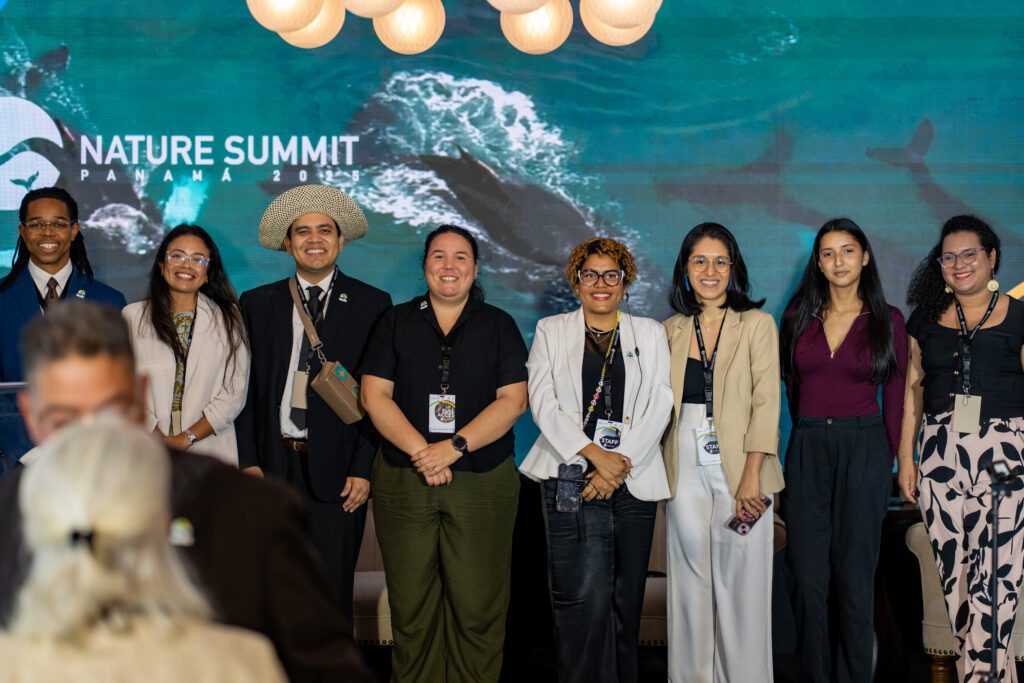
As the Nature Summit Series continues, its commitment to elevating Indigenous leadership stands as a model for the global community. By integrating ancestral wisdom into modern frameworks for the nature-based economy, the Summit has proven that lasting prosperity is built not through extraction, but through inclusion, regeneration, and respect.
Looking ahead, the lessons shared in Panama will resonate as the world gathers for COP30 in Belém, where the protection of nature and the leadership of frontline communities will again take center stage.
The next chapter of this journey unfolds soon. The third installment of the Nature Summit Series will take place alongside the United Nations Convention to Combat Desertification (UNCCD) negotiations in Panama from December 1 to 3. This event will complete the framework of aligning the Nature Summit Series with the three UN Conventions that emerged from the 1992 Rio Earth Summit — climate (UNFCCC), biodiversity (CBD), and desertification (UNCCD) — uniting them under one shared vision for planetary resilience and prosperity.
Interested attendees who would like to be considered for this invitation-only event can express their interest here.
Related Content: Nature Summit in Panama Launches Landmark Partnership to Redefine How the World Values Nature
 Follow SDG News on LinkedIn