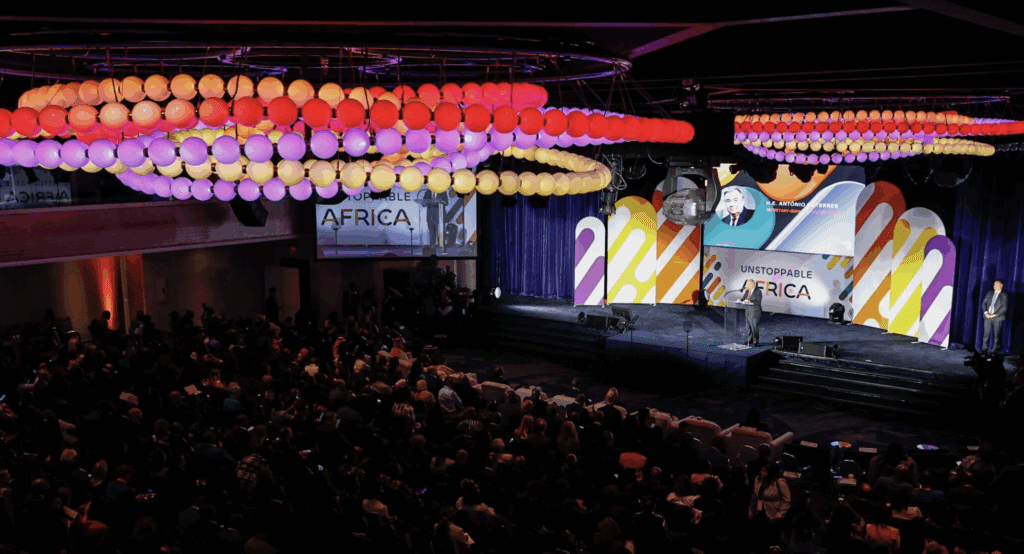
NEW YORK, Times Square — 21 September 2025 — Beneath the billboards of Times Square, Africa’s leaders and business titans stepped into the global spotlight today with a message of confidence and urgency. The Marriott Marquis hosted Unstoppable Africa 2025, the flagship forum of the Global Africa Business Initiative (GABI), just days before the 80th United Nations General Assembly.
The forum, co-hosted by UN Secretary-General António Guterres and H.E. Mahmoud Ali Youssouf, Chairperson of the African Union Commission, marked a decisive turn in global economic discourse: from “doing business in Africa” to “doing business with Africa.”
Africa at the Center of Global Opportunity
“The world meets at a time of turbulence and opportunity, and Africa stands at the centre of that opportunity,” said António Guterres, opening the forum.
He cited Africa’s youthful population, vast energy reserves, and rising innovation in fintech, agribusiness, fashion, and artificial intelligence. The task, he warned, is to turn this promise into prosperity aligned with the SDGs, Agenda 2063, and the Pact for the Future.
Ms. Sanda Ojiambo, Assistant Secretary-General and CEO of the UN Global Compact, pressed the need for a narrative reset: “The time has come to embrace a new narrative for Africa. We are shifting from doing business in Africa to doing business with Africa.”
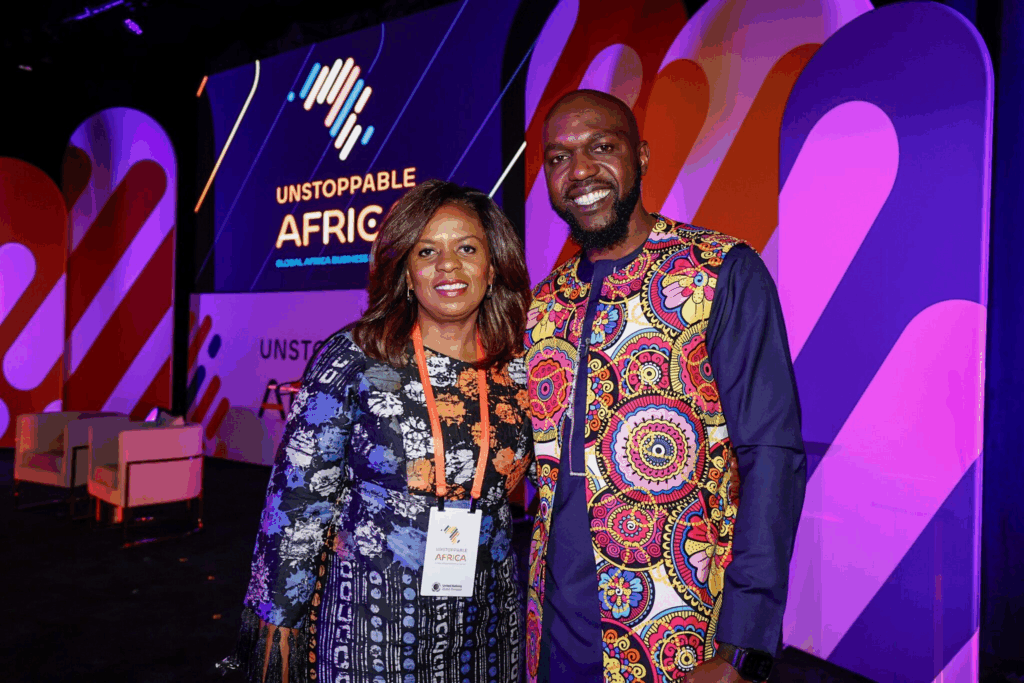
Formed in 2022, GABI works to rebalance the terms of global business engagement with Africa, aligning with Agenda 2063 and the SDGs. Its agenda spans energy, trade, digital transformation, food systems, education, health, and creative industries.
Leaders Call for Policy Reform and Investment
In a closed-door session, Guterres and Youssouf met with Angolan President João Lourenço, UN Deputy Secretary-General Amina Mohammed, entrepreneur Strive Masiyiwa, and 14 African CEOs. Together, they urged governments to strengthen policies that encourage industrial growth, regional trade, and long-term investment.
“Unstoppable Africa has become a powerful platform for African and global leaders, and the world’s biggest companies to engage with Africa,” said Masiyiwa, Executive Chairman of Econet Global and Cassava Technologies.
Youssouf echoed the theme: “Unstoppable Africa is more than a slogan. It is, first and foremost, a recognition of our potential and a determination to act, to transform the daily lives of African citizens.”
Trade, Minerals, and the Energy Transition
The forum spotlighted Africa’s shifting trade role in a fractured global economy. WTO Director-General Ngozi Okonjo-Iweala noted that supply chain diversification is pushing global companies toward Africa, citing growth opportunities in textiles and palm oil. With one-third of global reserves of critical minerals, she said, local processing could anchor Africa in the clean energy supply chain.
President Lourenço promoted the Lobito Corridor, linking the Atlantic to the Indian Ocean, as a transformative trade artery. Botswana’s President Duma Boko called for harmonized laws, faster approvals, and stronger public-private partnerships to unlock intra-African trade.
On minerals, Botswana’s Minister of Minerals and Energy, Bogolo Kenewendo, outlined plans for local processing hubs around mines to keep value within Africa. Paul Hinks of Symbion Power stressed the importance of rare earths and Africa’s potential to provide supply chain alternatives beyond China.
Energy access also loomed large. Rockefeller Foundation President Rajiv Shah announced that 32 nations are expected to sign energy agreements this week, with leaders targeting $50 billion in affordable finance to advance Mission 300—a drive to expand reliable electricity across the continent.
Financing Africa’s Green Industrial Future
In a pivotal panel, Alain Ebobissé, CEO of Africa50, urged African institutional investors—who manage over $2 trillion—to raise infrastructure allocation from 3% to 5%. Such a shift, he argued, could significantly close the continent’s financing gap.
Side events amplified this call. The Africa Business Leaders Coalition (ABLC) gathered CEOs representing $20 billion in turnover, urging harmonized regulations to ease cross-border trade.
What This Means for Global Leaders
The energy in Times Square made clear that Africa intends to set—not follow—the global economic agenda. With leaders demanding structural reforms, mobilizing capital for clean energy, and pushing for value addition in critical minerals, Africa is positioning itself as both a growth engine and indispensable partner in reshaping global markets.
For policymakers and diplomats, the message was unambiguous: Africa is not just seeking investment but insisting on equitable partnerships to drive the next phase of sustainable development.
Related Content: Africa’s Big Push: Unstoppable Africa 2025 Puts Continent at Center of Global Markets
 Follow SDG News on LinkedIn