While the war between the United States, Israel, and Iran has been defined by airstrikes, cyber operations, and escalating rhetoric in the Middle East, a quieter but equally consequential theater has emerged across Europe.
It is here—far from the frontlines—that the infrastructure enabling the Iran War is being sustained.
The Backbone of a Modern War
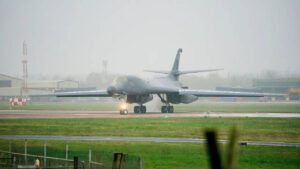
Across the continent, a web of American military bases has become indispensable to the conduct of operations. From the United Kingdom to Germany, Italy, Greece, and beyond, these installations are serving as the logistical backbone of the conflict.
Aircraft are refueled mid-mission. Intelligence is processed and relayed in real time. Drone operations are coordinated through European command centers. Troops and equipment move seamlessly between continents, enabled by decades-old defense agreements that were never designed for this kind of war, yet now define it.
Germany’s Ramstein Air Base stands at the center of this system. Long a symbol of transatlantic cooperation, it has become one of the most critical nodes in the operational chain, facilitating communications, targeting coordination, and the rapid execution of missions across the Middle East.
In the architecture of modern warfare, distance has been replaced by connectivity. Europe’s role is not symbolic. It is structural.
Public Opposition, Private Cooperation
This reality sits uneasily alongside Europe’s political posture.
Across major capitals, leaders have voiced concern over the war’s legality, its humanitarian consequences, and its destabilizing impact on global markets. Public sentiment in several countries has turned sharply against deeper involvement, with protests and political pressure mounting.
Yet behind the scenes, cooperation continues.
European governments have largely upheld their defense commitments, allowing the United States to utilize bases and airspace critical to sustaining operations. In some cases, they have drawn careful distinctions—framing their role as logistical rather than combative—but the effect is the same.
The war, in practical terms, runs through Europe.
There are limits. Spain has resisted allowing its territory to be used for offensive missions, forcing operational adjustments. France and Italy have emphasized constraints on how their facilities are used. But these exceptions only underscore the broader pattern: Europe remains deeply embedded in the conflict’s execution, even as its leaders attempt to distance themselves politically.
Trump’s Pressure Campaign—and Europe’s Response
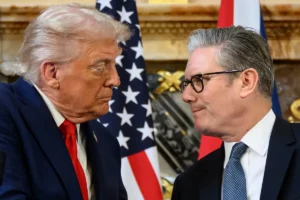
Complicating this dynamic is the increasingly confrontational tone of President Donald Trump toward European leaders.
In recent weeks, Trump has issued a series of public broadsides—criticizing NATO allies for what he describes as insufficient support, questioning their reliability, and framing Europe as both dependent on American security and obstructive in moments of crisis.
The rhetoric has been unusually direct, at times veering into open frustration with leaders in Berlin, Paris, and London. It reflects a broader shift in the transatlantic relationship, where coordination is no longer assumed but contested in public view.
And yet, despite the political friction, the machinery of cooperation has not broken down.
European governments have not withdrawn access to bases. Intelligence sharing continues. Military coordination remains intact. If anything, the dissonance between rhetoric and reality has grown more pronounced.
For European leaders, the calculus is complex. Publicly aligning too closely with Washington risks domestic backlash and political cost. But materially stepping back from cooperation would undermine long-standing security arrangements and potentially weaken their own strategic position.
For now, pragmatism is prevailing over politics.
The Geography of Power
Europe’s centrality to the conflict is not accidental. It is geographic.
Positioned between North America and the Middle East, the continent functions as a natural bridge—one that enables rapid deployment, sustained operations, and real-time coordination across theaters. Without it, the logistical burden on U.S. forces would increase dramatically, slowing response times and constraining operational reach.
In this sense, Europe is not simply a partner. It is a platform.
This geographic reality also brings new risks. As Iran expands its missile capabilities and signals a willingness to target distant assets, parts of Europe are increasingly within strategic range. What was once a distant conflict is now, at least in theory, closer to home.
Economic Shockwaves and Political Strain
The consequences are already being felt beyond the military domain.
Energy markets have reacted sharply, with prices rising amid fears of prolonged disruption. Supply chains are under pressure. Economic growth forecasts across Europe are being revised downward as policymakers brace for sustained volatility.
These pressures are feeding back into the political system.
Leaders must now navigate a delicate balance: maintaining their security commitments while responding to voters increasingly wary of entanglement in another distant war. The longer the conflict persists, the harder that balance becomes to sustain.
A War Without Clear Boundaries
What is emerging is a new model of conflict—one that defies traditional definitions of participation.
Europe is not deploying large numbers of troops to the battlefield. It is not leading offensive operations. And yet, its infrastructure, geography, and alliances have made it indispensable to how the war is fought.
The line between participant and bystander has blurred.
Trump’s rhetoric may be testing the limits of transatlantic cohesion, but it has not yet altered the underlying reality: Europe remains central to the war’s execution, whether it chooses to acknowledge it publicly or not.
In a world of networked warfare, influence is no longer measured solely by who fires the first shot.
It is measured by who makes the war possible.
RELATED STORIES:
- UN Summit Aims to Transform Landlocked Nations into Global Trade Links
- How the Iran War Is Accelerating the World’s Shift to Energy Independence
- India Bets Big on the Backbone of the AI Age
- The Iran War’s Shock to the Global System: Energy, Economics, and Global Governance in Crisis
- Trump Wants Greenland. NATO Is Now the Story.
 Follow SDG News on LinkedIn