UNCTAD says global FDI rose to $1.6 trillion in 2025, but the recovery is increasingly concentrated in advanced economies and strategic sectors such as AI, semiconductors, clean energy and critical minerals.
Global foreign direct investment returned to growth in 2025, offering a tentative sign of resilience in an economy still shaped by geopolitical tensions, trade uncertainty and high financing costs. But the rebound is not being felt evenly.
According to the United Nations Conference on Trade and Development’s World Investment Report 2026, global FDI rose 6% to $1.6 trillion last year, ending two consecutive years of decline. Yet UNCTAD warned that the recovery remains “fragile and uneven,” with investment increasingly concentrated in a narrow set of capital- and technology-intensive sectors.
Developed economies saw FDI inflows rise 11% to about $723 billion, while developing economies recorded a more modest 2% increase to just over $901 billion. The imbalance is especially important because foreign investment remains a core channel for job creation, technology transfer, infrastructure development and access to global markets.
AI Is Reshaping Where Capital Goes
The headline recovery masks a deeper shift in the global investment landscape. UNCTAD found that growth in investment activity was driven largely by data centers, oil and gas, semiconductors and other strategic sectors, while many traditional development-linked sectors weakened.
That matters because the new investment map is increasingly being drawn around artificial intelligence, digital infrastructure, critical minerals, advanced manufacturing and economic security. These sectors often require large subsidies, sophisticated industrial ecosystems, advanced energy systems and deep capital markets — advantages that wealthier economies are better positioned to offer.
UNCTAD noted that semiconductors, AI, clean energy and critical minerals now represent nearly half of all announced greenfield projects, but least developed and lower-middle-income countries together attract only about 10% of those projects.
In other words, the AI boom is not simply changing technology markets. It is changing the geography of development.
A Narrow Recovery for Developing Economies
For developing countries, the picture is mixed. Total inflows rose slightly, but gains were concentrated in a small number of economies. High-income developing economies such as Singapore, Hong Kong and the United Arab Emirates continued to attract a disproportionate share of investment flows, while lower-middle-income economies saw inflows decline 5%.
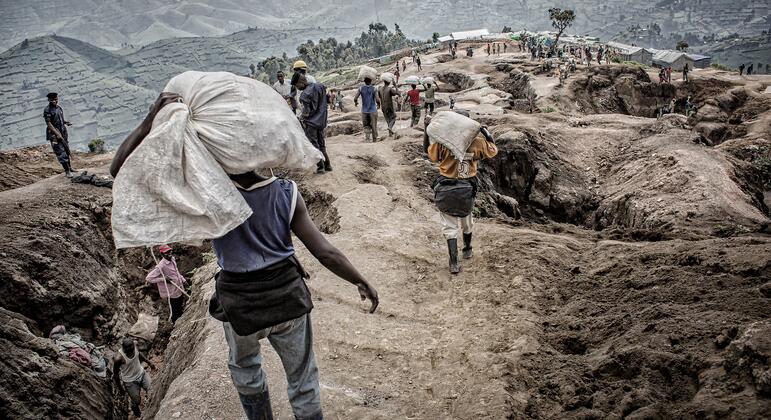
Least developed countries saw FDI rise 21%, but UNCTAD said that increase remained concentrated in a small number of economies and largely tied to resource-rich markets. That suggests that even where investment is rising, it may not be broad-based enough to drive inclusive industrial transformation.
The concern is not only volume, but quality. Investment in data centers or extractive industries can lift aggregate FDI numbers without necessarily delivering the same development impact as investment in local manufacturing, renewable energy access, water systems, agrifood value chains, health, education or small-business ecosystems.
Strategic Competition Is Replacing Efficiency
For decades, developing economies could compete for investment by offering lower costs, expanding workforces and access to emerging consumer markets. UNCTAD’s report suggests that model is weakening.
Capital is increasingly following strategic calculation: subsidies, supply-chain security, industrial policy, technology protection and geopolitical alignment. That shift can benefit countries that are already embedded in advanced supply chains, but it risks closing off the traditional development pathway for many lower-income economies.
As UNCTAD put it, the new investment logic “rewards deep pockets and established ecosystems,” making it harder for many developing countries to match the scale of support deployed by major economies.
The Development Stakes
The report lands at a time when the global financing gap for sustainable development remains acute. Developing countries need long-term capital for infrastructure, clean energy, resilient agriculture, digital connectivity and climate adaptation, but investment flows are becoming more selective and more strategically contested.
The challenge for policymakers is to ensure that the next wave of global investment does not deepen divergence between countries that can compete in AI-era industrial policy and those left mainly as sources of raw materials, low-margin production or debt-dependent infrastructure demand.
For developing economies, UNCTAD points to the need for targeted national strategies: identifying realistic entry points in evolving value chains, building infrastructure and skills, strengthening local supplier networks and aligning investment policy with industrial development.
For the international community, the message is broader. If AI, semiconductors, clean energy and critical minerals are now central to global investment, then access to those value chains must become part of the development agenda — not only a competition among advanced economies.
What Comes Next
The rebound in foreign investment is welcome. But the distribution of that rebound shows a global economy increasingly defined by concentration: concentration of capital, concentration of technology, and concentration of strategic advantage.
The question now is whether the new era of investment will help developing countries move into higher-value industries — or whether it will reinforce the very inequalities that global development finance is meant to overcome.
As governments race to secure AI infrastructure, advanced manufacturing and critical minerals, the development test will be whether investment can still serve as a bridge to shared prosperity, rather than another measure of global fragmentation.
Read the UNCTAD’s World Investment Report 2026
RELATED STORIES:
 Follow SDG News on LinkedIn