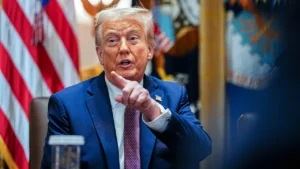
Just weeks before calling on allies for support in the Strait of Hormuz, U.S. President Donald Trump publicly downplayed the value of NATO, suggesting the United States had never truly needed its partners and minimizing their contributions in past conflicts. The remarks struck a nerve across Europe, particularly among countries that had lost more than a thousand soldiers fighting alongside U.S. forces in Afghanistan, often on the front lines.
Those comments did not exist in isolation. Less than two months ago, Trump was also leaving open the possibility of military action against Greenland, a territory of NATO ally Denmark. Even if such an invasion was unlikely, the signal was unmistakable: longstanding alliances could be leveraged, pressured, or redefined through a transactional lens.
Now, those signals are reverberating across global capitals.
In a sharp and consequential turn, the same allies whose sacrifices were dismissed are being asked to step into a new and rapidly escalating conflict. The result is not unity, but hesitation. Not alignment, but fracture.
As the Iran War intensifies, the Strait of Hormuz has become the focal point of this tension. The narrow waterway, through which roughly one fifth of global oil supply flows, is now effectively disrupted by Iranian military actions in response to U.S. and Israeli strikes. What began as a regional conflict has evolved into a global test of alliances, exposing the limits of cooperation in a more transactional era of geopolitics.
A Call for Support And a Global Refusal
President Trump has aggressively pushed NATO allies and key global economies to contribute naval forces to secure the Strait and restore the flow of energy. But the response has been strikingly unified in one respect: reluctance.
Across Europe, the message has been consistent. German officials have made clear that the conflict with Iran falls outside NATO’s mandate and should not automatically trigger alliance involvement. Defense Minister Boris Pistorius has openly questioned the strategic logic of the request, suggesting that a limited number of European naval deployments would add little value given the scale of U.S. military power already in the region.
More broadly, European leaders have emphasized that this is not a war they initiated and are unwilling to be drawn into a rapidly escalating conflict without a clear mandate or defined endgame.
At the European Union level, foreign policy chief Kaja Kallas has acknowledged internal discussions about expanding EU naval operations in the Middle East, but confirmed that foreign ministers ultimately chose not to extend an existing mission. Her assessment reinforced a broader European position that the conflict does not justify immediate military engagement.
Beyond NATO: A Broader Alliance Recalibration
The ripple effects of this moment extend well beyond Europe.
Japan and Australia, two of the United States’ most important Indo-Pacific partners, have also declined to participate militarily in securing the Strait of Hormuz. Their hesitation reflects not only legal and strategic constraints, but also a deeper reassessment of alliance expectations in an increasingly uncertain geopolitical environment.
The pattern is consistent. Allies are no longer responding automatically to U.S. requests. Instead, they are recalibrating based on national interest, domestic constraints, and a growing skepticism about being drawn into conflicts without clear strategic alignment.
The transactional approach that has strained NATO is now shaping U.S. relationships across the Indo-Pacific as well.
Diverging Strategies Across Europe
While much of Europe has taken a cautious stance, there are notable differences in tone and ambition.
UK Prime Minister Keir Starmer has emphasized that discussions are ongoing with the United States, European allies, and Gulf partners to explore a viable path forward, but has made clear that decisions have not yet been reached. The United Kingdom appears to be keeping options open while avoiding immediate escalation.
France has signaled a more proactive posture. President Emmanuel Macron has explored the idea of assembling a coalition to escort commercial vessels and ensure freedom of navigation through the Strait. However, even France has stopped short of immediate action. French officials have indicated that any such initiative would likely come only after the most intense phase of the conflict subsides, and there are currently no plans to deploy naval assets into the Strait in the near term.
Spain has taken an even firmer position. Earlier this month, Madrid declined to allow the United States to use its air bases for operations related to the conflict, prompting a sharp response from Washington, where President Trump insisted that U.S. operations did not depend on Spanish support.
Together, these positions highlight a fragmented European response, unified in caution but divided in how to approach the longer term challenge.
NATO Under Pressure
The crisis is placing unprecedented strain on NATO. President Trump has warned that the alliance could face a very bad future if members fail to support U.S. efforts, framing the situation as a test of burden sharing and loyalty.
Yet many European leaders are rejecting that framing outright. Officials across the continent argue that NATO’s purpose is collective defense, not participation in externally initiated conflicts. Some have also pointed to the imbalance in capabilities, questioning whether symbolic contributions would meaningfully alter the situation on the ground.
The contradiction is difficult to ignore. Allies who were recently told they were not needed are now being asked to contribute to a conflict they did not start. The political and diplomatic consequences of that shift are now playing out in real time.
Energy Shockwaves Across the Global Economy
Beyond geopolitics, the disruption of the Strait of Hormuz is triggering profound economic consequences.
Oil prices have surged sharply amid the blockade, with markets reacting to what is being described as one of the largest supply disruptions in modern history.
For energy dependent economies in Asia, including Japan and China, the stakes are particularly high. Some countries have begun releasing strategic reserves or negotiating alternative supply arrangements, while others are recalibrating their long term energy security strategies.
The crisis is accelerating a broader global shift: a renewed emphasis on energy independence and diversification, as nations seek to reduce vulnerability to geopolitical chokepoints.
A New Era of Transactional Alliances
Perhaps the most significant implication of this crisis is what it reveals about the evolving nature of global alliances.
The United States is now confronting the consequences of a more transactional approach to partnerships. Allies that were once expected to align automatically are instead making independent calculations, weighing risk, legitimacy, and strategic interest before committing.
This is not just a moment of disagreement. It is a structural shift. Alliances are becoming more conditional, less predictable, and increasingly shaped by immediate interests rather than long term commitments.
What Comes Next
As the conflict continues, the future of the Strait of Hormuz, and the stability of global energy markets, remains uncertain. Diplomatic efforts are ongoing, but Iran has shown little willingness to back down, while the United States continues to press for international support.
What is clear is that this crisis has already reshaped the geopolitical landscape. It has exposed fractures within NATO, extended those tensions into the Indo-Pacific, and reinforced the strategic importance of energy security.
In doing so, it raises a fundamental question for the years ahead:
In an era of escalating global risks, can alliances built on shared values withstand a world increasingly defined by transactions?
RELATED STORIES:
- Maersk Suspends Key Shipping Routes as Iran War Disrupts Global Trade
- The Red Line Moment: Trump’s 100 Percent Tariff Tests the Limits of Trade Power
- The Art of the Misdeal: What Greenland Revealed About the Price of Transactional Power
- Europe Moves as Washington Talks, NATO Troops Join Denmark in Greenland
- US Government’s National Security Strategy, Decoded: The Signals Washington Is Sending the World
 Follow SDG News on LinkedIn