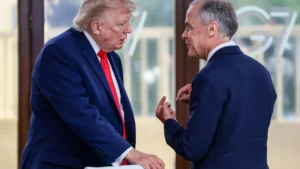
The alliance that once defined the architecture of global security is now confronting a reality it was never designed to handle: internal division at the highest level, in the middle of an escalating geopolitical crisis.
At the center of the latest rupture is a widening rift between the United States and Spain—one that is exposing not just policy disagreements, but structural limitations within NATO itself.
A Crisis Without a Mechanism
What has emerged from behind closed doors is as consequential as the dispute itself: NATO has no formal mechanism to suspend or expel a member state.
As tensions escalated over Spain’s refusal to support military operations tied to the war in Iran, U.S. officials reportedly explored punitive options. The response from within NATO was clear—there is no legal or institutional pathway to enforce such a move.
This is more than a procedural gap. It is a foundational constraint.
The alliance was built on the assumption that its members would ultimately align on core security priorities. It was never designed for a moment when a key ally would openly resist the strategic direction of its most powerful member.
Spain’s Strategic Defiance
Spain’s position reflects a broader recalibration underway across Europe.
Faced with the risks of escalation, domestic political pressures, and economic exposure, Madrid has taken a more cautious approach—declining to provide the level of military cooperation Washington views as essential. Access, basing rights, and operational support, once considered routine within NATO, are now points of contention.
This is not symbolic dissent. It is operational resistance.
And it signals a deeper shift: European allies are no longer defaulting to alignment with U.S. strategy, particularly in conflicts that extend beyond the immediate defense of the alliance.
The Iran War as a Breaking Point
The war in Iran has become more than a regional conflict. It is now a stress test for the durability of Western alliances.
For the United States, the expectation remains that NATO partners will act as force multipliers in moments of crisis. For Spain and others, the calculus has changed, balancing national interest, political reality, and the risks of entanglement in a widening conflict.
The result is a growing divergence in how security itself is defined.
The Original Assumption Is Breaking Down
At its core, NATO reflects a post-World War II worldview: that security could be centralized, alliances would remain cohesive, and shared values would ensure alignment.
That assumption is now under strain.
When threat perceptions diverge, when economic and political interests fragment, and when domestic electorates push back against foreign entanglements, the system begins to stall.
The absence of a mechanism to discipline or remove members underscores a deeper truth. The system was never built to manage internal contradiction at this scale.
From Alliance to Arrangement
The U.S.–Spain standoff is not an isolated dispute. It is a signal of a broader transformation underway in global affairs.
Alliances are becoming more conditional. Sovereignty is reasserting itself. Multilateral institutions are being tested not by external threats, but by internal divergence.
In this emerging landscape, the question is no longer whether NATO can maintain unity in moments of tension, but whether unity itself is still the organizing principle of global security.
A System Under Strain
For decades, NATO’s strength was its predictability. Today, that predictability is eroding.
The inability to reconcile internal dissent, let alone act on it, reveals the limits of a system built for consensus in a world increasingly defined by fragmentation.
The rift between the United States and Spain may be tactical in origin. But its implications are strategic.
Because when alignment can no longer be assumed, the entire foundation of the alliance begins to shift.
RELATED STORIES:
- “I don’t need international law.”: Welcome to the New World Order
- Trump Threatens Tariffs Over Greenland, Forcing Europe Into a High-Stakes Test of Alliance Unity
- Trump Wants Greenland. NATO Is Now the Story.
- IRA’s Tax Credit Revolution: Demystifying Tax Equity Investments and Transferable Credit
- The Cost of Trump’s Transactional Alliance Doctrine Is Now Unfolding in Real Time
 Follow SDG News on LinkedIn