Novo Nordisk Foundation and Grundfos Foundation Back Record Private-Sector Commitment to Expand Climate-Smart School Feeding
The World Food Programme (WFP), backed by major philanthropic support from the Novo Nordisk Foundation and the Grundfos Foundation, has launched one of the most ambitious school meals partnerships in recent years, aimed at transforming food systems and child nutrition across Eastern Africa.
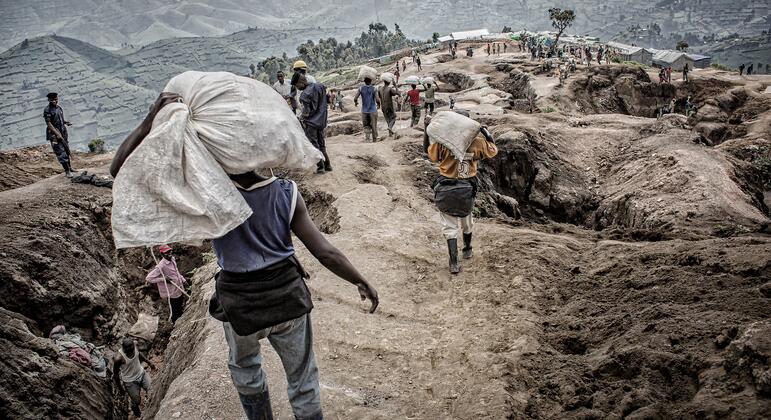
The initiative will expand climate-smart, home-grown school feeding programs across Uganda, Kenya, and Ethiopia over the next five years, reaching more than 366,000 children while supporting tens of thousands of smallholder farmers through locally sourced agriculture, regenerative farming practices, improved nutrition, cleaner cooking technologies, and water resilience infrastructure.
At the center of the partnership is a major financial commitment led by the Novo Nordisk Foundation, which has established a funding framework of up to approximately US$77.75 million for the initiative. The Grundfos Foundation is contributing an additional US$3.1 million over an initial three-year period.
Together, the commitments represent the largest philanthropic backing WFP’s school meals programming has ever received from private-sector partners, underscoring the growing confidence among major foundations that school feeding systems can serve as engines for public health, economic resilience, and climate adaptation simultaneously.
The Novo Nordisk Foundation’s funding structure is designed in phases, with future allocations tied to performance, implementation progress, and continued strategic alignment. The final portion of the funding package remains contingent upon additional approval by the foundation, reflecting the scale and long-term ambition of the initiative.
WFP’s Expanding Vision for School Feeding
For WFP, the partnership reflects a broader evolution in how school meals are viewed globally.
Long associated primarily with humanitarian assistance, school feeding programs are increasingly being positioned as long-term development infrastructure capable of strengthening national resilience.
WFP’s “home-grown school feeding” model links schools directly with local farmers and domestic supply chains, creating stable demand for locally produced food while improving nutrition and educational outcomes for children.
The approach is designed to strengthen rural economies, support climate-smart agriculture, and reduce dependence on imported food systems.
Participating farmers in the Eastern Africa initiative will receive support and training in regenerative and climate-resilient agricultural practices, while schools will benefit from upgraded kitchens, cleaner cooking systems, and improved water infrastructure.
For countries facing intensifying climate pressures, agricultural instability, and rising food insecurity, the model offers a pathway toward greater self-sufficiency and long-term resilience.
The Novo Nordisk Foundation’s Growing Global Influence
The scale of the commitment also reflects the expanding role of the Novo Nordisk Foundation in shaping global conversations around nutrition, food systems, and public health.
Established in 1924, the Danish foundation is the controlling shareholder of Novo Nordisk, the pharmaceutical company known globally for insulin and obesity treatments including Ozempic and Wegovy.
Today, the foundation has become the world’s largest philanthropic organization by assets and has increasingly directed its resources toward the intersection of health, sustainability, agriculture, and climate resilience.
Its core thesis is that the future of public health will depend not only on healthcare systems, but also on how societies produce, distribute, and consume food.
That philosophy has driven growing investments in regenerative agriculture, sustainable proteins, childhood nutrition, and food systems innovation.
In 2024, the foundation partnered with WFP, Germany’s Federal Ministry for Economic Cooperation and Development, and the Rockefeller Foundation to launch the School Meals Accelerator, a global initiative aimed at helping governments extend nutritious school meals to an additional 100 million children by 2030.
The Eastern Africa partnership represents one of the largest and most operationally ambitious examples of that strategy to date.
Philanthropy and Multilateral Institutions Converge
The initiative also highlights the increasing convergence between large-scale philanthropy and multilateral institutions.
As governments and international organizations confront mounting financial pressures and increasingly complex climate and development challenges, philanthropic institutions are playing a growing role in helping fund experimentation, accelerate implementation, and scale proven models.
In this partnership, WFP provides the operational expertise, government relationships, and implementation capacity, while philanthropic capital helps expand the scope and ambition of what can be achieved.
The Grundfos Foundation’s participation adds a critical focus on water systems and resilience, recognizing the essential relationship between clean water, agriculture, nutrition, and education outcomes.
Together, the partnership reflects a broader shift underway in international development — one where food systems, climate resilience, public health, and local economic development are increasingly treated as interconnected challenges requiring integrated solutions.
Reimagining the Role of School Meals
Globally, investment in school feeding programs has surged in recent years as governments and development institutions increasingly recognize their long-term societal value.
School meals are no longer viewed simply as social assistance programs. They are increasingly being treated as foundational infrastructure capable of improving public health, supporting domestic agriculture, reducing inequality, and strengthening resilience against climate shocks.
For WFP and its philanthropic partners, Eastern Africa is now becoming a testing ground for that larger vision.
And with one of the largest private philanthropic commitments ever directed toward school feeding, the initiative signals growing recognition that the future of resilience and prosperity may begin in classrooms, kitchens, and local farms.
RELATED STORIES:
- Feeding the Planet Without Cooking the Climate
- Novo Nordisk and OpenAI Partner to Redefine the Future of Drug Discovery
- Feeding America Aims to Rescue 5 Billion Pounds of Food with New $50M Annual Fund
- Maersk Taps World’s First Commercial E-Methanol Plant as Operations Begin in Denmark
- The Ocean’s New Giants: Why Humpback “Super-Groups” Are Rewriting the Rules of Marine Life
 Follow SDG News on LinkedIn