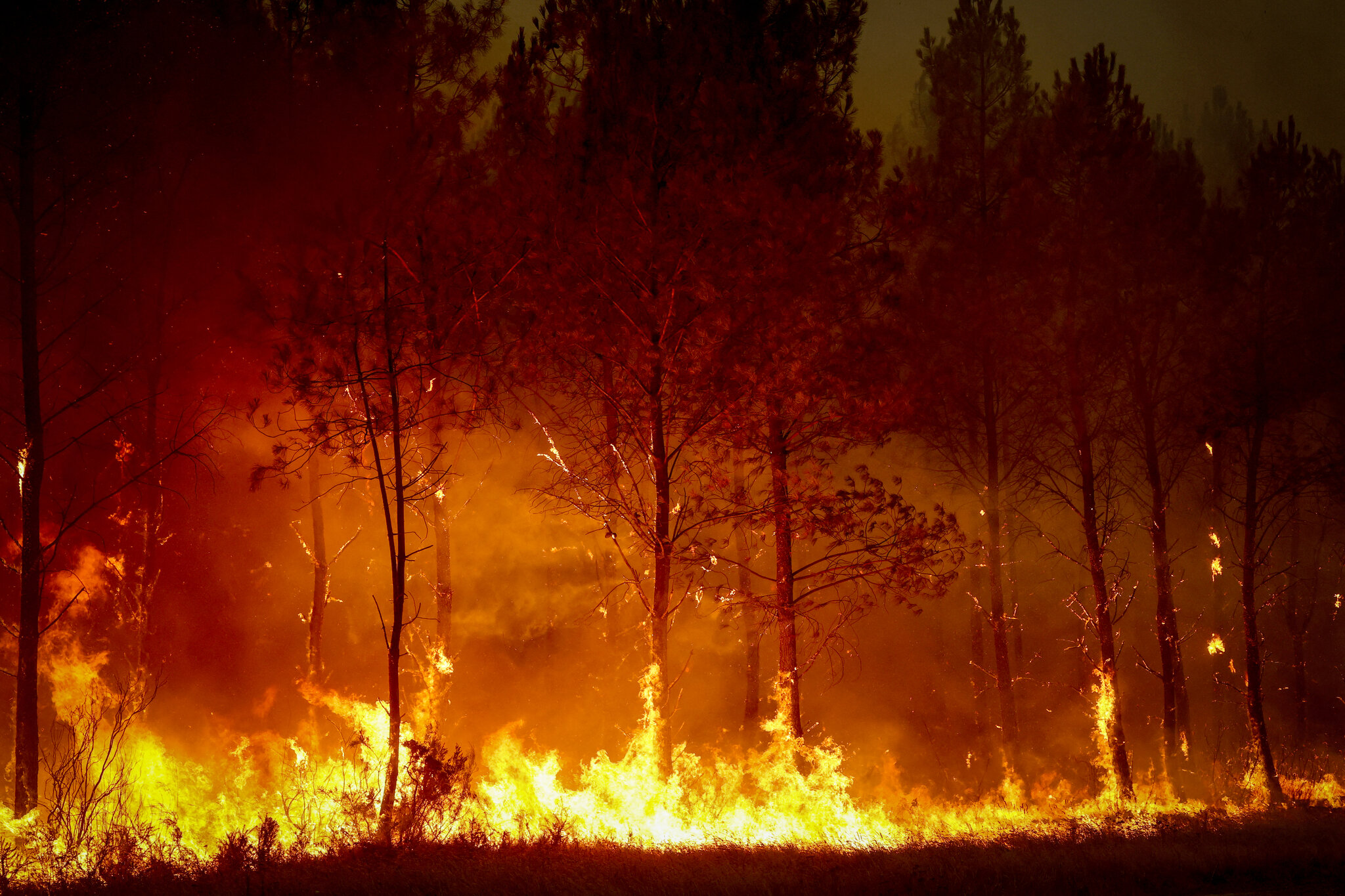
As firefighters continue to contain the historic wildfires that have swept across France and Spain, new scientific research is providing one of the clearest assessments yet of how climate change influenced the weather conditions that fueled this summer’s fires.
A rapid attribution study by the World Weather Attribution (WWA) initiative found that human-caused climate change made the hot, dry and windy conditions that fueled this summer’s wildfires approximately 20 times more likely in central Spain and twice as likely in southwestern France. The study focuses on how climate change influenced the environmental conditions that allowed the fires to spread rapidly, rather than the specific events that ignited individual fires.
Understanding Attribution Science
Scientists emphasize that climate change does not ignite wildfires. Individual fires are still typically sparked by human activity or natural causes such as lightning.
Instead, attribution science estimates how climate change alters the probability and intensity of the weather conditions that determine how fires behave once they begin.
Using historical observations and climate models, researchers compared today’s climate with a hypothetical world without human-caused greenhouse gas emissions. Their analysis found that rising global temperatures substantially increased the likelihood of the combination of extreme heat, drought and strong winds that created ideal wildfire conditions across parts of France and Spain.
The study also identified an unusual sequence of weather events that amplified wildfire risk: a relatively wet winter and spring encouraged abundant vegetation growth, followed by successive heatwaves and drought that transformed that vegetation into highly combustible fuel.
Evidence Extends Beyond One Study
The WWA findings are reinforced by additional peer-reviewed research released this week.
A study published in Scientific Reports found that the number of extreme fire-weather days across southern Europe has more than doubled since the early 1980s, while those days have become roughly 50% more intense. The researchers also found that over the past 26 years, climate warming has tripled the likelihood of severe fire weather in Spain and increased the risk by roughly 40% in France, findings that are consistent with a longer-term increase in severe fire-weather conditions despite decades of improvements in firefighting capabilities and forest management.
Taken together, the two studies add to a growing body of evidence that climate change is increasing the likelihood of the extreme weather conditions under which wildfires can spread rapidly and become more difficult to contain.
Implications for Climate Resilience
The findings carry important implications for governments confronting more frequent and severe wildfire seasons.
If climate change is making dangerous fire weather substantially more common, resilience strategies cannot rely solely on expanding emergency response capacity after fires ignite. Increasingly, the focus is shifting toward reducing underlying risk through forest management, landscape restoration, early warning systems, land-use planning and community preparedness.
European governments have expanded cross-border firefighting cooperation while increasing investment in prevention, adaptation and landscape management as wildfire seasons become longer and more severe. The latest attribution research adds to the scientific evidence informing those efforts.
From Scientific Evidence to Public Policy
Rapid attribution science is increasingly becoming more than an academic exercise. By quantifying how climate change changes the likelihood and intensity of extreme weather, these studies are providing governments with actionable evidence to inform climate adaptation, disaster preparedness and long-term public investment.
Rather than focusing solely on emergency response after disasters occur, policymakers are increasingly combining attribution research with climate projections, satellite observations and risk modeling to identify where infrastructure, land management and emergency systems can be strengthened before future disasters strike. This shift reflects a broader evolution in resilience planning—from reacting to individual events toward anticipating and reducing future risk.
Across Europe, the latest findings are likely to reinforce ongoing efforts to expand cross-border firefighting cooperation, invest in more resilient forests and landscapes, strengthen early warning systems, and incorporate climate risk into land-use planning and infrastructure development. Similar approaches are increasingly being explored in other regions facing growing wildfire threats, including North America, Australia and parts of South America.
As attribution science continues to mature, its application is expanding beyond wildfire policy. Governments are increasingly using this type of evidence to inform decisions related to flood protection, heat resilience, water security, insurance markets and climate adaptation financing. For policymakers, the value lies not in explaining a single disaster, but in better understanding how future risks are evolving—and where today’s investments can reduce tomorrow’s human, environmental and economic costs.
RELATED STORIES:
 Follow SDG News on LinkedIn