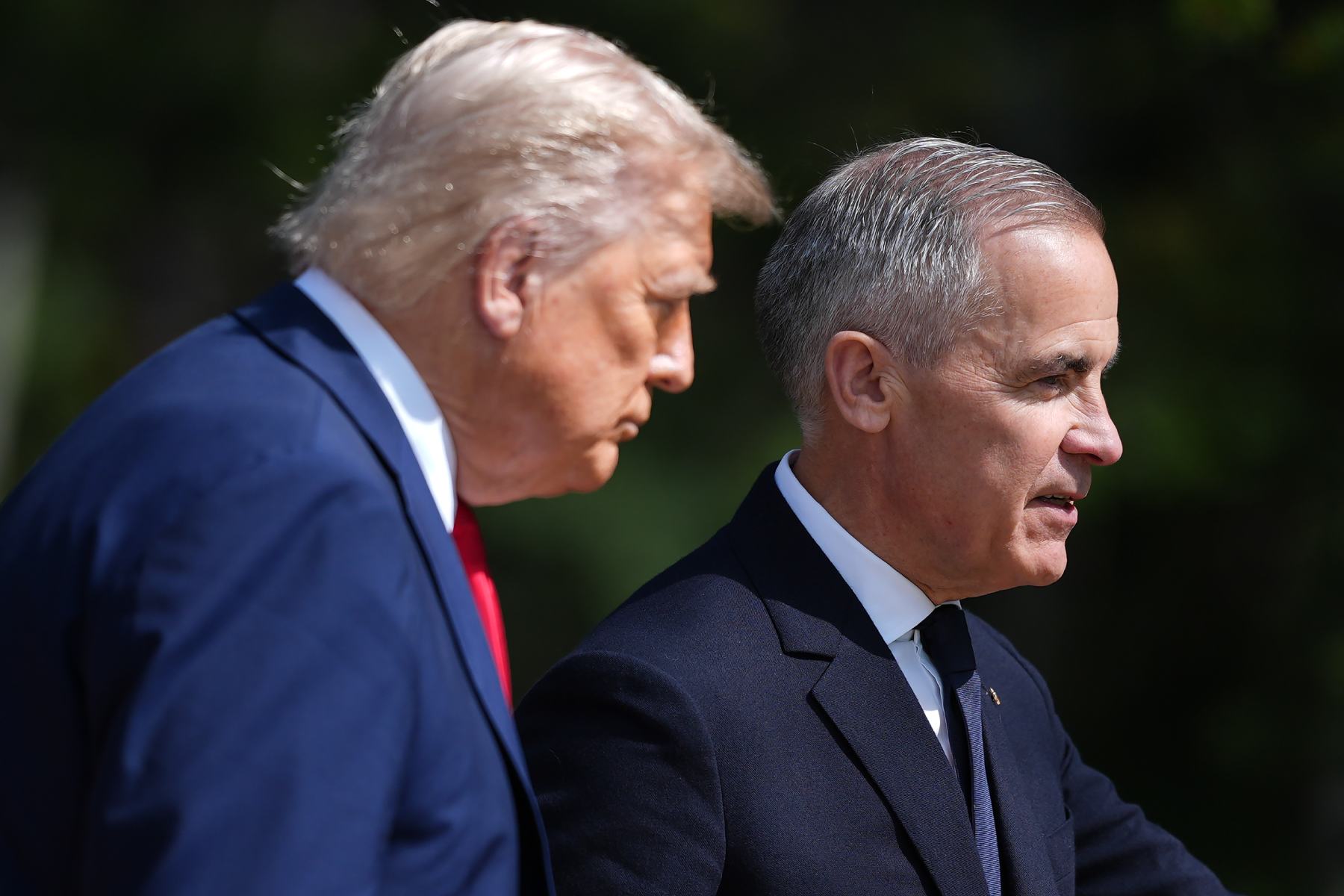
The latest escalation is no longer just a tariff dispute. It is accelerating a broader Canadian effort to reduce economic dependence on its largest trading partner.
OTTAWA — The Canada-US trade conflict has entered a more consequential phase.
After negotiations collapsed on August 21, the United States imposed 50% tariffs on roughly US$20 billion of Canadian goods. Canada has pledged dollar-for-dollar retaliation beginning September 8. President Donald Trump has since threatened to extend 50% tariffs to Canadian-made cars, trucks and auto parts beginning January 1, 2027.
The immediate stakes are significant. But the larger story is what the dispute is beginning to change.
Canada is no longer treating the confrontation simply as another tariff negotiation. Prime Minister Mark Carney is increasingly framing it as a structural challenge that requires the country to become less economically dependent on the United States.
“We have recognised from the beginning that America has changed, and that we will not return to our old relationship,” Carney said after suspending negotiations.
For a country whose economy has long been built around privileged access to the U.S. market, that marks a significant shift.
A Deal That Nearly Happened
The rupture came unusually close to being avoided.
Only a day before negotiations collapsed, Canadian Trade Minister Dominic LeBlanc said the two countries were “very close” to an agreement. The proposed deal could have reduced U.S. tariffs on Canadian-built vehicles from 25% to 15% and cut steel and aluminum tariffs from 50% to 25%.
What happened next is disputed.
Carney said Washington introduced changes to the proposed agreement that Canada considered “unfair” and “uneconomic.” U.S. officials offered a different account, arguing that Canada introduced new demands and retreated from earlier commitments.
The disagreement points to a deeper problem. The dispute is increasingly about more than tariff levels. It is also about whether governments and businesses can rely on the rules governing cross-border trade.
Trump has since escalated the pressure, threatening a 50% tariff on Canadian vehicles and parts from January and telling manufacturers they can avoid tariffs by moving production to the United States.
The automotive sector is especially exposed. Vehicles and components routinely cross the U.S.-Canada border during production, so tariffs can raise costs and disrupt supply chains on both sides.
Carney’s Bigger Bet
Canada’s response suggests Ottawa is preparing for a longer-term shift.
Carney has emphasized new export markets, stronger domestic industrial capacity, infrastructure investment and greater economic self-reliance. His government is also seeking to reduce internal trade barriers between Canadian provinces.
The challenge is scale.
Around 70% of Canadian exports still go to the United States, making rapid diversification unrealistic. But Canada has extensive trade relationships with Europe and Asia that could gradually reduce that exposure.
Ottawa has also avoided deploying some of its most disruptive potential leverage.
Canada supplies the United States with strategically important commodities including oil, potash and critical minerals. Restricting those exports could increase pressure on Washington, but it would also create risks for Canadian producers and encourage U.S. buyers to seek alternatives.
That restraint reflects a broader reality of economic coercion: once supply chains move, they do not always move back.
Canada-US Trade: The Adjustment Has Already Begun
The Canada-US trade conflict is already influencing business planning and investment decisions.
The Bank of Canada has documented pressure on tariff-exposed industries and warned that replacing established markets and supply chains can be expensive and slow.
That matters most in sectors built around continental integration. Steel, aluminum, autos and other manufacturing industries were designed around relatively frictionless movement across the U.S.-Canada border.
Tariffs directly challenge that model.
Markets have so far reacted more cautiously than the political rhetoric might suggest. Canada’s benchmark stock index was little changed on August 24, while the Canadian dollar weakened as investors assessed the latest escalation.
But the more important consequences may emerge over time. Capital investment decisions are often shaped less by a single tariff announcement than by uncertainty over whether the rules governing trade will remain stable.
A Test for Middle Powers
Canada’s dilemma is increasingly relevant beyond North America.
Governments around the world are reassessing their dependence on major powers for markets, energy, minerals, technology and manufacturing.
Canada illustrates that tension particularly clearly. The United States remains its largest market and closest economic partner, giving both countries powerful incentives to preserve integration. At the same time, Ottawa is increasingly treating excessive dependence on a single trading partner as a strategic vulnerability.
That does not mean Canada is economically separating from the United States. The depth of bilateral trade and interconnected supply chains makes such a rupture extraordinarily costly.
It does mean that diversification, resilience and domestic capacity are moving closer to the center of Canadian economic policy.
The Signal
For decades, the defining assumption of Canada-US trade was that integration would continue to deepen.
That assumption is now being tested.
The immediate question is whether Washington and Ottawa return to negotiations. The larger one is whether repeated tariff disputes are already changing where companies invest, manufacture and source critical goods.
Factories can move. Supply chains can diversify. Export markets can shift.
Those decisions are considerably harder to reverse than tariffs.
For Canada, the emerging strategy is therefore bigger than winning the current dispute. It is about reducing vulnerability to changes in U.S. trade policy while preserving the benefits of North American integration.
For other governments, the lesson is broader: as trade, resources and supply chains become increasingly intertwined with geopolitical leverage, economic resilience is becoming a core element of national strategy.
 Follow SDG News on LinkedIn