Disruptions through the Strait of Hormuz are accelerating a strategic reassessment across Europe and Asia, with renewables, storage and grids increasingly treated as national resilience infrastructure.
Six months into the U.S.-Israeli war with Iran, the conflict is reshaping energy security far beyond the Middle East.
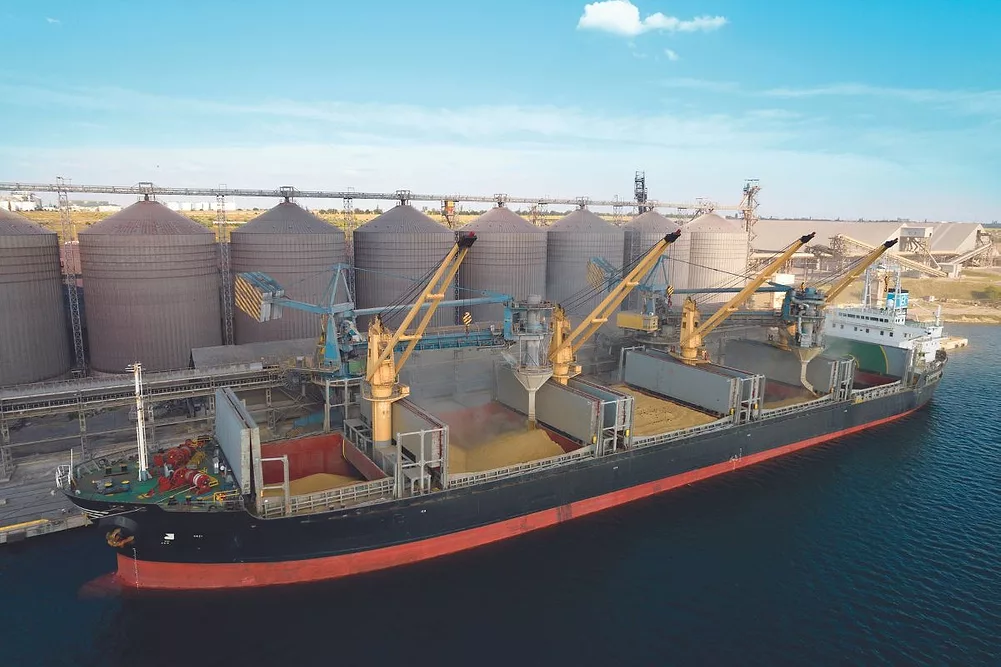
The disruption of the Strait of Hormuz has constrained a route that normally carries roughly one-fifth of global oil and liquefied natural gas shipments, exposing major energy-importing economies to higher prices and supply uncertainty.
The response is not uniform. Some governments are accelerating renewable energy, storage and electrification. Others are increasing coal use or seeking alternative fossil-fuel supplies to protect near-term reliability.
But the strategic lesson is becoming clearer: energy security is no longer only about securing fuel supplies. It is increasingly about reducing exposure to geopolitical chokepoints altogether.
The Strategic Shift
South Korea, Thailand and the European Union are among the governments increasing support for renewable energy, while higher energy prices are strengthening demand for rooftop solar in markets including the Philippines, Australia and Europe, according to Reuters.
The shift was already underway before the war. The International Energy Agency expects renewable electricity generation to grow by more than 8 percent in 2026 and overtake coal as the world’s largest source of power generation for the first time.
What is changing is the strategic rationale.
Domestically generated renewable electricity is less exposed than imported fossil fuels to maritime disruption, sanctions, blockades and commodity-price shocks. Combined with storage, transmission and electrification, it can reduce the vulnerability created by dependence on external fuel supply chains.
Investment is increasingly reflecting that logic. The Financial Times reported that investment in solar-plus-storage projects outside China reached roughly $25 billion in the first half of 2026, nearly triple the level a year earlier.
Asia Faces the Greatest Exposure
The implications are particularly significant in Asia, where several major economies remain heavily dependent on Middle Eastern energy.
China has continued to expand solar generation rapidly while electric-vehicle adoption reduces petroleum demand in transport. Reuters reported that solar generation grew more than three times as quickly as coal output between March and July, while electric vehicles accounted for 63 percent of Chinese passenger-car retail sales in June.
But the same security shock is also extending the life of coal.
India, Vietnam and South Korea have increased coal consumption as governments prioritize reliable electricity. Elevated LNG prices have encouraged gas-to-coal switching in parts of both Asia and Europe.
That contradiction is central to the current strategic picture: the war is accelerating the case for long-term energy independence while also reinforcing short-term reliance on whatever domestic energy sources are immediately available.
Europe Is Testing System Resilience
Europe’s experience shows why the next stage of energy security is increasingly about the electricity system itself.
Average wholesale electricity prices in the European Union rose more than 30 percent year-on-year in the second quarter following the Hormuz shock, according to the IEA.
High solar generation has helped limit price pressure during parts of the day, but renewable capacity alone does not eliminate vulnerability. Batteries, transmission networks, interconnections and flexible demand determine how much domestic electricity can actually substitute for imported fuel.
Australia provides a useful contrast. Average wholesale electricity prices there were roughly 45 percent lower year-on-year in the second quarter, with the IEA attributing the decline partly to strong renewable generation and rapidly expanding battery storage that reduced dependence on gas during peak demand.
For defense and national-security planners, the implication is increasingly relevant: resilience depends not simply on how much energy a country produces, but on whether its power system can continue operating through external shocks.
The Near-Term Trade-Off
The current crisis is not producing a uniformly cleaner energy system.
The IEA expects electricity-sector carbon dioxide emissions to rise around 1 percent in 2026, partly because expensive gas is driving greater coal generation. Emissions are expected to broadly plateau in 2027 as renewables, nuclear power and gas increasingly displace coal.
Financing conditions also remain challenging. Higher interest rates raise the cost of capital-intensive renewable, grid and storage projects, while supply-chain disruption can increase equipment costs.
Governments are therefore pursuing multiple forms of resilience at once: renewable investment, additional batteries, alternative LNG supplies, strategic reserves and, in some cases, more coal.
The Defense Dimension of Energy Security
The conflict is broadening the definition of energy security.
Fuel supply remains critical, but governments are increasingly focused on the resilience of electricity grids, the origin of critical equipment, domestic generation capacity and the security of energy infrastructure.
Climate-related disruption adds another layer. Extreme heat, drought and severe weather can affect hydropower, nuclear generation, transmission systems and energy transportation networks.
For governments, this means energy resilience increasingly sits at the intersection of defense policy, industrial strategy, infrastructure security and climate adaptation.
What to Watch
The key question is whether the policy response to the Iran war becomes structural.
Additional LNG production later this decade could ease supply pressure and reduce some of the immediate incentive to move away from imported fossil fuels.
But the crisis has again demonstrated the vulnerability created by concentrated energy routes and external fuel dependence.
The longer-term strategic competition will increasingly be about which countries can build energy systems that are cheaper, more flexible and less exposed to geopolitical disruption.
For major energy-importing economies, renewables, storage and resilient grids are increasingly becoming not only climate infrastructure, but components of national security.
 Follow SDG News on LinkedIn